
Ever since I stumbled my way through Dishonored for the first time, I’ve become a huge stealth nerd. I’ve made my way through most of the classics, from Thief to Deus Ex, and I’m always thirsty for a new vent-crawling, shadow-lurking experience. So, several years ago, I was excited to learn that a new stealth-focused title created by some of my favourite veteran developers was making its way to the market.
A Quick and Clean Heist
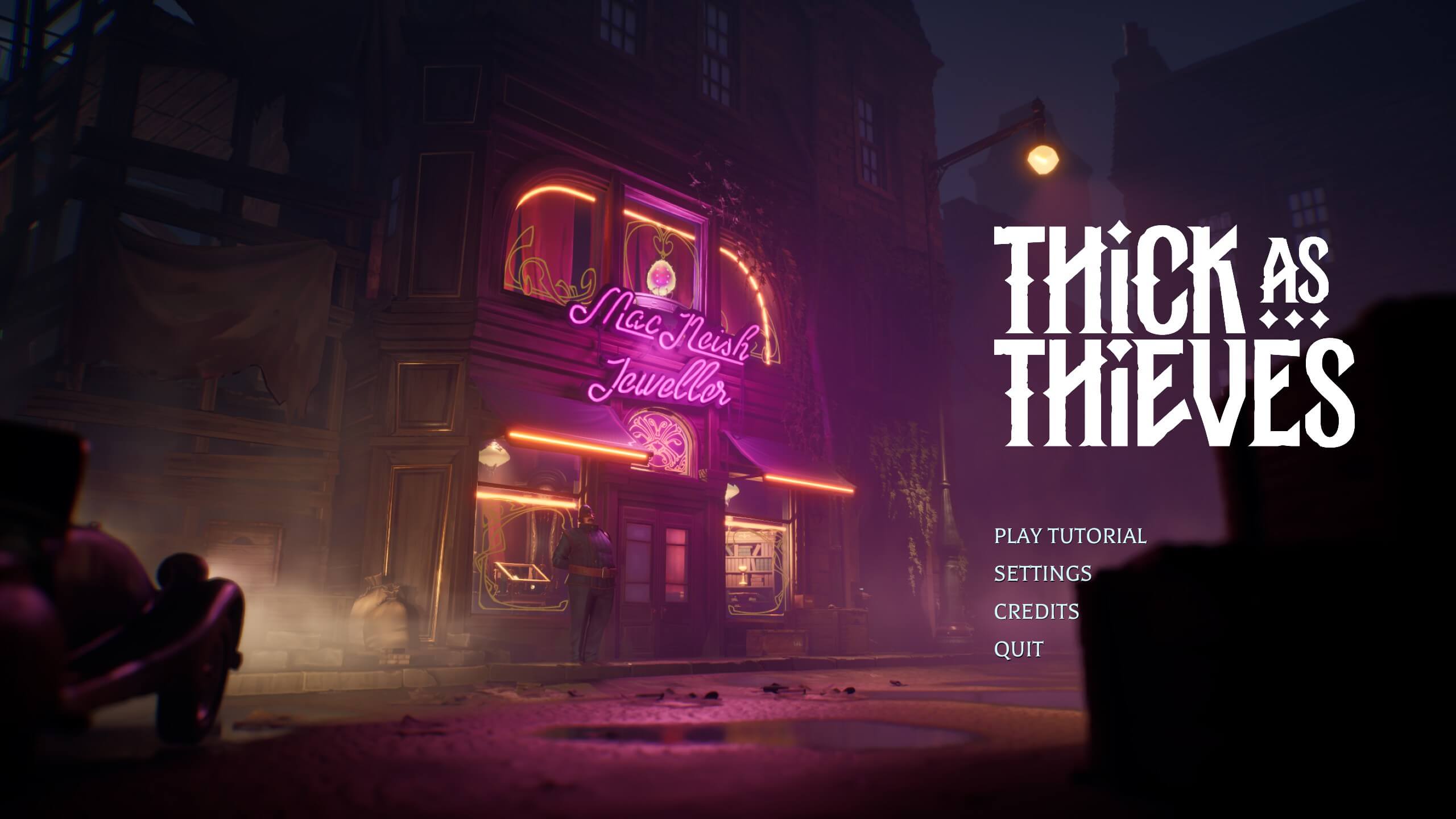
Thick As Thieves is a co-op/single-player stealth game developed by OtherSide Entertainment and published by Megabit. The game was initially concieved as a PvPvE experience, where players would compete against each other to steal treasure. However, some time during development the design shifted towards a more cooperative playstyle, for reasons so far unknown. But with such a sudden change in development so close to release, is the final result any good? Let’s take a closer look at this heist game and see if it will steal your heart, or just your time.
Gameplay
Thick As Thieves is set in Kilcairn, a Scottish city in a magical alternate 1910s. You play as a member of the city’s Thieves Guild, completing contracts for your bosses in order to unravel a mystery behind a strange, magical diamond. And that’s about the crux of the story so far. Because of how gameplay works, there isn’t much room for more detailed environmental storytelling, but I’ll get to that later.
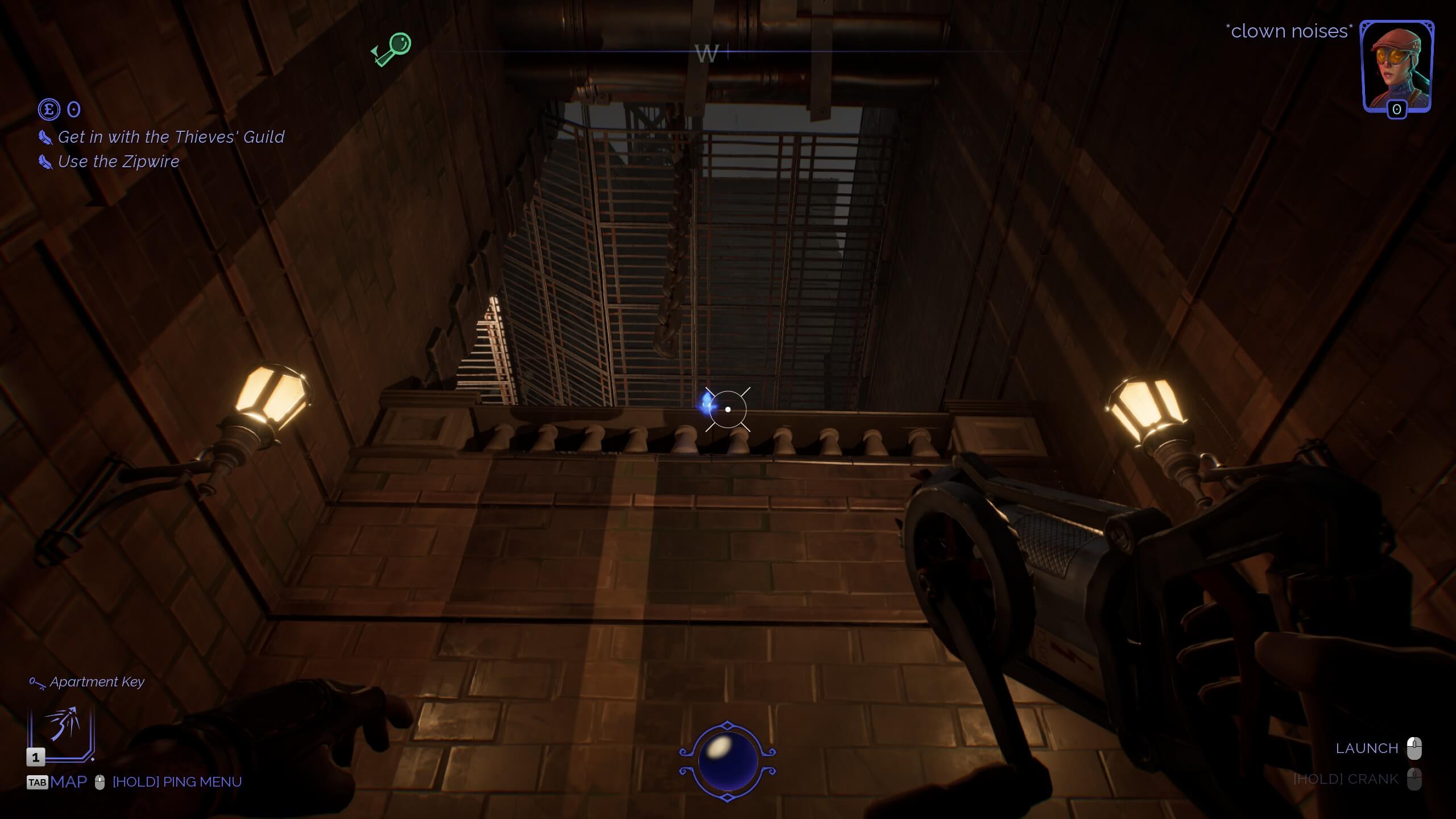
Thick As Thieves is a pure stealth game. There is no combat; you have no weapons, and any guards you knock out from behind will eventually get back up. If someone spots you, you can only run. The stealth mechanics are almost identical to the classic stealth system of the Thief series. Stealth is light- and sound-based; if you’re standing in total darkness, enemies won’t spot you even if they’re looking straight at you, but they will hear you if you run. To help with your stealth, you have access to a range of useful tools. Two are unique to the current playable classes: the Spider can use a grappling hook to zip to higher ground, while the Chameleon can disguise themself as a guard. You also have access to smoke bombs, pickpocket faeries, and all manner of magicological miscellany.
Levels
The levels (of which there are currently two) follow a simple game loop. You and your friends are dropped into the map and have a certain time limit to achieve a specific goal, such as lifting an artefact locked in a vault or pilfering a certain amount of gold. Once you get what you came for, you have 8 minutes to find a magical door to exfiltrate.

The structure of the map and the patrol patterns of guards and cameras is fixed, but the placement of your goals, the exit, and the intel that tells you where your goals are is randomised each time. While this means each run feels unique, this also prevents the game from having the sort of environmental storytelling and little interactions I love in similar titles, like Dishonored. As for the time limit, it’s good for keeping you on the move and forcing you to make decisions, but I found that it pressured me away from my preferred playstyle of slow, methodical movement. And slow stealth is basically your only option, as I’ll get into.
Gameplay Issues
Thick As Thieves‘ biggest strength is also its weakness. Its stealth mechanics are robust and fun, but they’re the only way to interact with the game world. The lack of combat may immerse you as a thief, but it also removes an optional verb that would otherwise broaden gameplay. Stealth games like Dishonored, Metal Gear Solid, and even Thief all offer combat mechanics, giving the player an additional verb to use when caught. The player can hide bodies or leave them out and risk enemies finding them. Enemies can enter a heightened state of awareness and completely change their patrol patterns if violence breaks out. Combat, even if it is unwieldy and discouraged, broadens the gameplay.
Thick As Thieves does not have combat, and so the developers must neuter the stealth to balance around the player’s single verb of escape. Guards cannot be as aware of their surroundings and return to a neutral patrol much sooner. There are no map-wide alarms that would otherwise force changes to gameplay strategy. All you can do is hide and wait, and when you’re working against the clock, that doesn’t feel very fun to do.

The game also makes the cardinal sin of giving the player easy access to a “see-through-walls” power, in the form of a magical diamond. Nothing removes the tension and strategy of a stealth game faster than an X-ray power, especially one that can be used indefinitely. Why bother learning patrol patterns and paying attention to footsteps and sound cues when you can just press 4? Thick As Thieves is a more casual game, and the X-ray power greatly helps with planning movement quickly. But I found that it removed the quiet tension that makes stealth games emotionally resonant for me.
Graphics & Audio
Thick As Thieves’ graphics are solid, but nothing to write home about. The cartoonish art style does a lot to paper over the otherwise simple graphics, and there are some very good wide shots, especially in the second map.

Unfortunately, despite the game’s simple graphics, it is very resource-intensive. This is because the system loads the full map at all times, so multiple players can move around it with relative freedom. I didn’t encounter any major framerate issues, but the graphics tended to fall off and bitcrush at a distance.
The audio’s pretty solid. Every guard and security system has unique sound cues to tell you what they are from a distance. Of course, none of that matters when you can just press the “see through walls” button. Thankfully, the game nails the most important part of a stealth game: the guards’ idle chatter. I’m a particular fan of the ghostly guards (officially called the Hauntstables), who all have darkly comedic lines about how this job will be the death of them. The game has a nice, jazzy soundtrack, but most of the time you’ll be listening to ambient audio.
Longevity
Thick As Thieves, in its current state, is pretty short. The game is around 4 to 6 hours long. While it offers some replayability with harder difficulties and semi-randomised objectives, the two existing levels get old pretty quickly. However, the studio priced the game at an affordable 5 dollars to match. There is an implicit promise of more gameplay updates down the line as well. We’ll just have to wait and see if that’s actually the case.
Final Thoughts
Thick As Thieves, as it stands, is less of a game and more of a highly polished paid demo. Everything is decent, but nothing is spectacular. The core stealth loop is solid, but balancing around randomised co-op and a lack of combat removes some of the deeper gameplay and narrative systems that really make stealth shine. The art style is charming, but not especially memorable. The audio design is decent, but can be mostly ignored thanks to the more convenient X-ray system. And the game’s total content is too sparse to really be considered a full game, but large enough to not warrant a “demo” title. I enjoyed my short time with it, and I believe it could become solid down the line.
However, as it stands, Thick As Thieves is more of a promise of a game. For now, I’ll be giving it the Thumb Culture Silver Award and my continued attention.

Disclaimer: A code was received in order to write this review.
YouTube | Facebook | Twitter | Instagram | Discord | Podcast
About Author