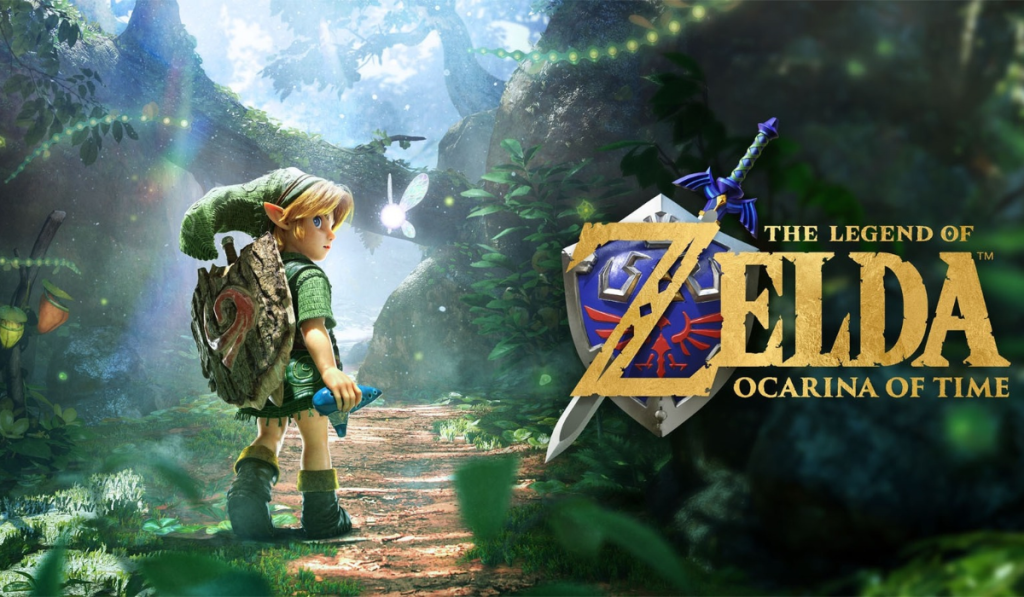
Originally released back in 1998 on the Nintendo 64, The Legend of Zelda: Ocarina of Time has helped shape what we now expect from 3D adventure games. Now, almost three decades later, Nintendo has brought this legendary adventure back, completely rebuilt for the Nintendo Switch 2.
I’ll be honest, when I first heard that Ocarina of Time was getting another outing, I was wondering just how much Nintendo could realistically improve upon something that was already so well loved. We’ve had various versions over the years, including the 3DS release, but this latest version feels like something rather special.
Power is in my hand!
Playing it docked on my OLED tv has genuinely made me stop and appreciate just how far gaming has come. The colours are incredibly vibrant, the environments are beautifully detailed, and everything moves so smoothly. But perhaps the biggest surprise hasn’t been the technology or the nostalgia. It’s been seeing my nine-year-old son take such an interest in a game that originally came out before I was even thinking about becoming a parent. He absolutely loves it and, quite frankly, I struggle to get him to put the controller down!
If that’s not a testament to how well Nintendo has brought this classic into a new generation, I don’t know what is.
Gameplay
At its heart, Ocarina of Time remains the adventure we all know and love. You begin your journey as young Link in Kokiri Forest, eventually finding yourself travelling across Hyrule, battling monsters, exploring dungeons, solving puzzles and trying to prevent Ganondorf from taking control of the kingdom.
The familiar story is still here, taking you through two different periods of Link’s life, with the transition from childhood to adulthood remaining one of the most memorable parts of the entire adventure. It’s a formula that works just as well today as it did back in the late nineties.
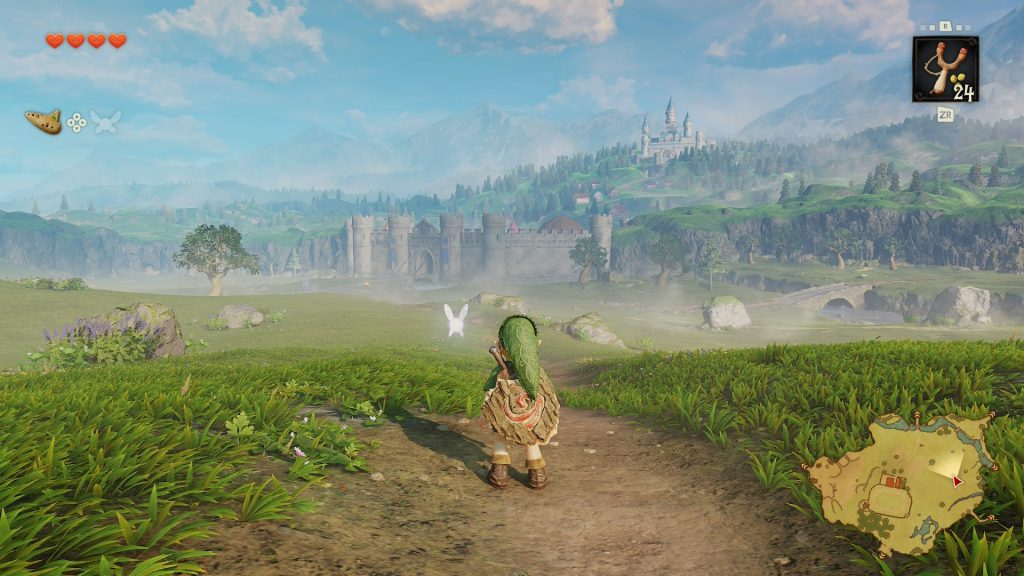
However, this isn’t simply the original game with a fresh coat of paint. Nintendo has made some welcome improvements to bring the gameplay up to modern standards. The camera is now fully controllable, meaning you can properly look around your surroundings rather than relying on the old fixed camera angles. This makes exploring Hyrule feel much more natural, especially when navigating larger environments.
Put ’em up!
Combat and general movement also feel much more comfortable thanks to the updated controls. Having important equipment more readily accessible through the controller makes switching between items less cumbersome, while the improved aiming controls make using your bow and other equipment feel far less dated. I did take up the offer in the settings to swap my jump button to B instead of X, as it felt a lot more natural to me.
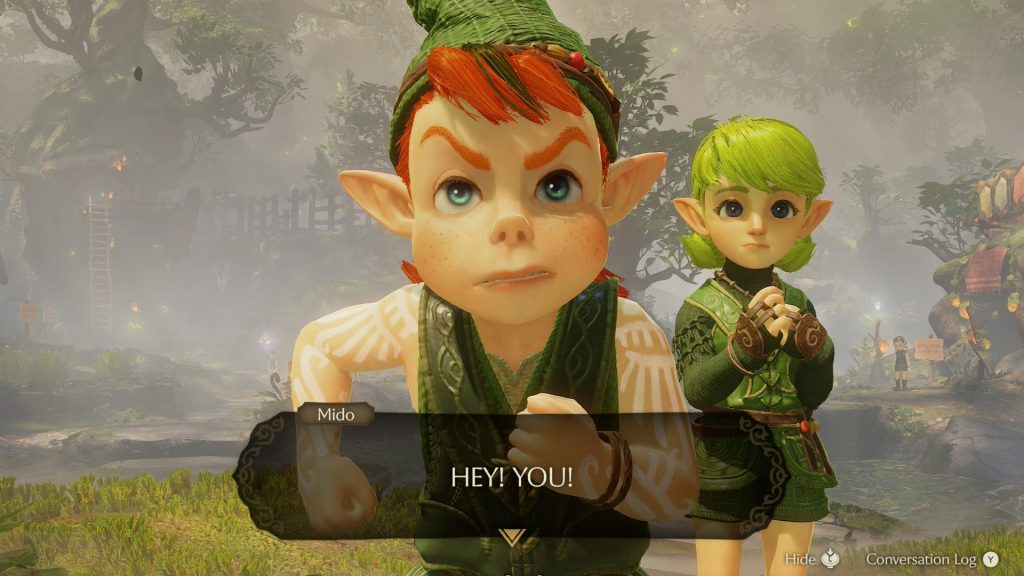
There are also additional touches throughout the adventure, including expanded dialogue and fully voiced cutscenes. These help give certain characters more personality and bring some extra emotion to moments that previously relied entirely on text. Navi, in particular, feels much more like a companion rather than just a little fairy constantly shouting for your attention.
One of the more interesting additions is the Hall of Fallen Foes, where you can revisit defeated enemies and challenge them again. It’s a nice little extra for anyone wanting to test their abilities beyond the main adventure.
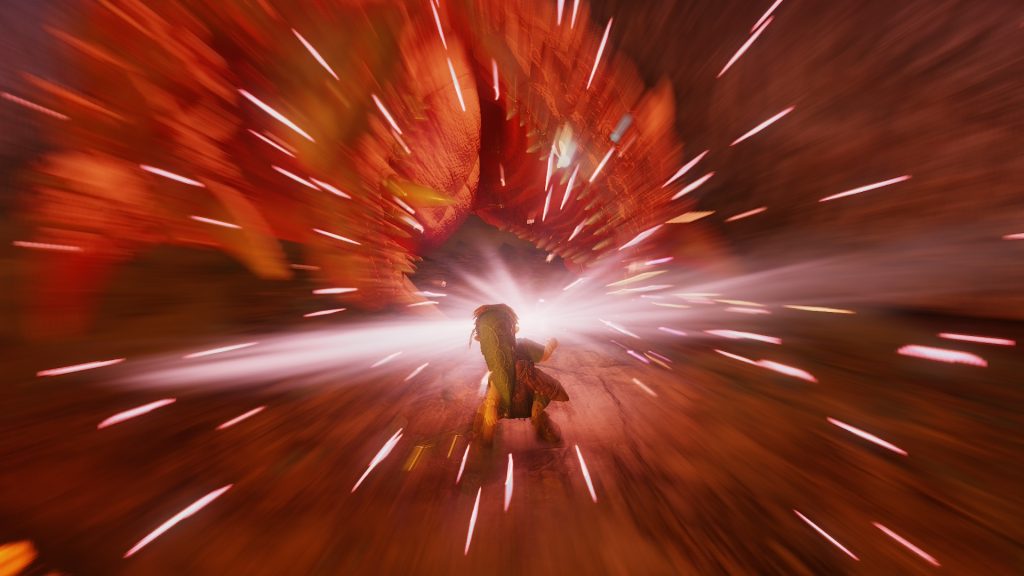
The ocarina itself has also received some clever attention. Using the Switch 2’s built-in microphone, you can actually hum melodies or play them on a real instrument to trigger the corresponding songs in the game. It’s a fun addition that makes something already central to the original experience feel even more interactive.
Second screen?
One thing I’ve found myself using quite a bit is Zelda Notes, which you can access through the Nintendo Switch app on your phone or tablet. I wasn’t sure how much use I’d get out of having a second screen, but it’s actually become a really handy companion while exploring Hyrule.
Having a live map sitting on my phone means I can quickly check where I am and see where I’ve been without constantly stopping the game to bring up the map on the Switch itself. It’s also useful for keeping track of discoveries and making notes when I’ve come across something I want to return to later. It’s a simple idea, but it works really well, particularly when you’re exploring larger areas or trying to work out where to head next. I quite like having my phone beside me while playing, almost like having my own little Zelda guidebook to hand. It’s certainly something I didn’t know I needed until I started using it!
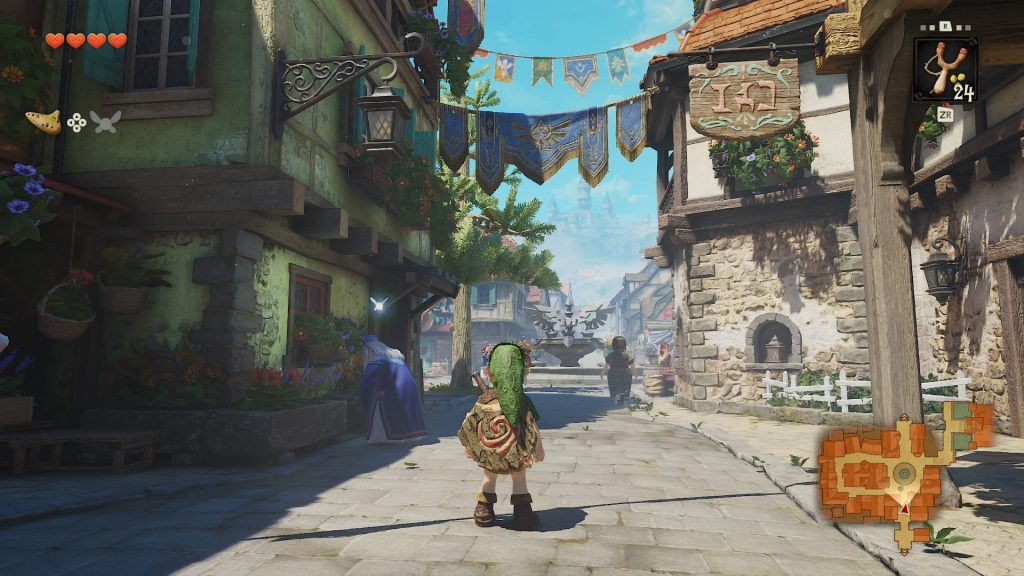
Graphics & Audio
I’ve been playing Ocarina of Time mainly docked on my OLED, and I genuinely think it’s one of the most impressive-looking games I’ve played on the Nintendo Switch 2 so far.
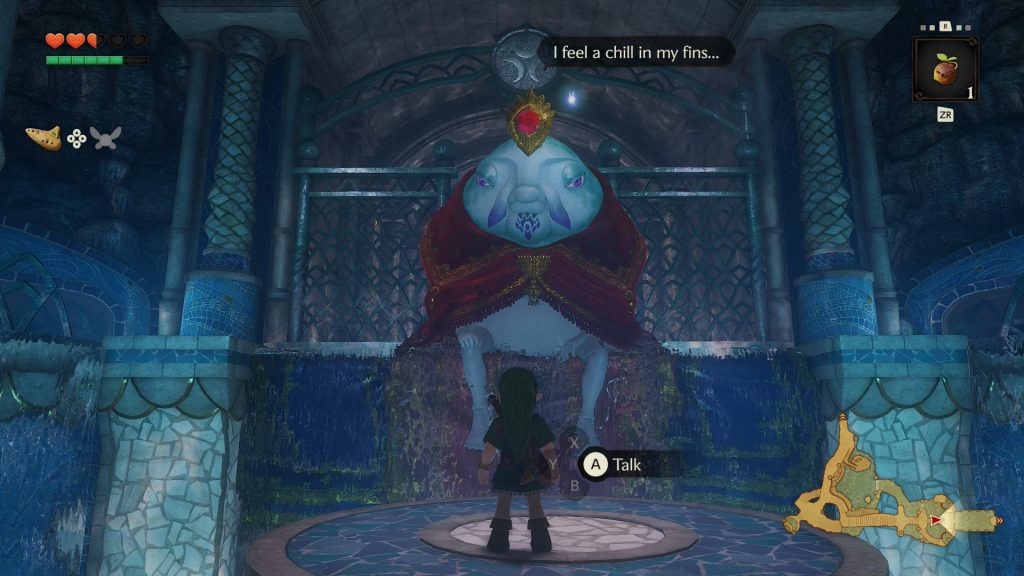
The difference is enormous. Hyrule has been completely transformed, with beautifully detailed environments, improved lighting, realistic water effects, atmospheric shadows and character models that look considerably more lifelike. Kokiri Forest is full of colour and detail, while locations such as Hyrule Field, Kakariko Village and the various temples have been given an incredible visual overhaul.
The colours are particularly striking on my OLED. Greens look wonderfully rich, water has a beautiful depth to it, and the lighting really helps bring each environment to life. There are moments when I’ve found myself simply standing around looking at the scenery rather than getting on with the adventure.
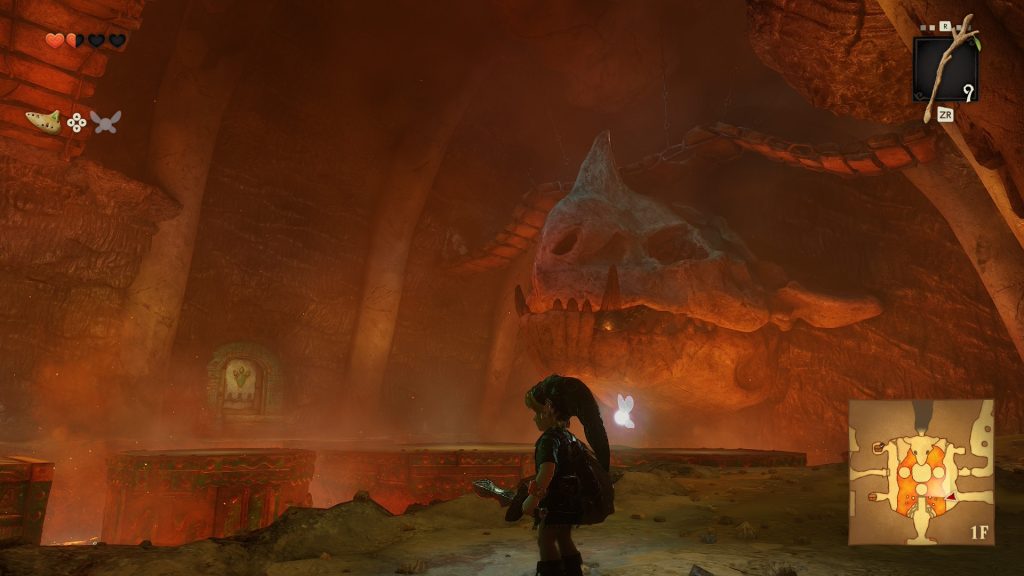
Performance is equally impressive. The game runs at a beautifully smooth 60fps, making movement, combat and camera control feel incredibly fluid. Having experienced older versions of Ocarina of Time, the difference in how responsive everything feels is immediately noticeable. I appreciate that we didn’t have this kind of technology back then.
Resolution
Interestingly, both my Nintendo Switch 2 and television report a 4K output and input, respectively. Whether you’re technically getting native 4K rendering is another question, as the game appears to use upscaling to achieve its impressive presentation. But honestly, unless you’re looking particularly closely, it’s difficult to care. On my screen, the picture looks absolutely fantastic.
The audio has received just as much attention. The original soundtrack was already iconic, but Nintendo has gone a step further with a fully reworked symphonic orchestral score. Familiar melodies have been given a much grander feel, adding atmosphere to exploration and making some of the bigger story moments considerably more dramatic.
The addition of voice acting during key cutscenes is another welcome improvement. It gives conversations more personality and helps make the characters feel part of a living world rather than simply people waiting to deliver their next block of dialogue.
It’s a fantastic combination of visual and audio improvements that makes the entire adventure feel fresh again.
Longevity
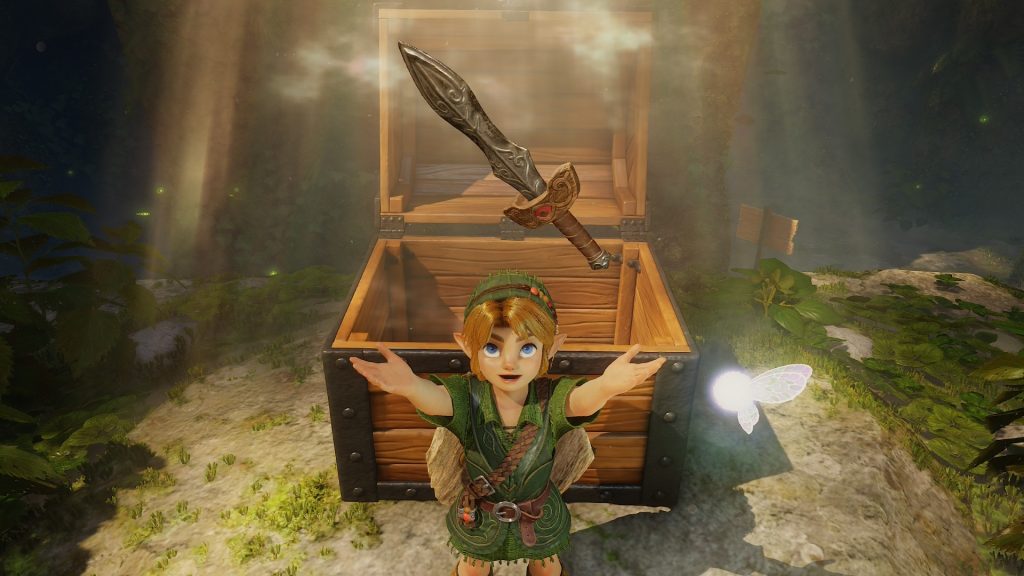
There is plenty here to keep you occupied. Between the main storyline, numerous dungeons, optional discoveries, hidden collectables, and additional challenges, Ocarina of Time offers a substantial adventure.
Of course, anyone familiar with the original will already know much of what lies ahead. However, the improved presentation and controls make revisiting familiar locations enjoyable in their own right. Even if you know where you’re going, there’s something rather satisfying about seeing these places recreated with such attention to detail.
A game for everyone
What I find heart-warming is how well this version is introducing the franchise to a younger audience.
My nine-year-old son has taken a real liking to it. I wasn’t entirely sure whether he would have the patience for an adventure that originally came from the Nintendo 64 era, especially when there are so many modern games competing for his attention. Yet here he is, exploring Hyrule, working out puzzles, fighting enemies and getting completely absorbed in the adventure. He genuinely can’t put it down!
Watching him discover characters, locations and story moments for the first time has been brilliant, making his own gaming memories. It’s a lovely reminder that great games aren’t necessarily restricted by the generation they were originally created for, and that’s perhaps one of Nintendo’s biggest achievements with this release. They’ve managed to preserve what made Ocarina of Time special while making it accessible and appealing to people who weren’t even born when the original arrived.
Final Thoughts
Nintendo has clearly put a tremendous amount of work into rebuilding the experience. The visual improvements are stunning, the orchestral soundtrack is wonderful, and the modernised controls make the game feel far more comfortable to play in 2026.
Playing docked on my tv has been a real highlight. The vibrant colours, detailed environments and smooth 60fps performance make this a genuinely beautiful game to experience. Yes, there are questions around native 4K rendering, but the end result is what matters, and visually it’s difficult not to be impressed.
Perhaps my favourite part, though, has been seeing my son fall in love with it. A game that first appeared nearly 30 years ago is now capturing the imagination of a completely new generation. That’s something quite special and arguably a bigger achievement than any graphical upgrade. Whether you’re returning to Hyrule for another adventure or experiencing it for the very first time, there’s never been a better opportunity to discover what makes Ocarina of Time so special.
Nintendo hasn’t just brought back a classic. It’s given it another generation of players to fall in love with it, and judging by how much my son is playing it, I think they’ve got that absolutely right.
I give The Legend of Zelda: Ocarina of Time a Thumb Culture Platinum Award!

Disclaimer: A code was received in order to write this review.
YouTube | Facebook | Twitter | Instagram | Discord | Podcast
About Author
