
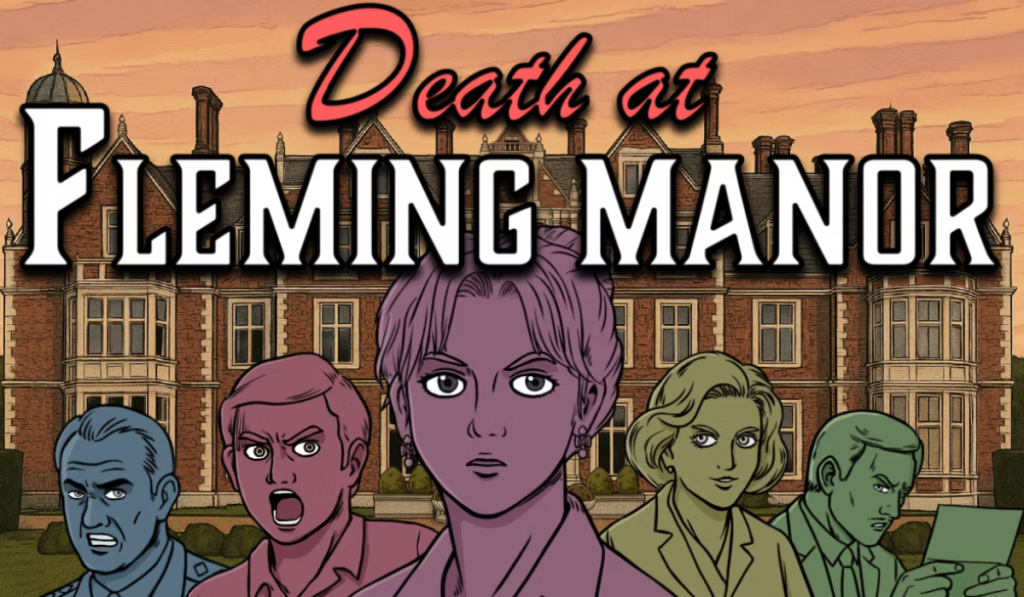
Those who have experienced my reviews before will know that I can never say no to a detective mystery genre of game. Death at Fleming Manor is no different, as you investigate a series of mysterious deaths at a British manor in 1959. Developed and published by SUPERTHUMb, it is your objective to explore scenes, find and analyse evidence before completing the death certificate. Since being released on the 3rd of November 2026, I have had plenty of time to sink my teeth into the story. Players can pick up Death at Fleming Manor with a 10% introductory offer now for £13.49. However, after the 17th of November 2026, this will rise back to its standard price of £14.99.
Elementary, my dear Watson!
Death at Fleming Manor is advertised by SUPERTHUMb as being a game similar to the likes of Return of the Obra Dinn and The Case of the Golden Idol, with the latter being a game I have previously reviewed. However, whilst Death at Fleming Manor is similar, it brings its own originality with the player being the coroner rather than a detective. How well does this concept translate? Well, let’s have a look!
Gameplay
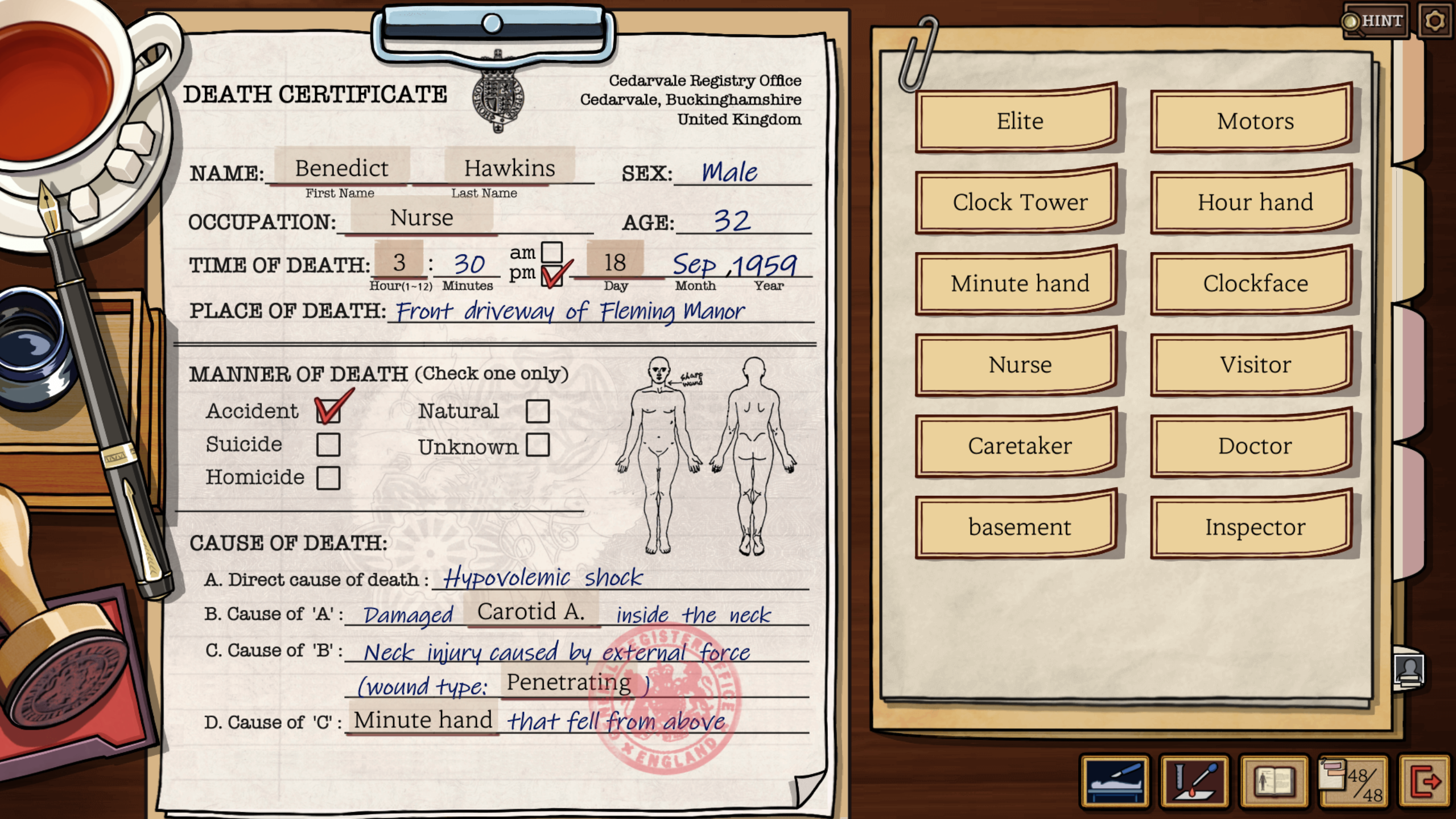
Like the player, it is the protagonist’s first day on the job in the fictitious town of Cedarville. The long-standing coroner has retired, and you have been chosen. After a quick introduction from the police inspector, you are thrusted into your first crime scene. Learning on the job is not too dissimilar to policing in real life, so at least that is realistic! However, unlike real life, there are shining spots that guide you to finding the evidence. Everything found at the scene weaves into the story. While it might not seem relevant at first, its relevance becomes apparent when completing the death certificate.
When finding evidence, the player is invited to click on the word (only when underlined in red). This allows the player to hold onto this evidence to help complete the death certificate. A perfect example of this is in the above photograph. Here, it can be seen where the evidence (words) has been taken from the scene and inserted into the correct highlighted space. It is not always apparent as to what is going to be evidence. As the player also has to make reference to time of death and dates, which are not collectable like the words. This is manually inputted by the player. Therefore, they have to keep a keen eye to ensure that that piece of evidence is not missed.
All We Want Is The Facts!
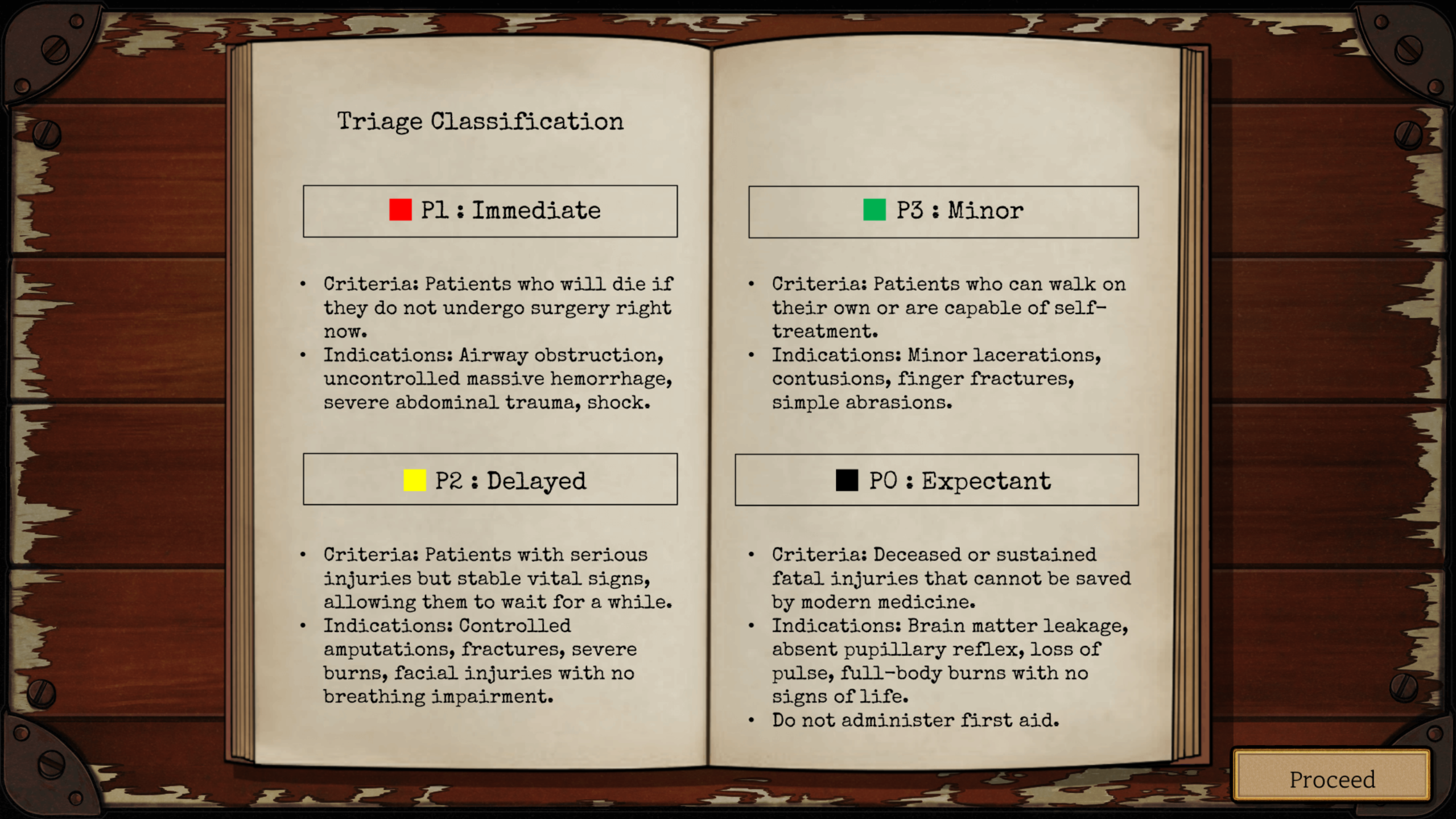
To help understand the scene, the player will make use of their medical dictionary. This is your trusty companion, as it holds everything you need to know to understand how the death happened and what the cause of death is. The medical dictionary holds information that is relevant to that specific episode. Making it easier to understand and pick apart the manner and cause of death. I will not sit here and pretend that I know if the medical dictionary is scientifically correct. However, in terms of the game and finding out what has happened, it does its job well.
Thankfully, Death at Fleming Manor is not overly difficult. If the player is struggling, they can be given hints about certain aspects. This cannot be the case for every piece of evidence the player is struggling with. But it seems that SUPERTHUMb have chosen specific evidence that they believe the player may struggle with. They are not given the answer immediately; rather, they use a hint system before eventually revealing the answer if the player cannot solve it.
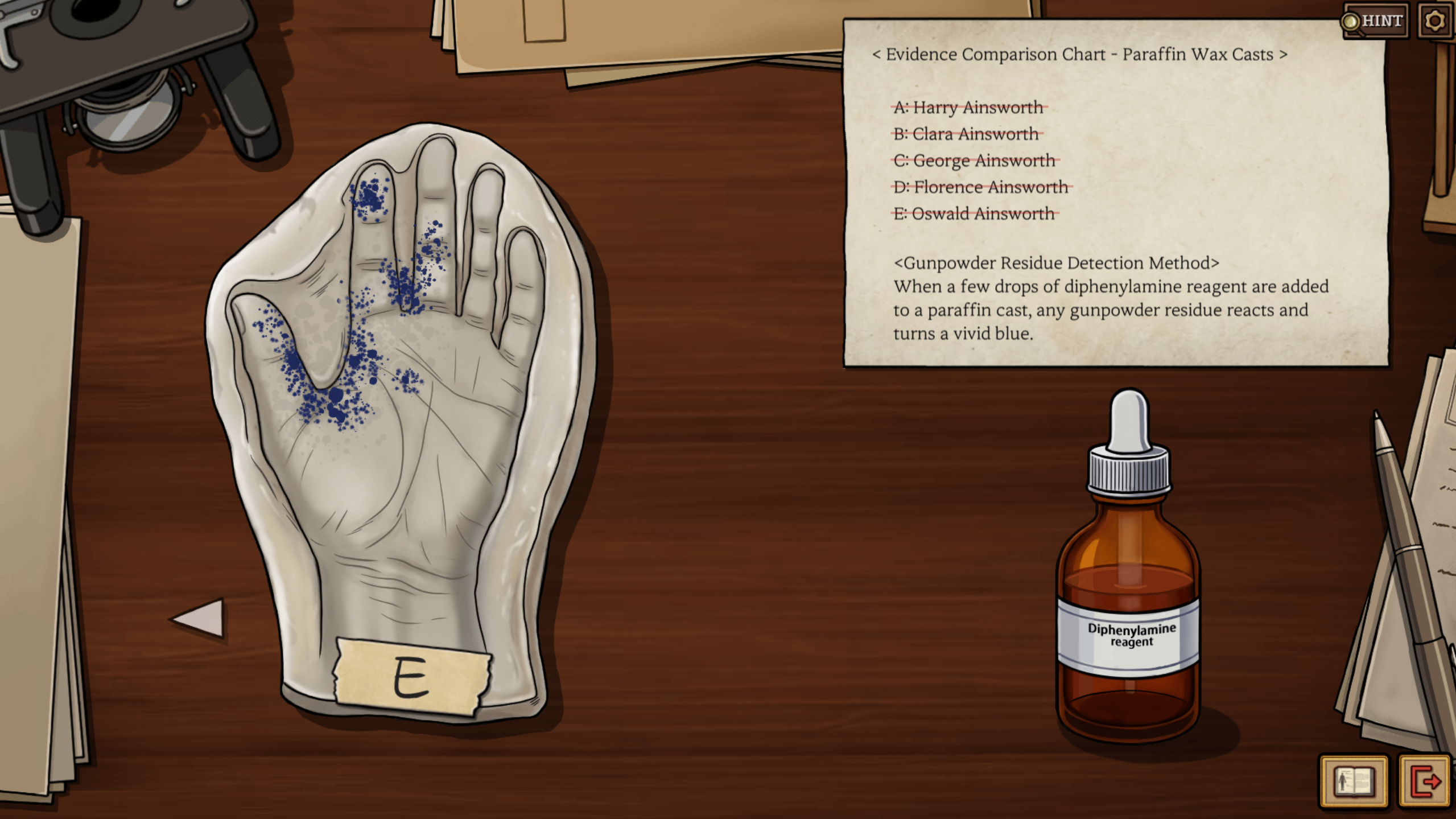
There is more to Death at Fleming Manor than just filling in the blanks. There are scientific experiments that you need to do as the coroner to understand the cause and manner of death. Firstly, there is Avery, who helps you complete the post-mortem. Here, he will give you an understanding of the time of death through the body’s stomach contents or lack thereof. Then there is blood analysis, comparing blood from the victim/suspect with evidence. Or, as shown in the above image, testing for gunpowder residue. All of these different methods will help to determine what has happened.
Graphics & Audio
One of the things that Death at Fleming Manor prides itself on is its art style. It is inspired by the 1960s European detective comics and the Ligne claire drawing style. This is a style of art which was pioneered by the creator of ‘The Adventures of Tintin’, which, when I compare, I definitely see. These were hand-drawn for the game, and the process of this can actually be seen on the developer’s YouTube channel. In all honesty, the art style is one of the best things about this game. It brings the game together, and I couldn’t think of a better art style to use for this type of mystery-driven game. Further to this, choosing the backdrop of a British country manor was also a great choice. It creates the best atmosphere for this type of game. Bringing you back to the likes of Agatha Christie mysteries.
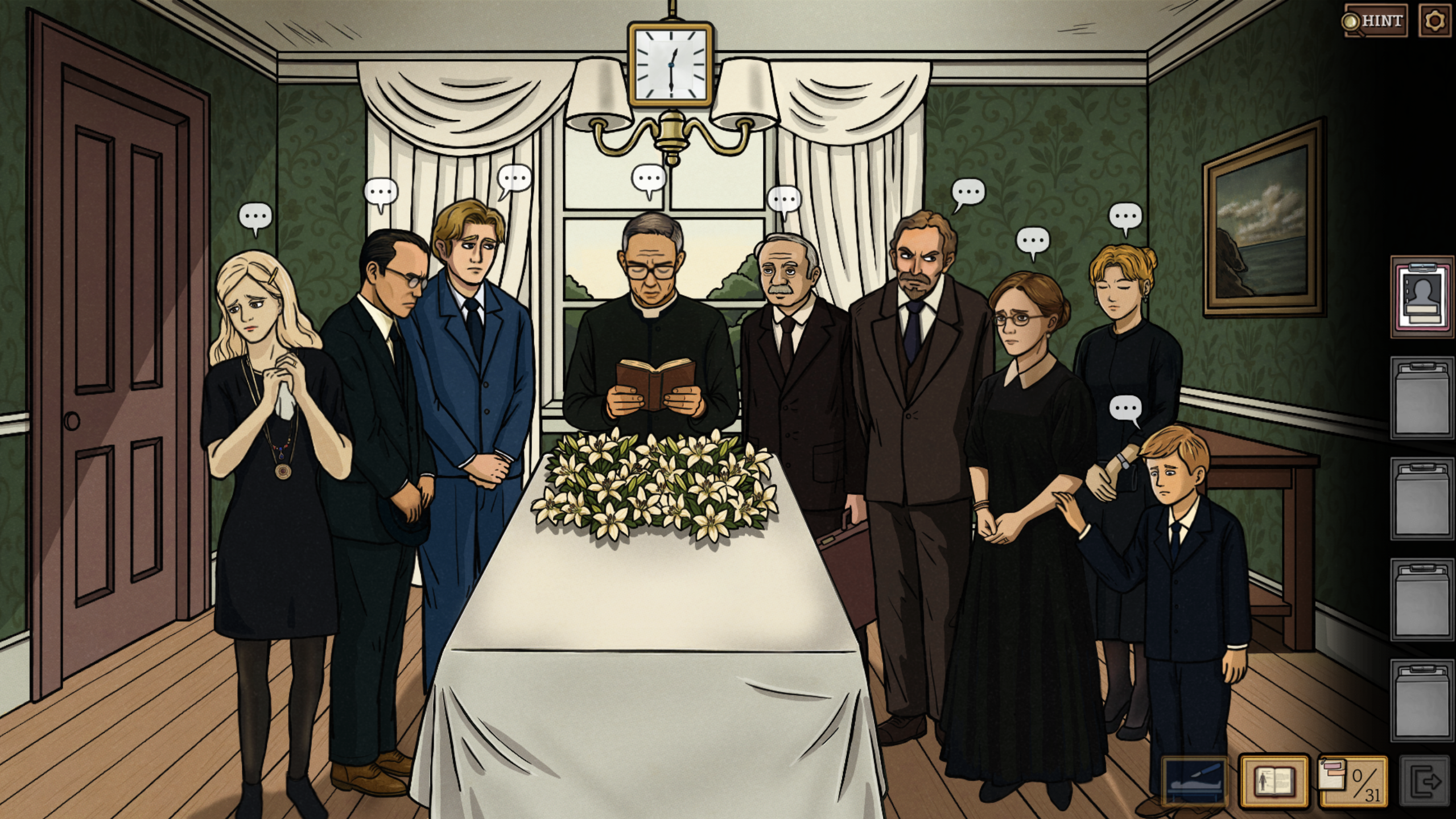
The crime scenes themselves are also great. Showing the player a snapshot of how the person is impaled (such as the scene in chapter 2) or a family feud which ends in a bust-up. These small snapshots, I think, are better suited than playing out a whole scene. It makes it more impactful. I’ve never been a person to write too much in my reviews regarding the audio, and this will be no different. However, I will say that the audio does help add to the overall atmosphere that is trying to be created. It is not out of place, and it helps to add to the scene that is being built.
Longevity
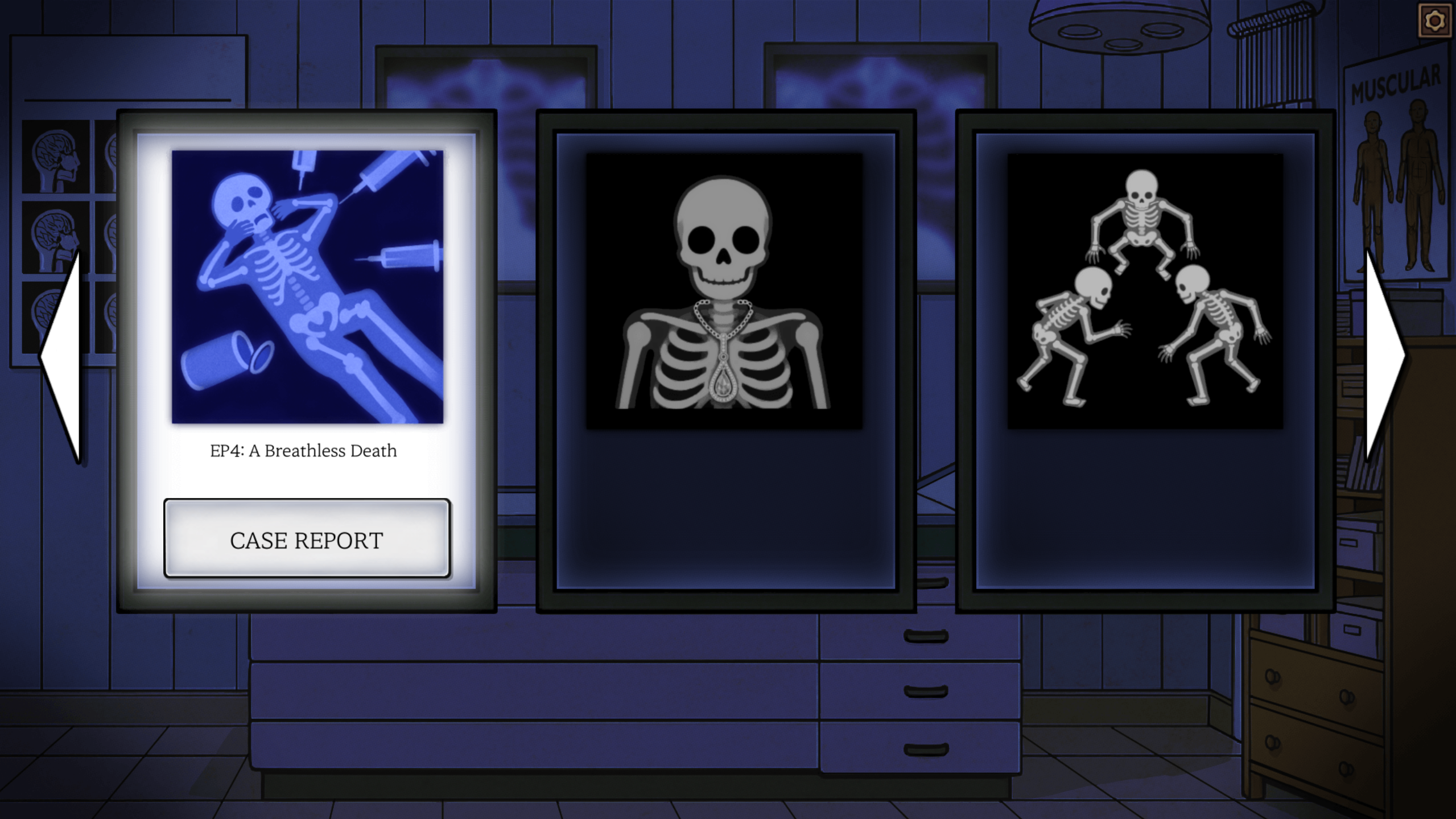
Death at Fleming Manor features 12 chapters, with the latter three being shorter in comparison to the other 9. It explores the background of its main characters well, which in turn means that the chapters run longer as it shows previous history. According to Steam, it took me approximately 7 and a half hours to finish the game. When we compare it to the price, I think it is a decent amount of gameplay. I could always go back to the last chapter as well, considering that there are 4 different endings. However, it does not offer any replayability. You would be completing the same deaths. However, as I have stated already, I do think the game has plenty to offer in the 7 and a half hours it took me to complete the game.
Final Thoughts
I really enjoyed my time with Death at Fleming Manor. It was the first time in a long time I have been keen to get onto a game to actually finish the story. I was honestly shocked by the ending, which I will not give any spoilers for (as asked by SUPERTHUMb). But I do implore you to give the game a go yourselves and uncover the mystery behind Fleming Manor and all its deaths. Taking into account the fun I have had with this game.
I will be awarding Death at Fleming Manor with the Thumb Culture Platinum Award.

Disclaimer: A code was received in order to write this review.

YouTube | Facebook | Twitter | Instagram | Discord | Podcast
About Author
