
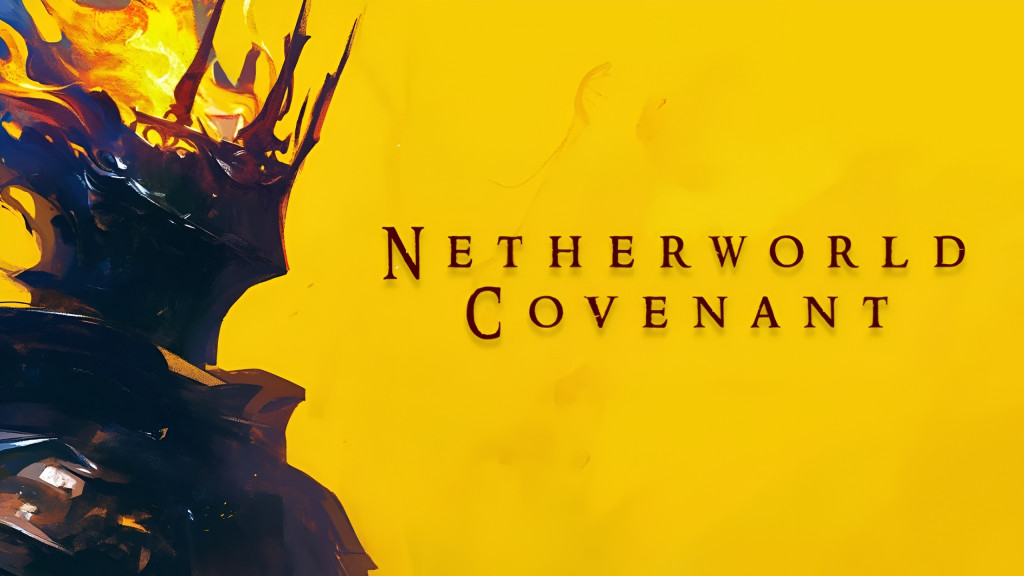
Netherworld Covenant (out now on Steam, and Epic) opens with a confident splash of crimson and black, silver armour catching the light as fallen warriors rise once more. Developed by MadGoat Game Studio and published by Infini Fun alongside CriticalLeap, Netherworld Covenant very clearly wants to sit in the uncomfortable space between roguelike repetition and Soulslike severity.
The premise lands hard. You rise from death to avenge fallen comrades, only to find chaos has warped them beyond recognition. Victory doesn’t free them; their spirits bind to you, granting spectral abilities that shape every run. It’s a striking hook, but it also sets the tone early. Netherworld Covenant doesn’t ease you in. It demands pace, punishes hesitation, and makes the consequences clear. From the opening cutscene, the message is blunt: you’re here to suffer, adapt, and return sharper.
Netherworld Covenant – Resurrection has terms
Before we dig deeper, I’m curious. What drew you to Netherworld Covenant in the first place? Was it the Soulslike promise, the roguelike structure, or the idea of fighting alongside the ghosts of your former allies? Let us know in the comments how your first run went, triumphant or tragic.
Gameplay
Netherworld Covenant is built around deliberate repetition. Each run feeds into the next through Black Stones, and Legion Relics, currencies used in a central hub to unlock upgrades, classes, weapons, and long-term progression. This hub area is one of the game’s strongest design choices. Even failed runs feel purposeful, and progress is always visible, which goes a long way towards making the difficulty feel earned rather than punishing.
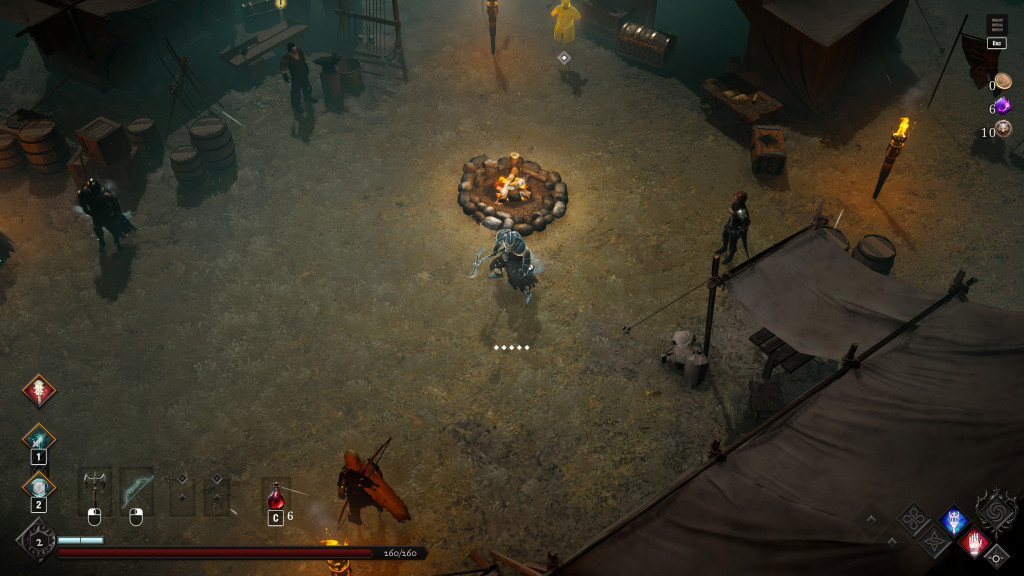
Combat itself is slow, measured, and unforgiving. Dodging requires precise timing, attacks fully commit you, and success often comes from knowing when not to act. There’s an evident Soulslike influence here, but layered over a roguelike structure reminiscent of Hades, with relics, aura bonuses at the start of each run, and incremental stat boosts earned room by room. The difficulty selection feels oddly placed. On lower settings, especially once you’ve invested heavily in upgrades, the careful rhythm of combat collapses into something far less satisfying. Normal mode turns encounters into a strange, almost comedic exercise in waiting and firing, particularly given the slow movement and deliberate animations. Netherworld Covenant benefits from resistance. Keeping the difficulty slightly higher than comfortable preserves the intended flow, roll, charge, strike, retreat, repeat. Normal mode undermines that identity rather than expanding accessibility.
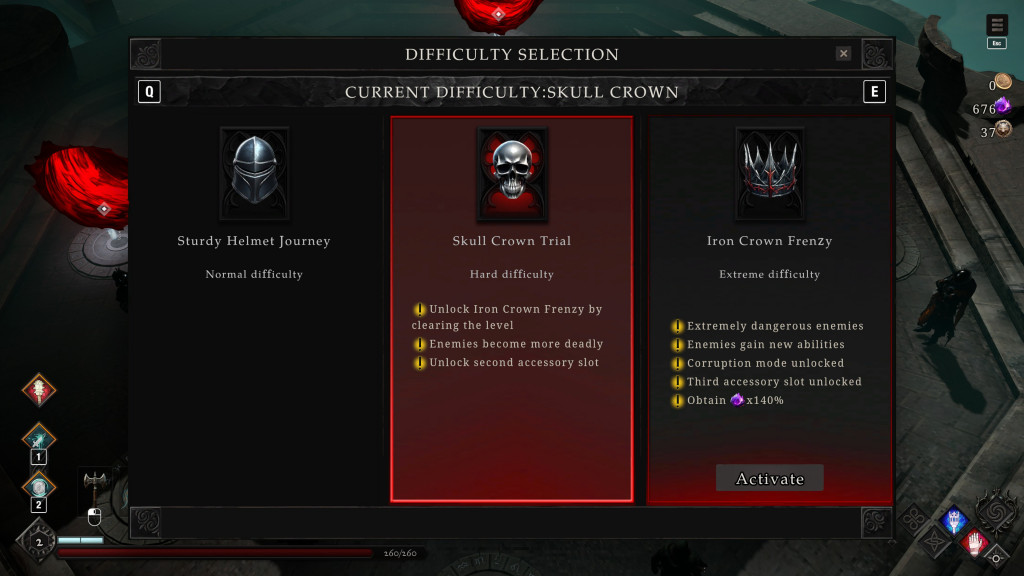
Class variety keeps interest alive throughout runs, with Mage and Berserker available early on and more classes unlocking over time. Some builds feel genuinely powerful once the relic strategy clicks, and upgrades enhance your strength without making experiences trivial. However, balance isn’t perfect. The bow feels nearly overpowered, enabling safe charging, high damage, and quick retreats. Several fights can be won through patience rather than skill, which contrasts with the game’s otherwise demanding combat. There are minor frustrations, too. Relic rooms force item swaps, even if it means losing something valuable. While relic upgrades carry over after swapping, Black Stone purchases are permanent and non-refundable, making early experimentation riskier than it needs to be. Furthermore, occasional controller issues, where the game won’t switch back to gamepad input after using the keyboard, don’t help the overall experience.
Graphics and Audio
Netherworld Covenant has a look that initially feels more dramatic than it actually is. The opening and closing cutscenes lean hard into reds, blacks, and shining silver armour. Once you’re actually playing, things settle into something far greyer. Most of the game takes place in crumbling stone castles and worn corridors, broken up by flickers of regular and purple fire, the odd splash of sickly green, patches of dying brown grass, and the occasional brightly coloured icon screaming for your attention mid-fight.
The visual hook comes from the contrast. Fully 3D characters move through pixel-art environments, which gives everything a slightly diorama-like feel. Character designs and enemy silhouettes are clear and readable, which matters in a game this precise, and the Corrupted Beings have enough presence to feel like former allies rather than just another health bar. It’s effective, even if the sameness of the environments becomes apparent after a few runs. Unfortunately, there is no way to fight your fallen foes again. It’s a one-time thing and only the monster after that, which is a shame because they were in a new environment.
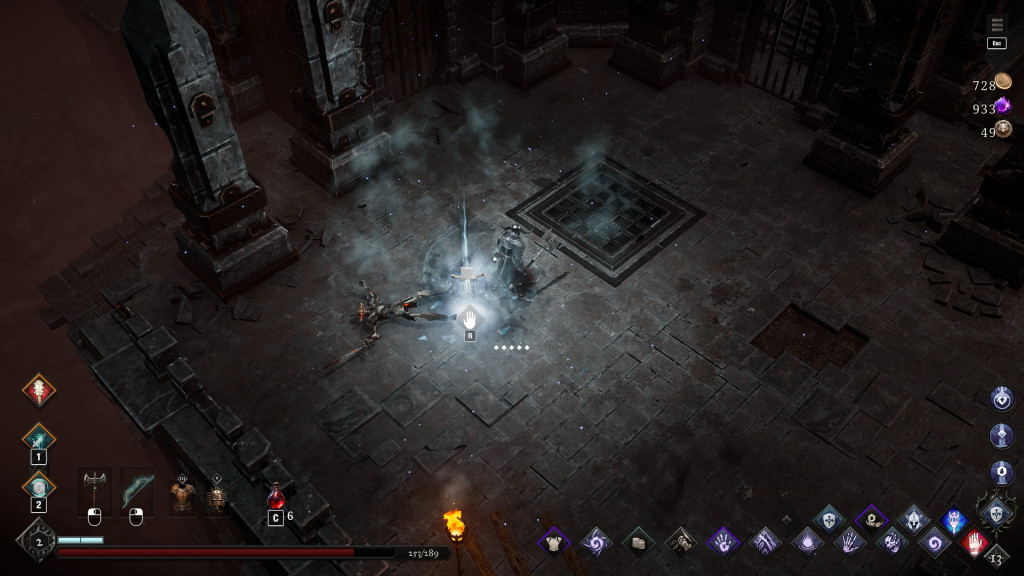
Restricting you from doing something different adds to the monotony of the game. Most runs blur together visually, with the same castle rooms appearing again and again, sometimes within the same run. There are a few shifts into desert ruins, and some memorable areas such as the dockside pirate area. Then we have interesting enemies of crystal golems and Cthulhu-adjacent horrors, but that stretch stands out mainly because so little else does. When one map becomes your favourite simply because it’s different, that’s telling.
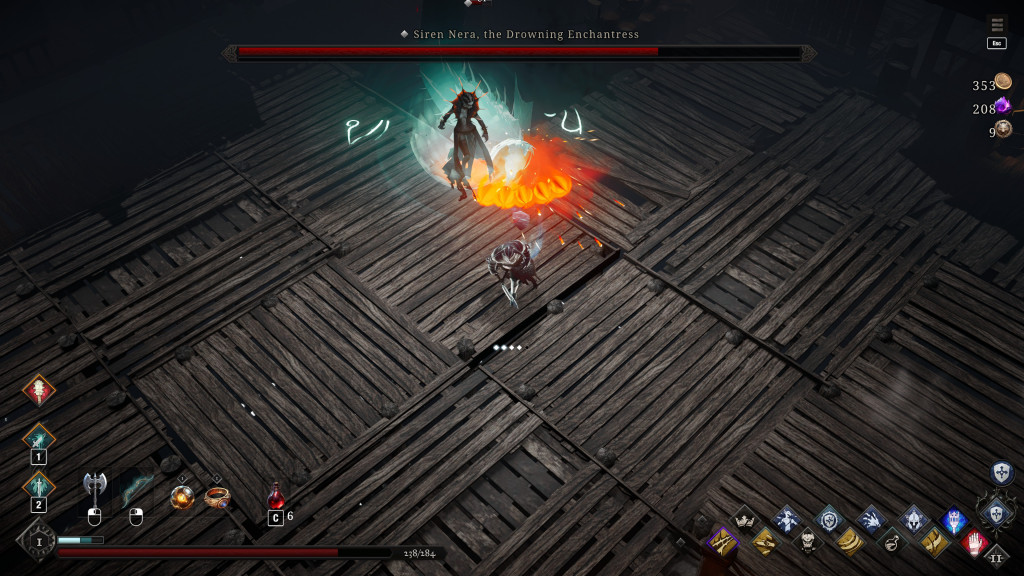
The experience falters further due to the audio. Sound effects are extremely quiet by default, to the point where combat feedback is easy to miss. There is music, but just barely, relying on eerie, drawn-out violin stings that drift in and out like they’re not entirely sure they’re welcome. Most of the time, you will hear only ambient sounds like wind, fire crackling, and the occasional thunderclap or shattering-shield effect, startling because they are sudden. Some bosses feature voice lines, but these lack subtitles, which feels like an oversight in an otherwise text-heavy game. Speaking of text, dialogue scrolls painfully slowly, though thankfully, you can skip ahead instantly with a button press.
Longevity
Netherworld Covenant is less about playtime and more about tolerance. There are six bosses in total, with a couple feeling uncomfortably similar, and progression is driven by unlocks rather than narrative momentum. New armour sets, blueprints, weapons, and journal entries provide goals.
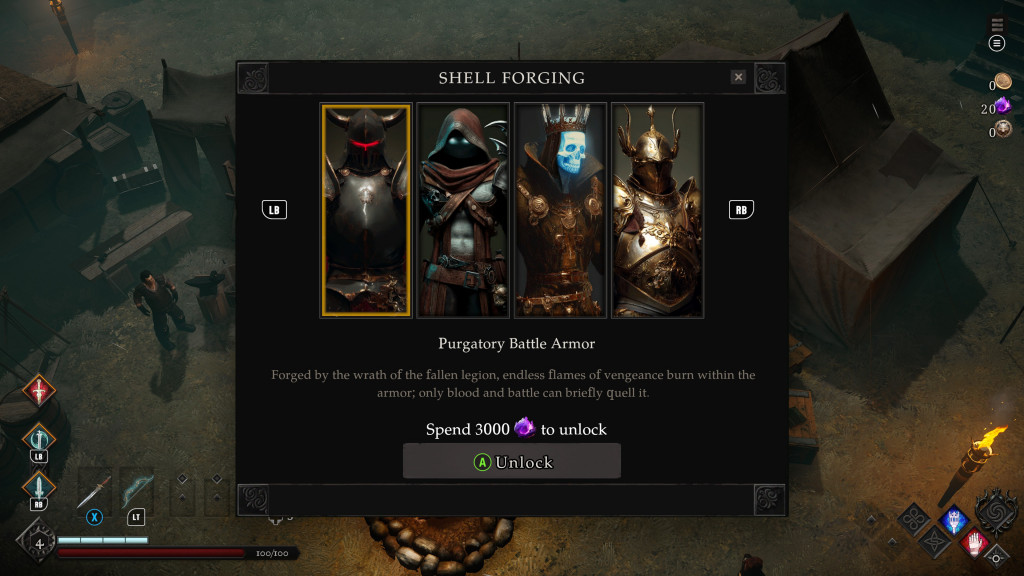
Completing the game unlocks Chaos mode and Boss Rush. Ironically, Boss Rush is often the easier option, making it an efficient, if slightly hollow, way to farm currency. Chaos mode is just a regular run, but enemy types will appear at different stages, not in order.
Final Thoughts
Netherworld Covenant is a game with clear intent and uneven execution. When its systems align, particularly in higher-difficulty combat, it delivers a tense, satisfying rhythm that rewards patience and learning. When they don’t, repetition, audio issues, and balance problems chip away at that momentum.
Netherworld Covenant does not hold your hand, nor always respects your time, but it does offer moments of genuine strength and identity. Upgrades make you feel powerful without breaking the world entirely, and its visual style commits fully to its bleak fantasy. With refinement, particularly in sound design, map variety, and balance, Netherworld Covenant could stand taller among its inspirations.
Thumb Culture Silver Award

Disclaimer: A code was received to write this review.
If you enjoyed this review, why not check out another soulslike review by Jose, but this time it’s a card game called Death Howl
YouTube | Facebook | Twitter | Instagram | Discord | Podcast
About Author
