
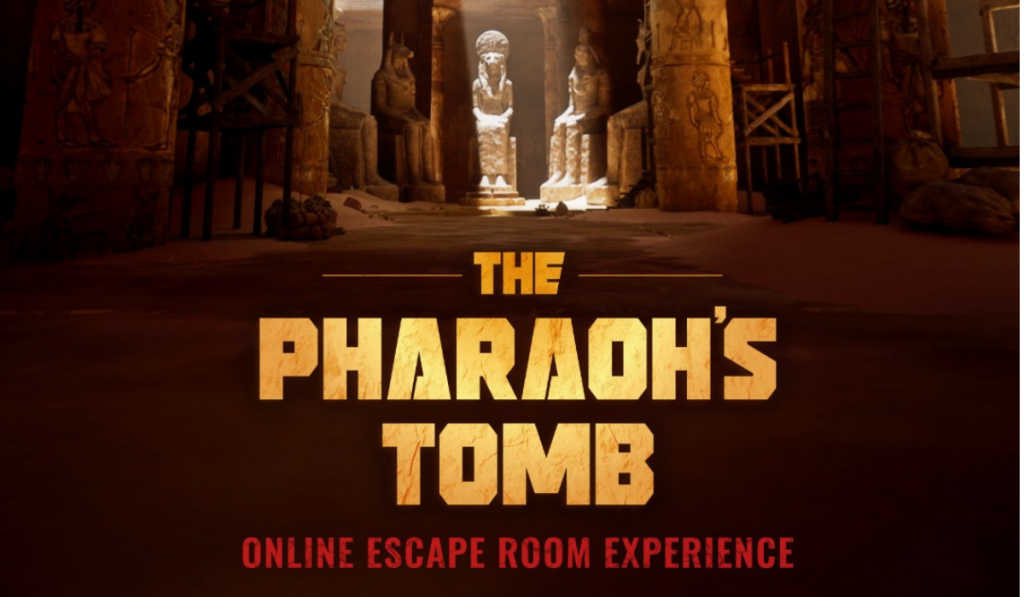
Wolf Escape Games has made a habit of dropping players into strange situations and calmly asking them to think their way out, and with The Pharaoh’s Tomb, the studio dives headfirst into ancient mystery. This is the fourth escape game in their catalogue, and having reviewed both Hallows Hill and Phantom’s Hour it feels like a confident step forward rather than a simple repeat of past ideas. Swapping modern locations for dusty ruins and long-forgotten secrets, the game invites you to step into a cinematic puzzle adventure inspired by classic archaeological tales and golden-age detective fiction.
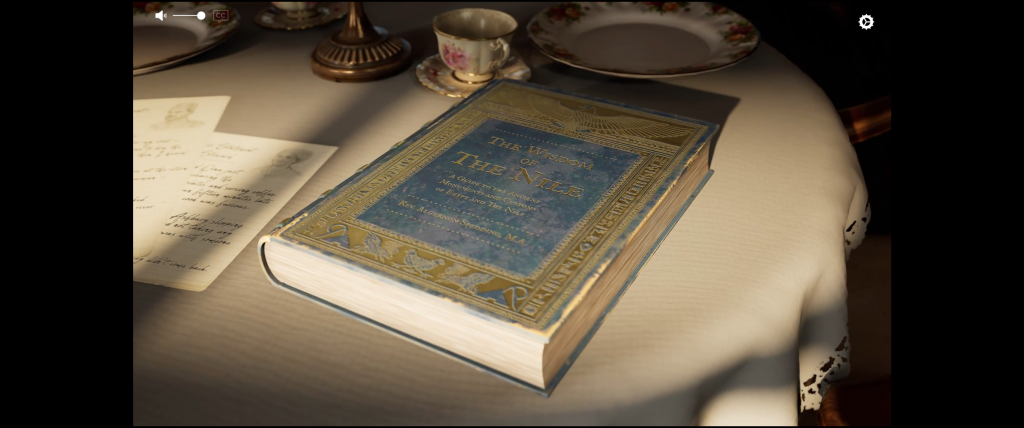
Set in Cairo, 1901, you play as Sherlock and Watson, and the setup is immediately enticing. A priceless artefact has vanished, a lost heiress, clues point to Egypt, and an ancient tomb hides answers best left undisturbed. From the moment the story begins, the game leans heavily into atmosphere and narrative, giving players a clear sense of purpose beyond “solve puzzles to escape.” Instead, you’re uncovering a mystery, piece by piece, with every solved riddle pulling you deeper into the sands of history.
Cursed With Great Style
Designed for solo play or groups of up to six, The Pharaoh’s Tomb is clearly aimed at social gaming. A host is required to share their browser screen and operate the mouse for interaction, while the others use their phones/tablets to view clues within their inventory via a QR code/room code. Whether you’re shouting ideas across a sofa or talking over a video call, the experience thrives on shared moments of discovery, confusion, and sudden collective genius. That said, how did the TC Crew do?
Gameplay
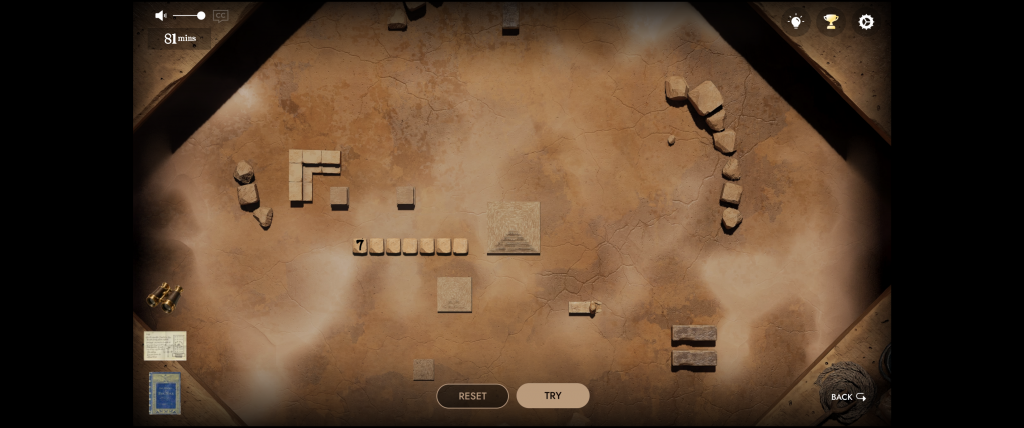
At its core, The Pharaoh’s Tomb sticks to classic escape room principles, but it presents them in a polished and confident way. You explore environments, click through scenes, inspect objects, collect clues, and slowly work out how everything fits together. Nothing here feels rushed, and the pacing allows players to really settle into the experience rather than feeling pressured by artificial timers.
The puzzles are where the game truly shines. There’s an impressive variety on display, ranging from visual pattern recognition and logic challenges to riddles that require lateral thinking and careful observation. Some puzzles are quick wins that boost confidence, while others ask you to stop, talk things through, and re-examine clues you thought you understood. Importantly, the game avoids relying too heavily on any single puzzle type, keeping things fresh throughout. We certainly each had our own Eureka! moments while taking part.
One of the smartest design choices is the shared inventory system. Items and clues collected by any player are accessible to everyone, removing the frustration of one person holding the solution hostage without realising it. This encourages communication and collaboration rather than competition, making it ideal for mixed-experience groups where some players may be newer to escape games.
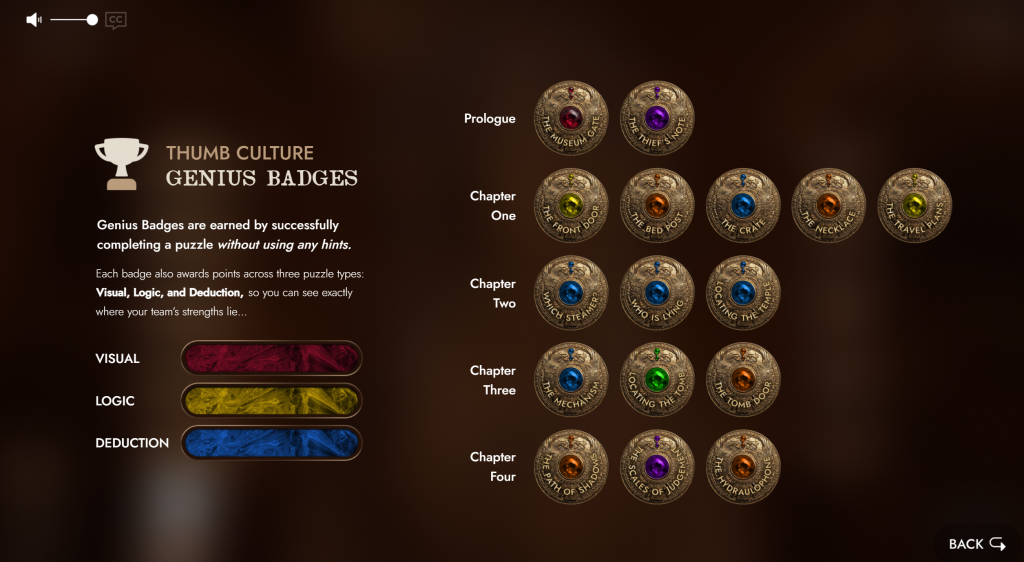
Hints are available if you need them, but the game never pushes you toward using them. Instead, it quietly lets you struggle just enough to make solving a puzzle feel genuinely rewarding. For those who enjoy a challenge, completing sections without hints adds an extra layer of satisfaction and bragging rights once the tomb finally opens its secrets.
Graphics & Audio
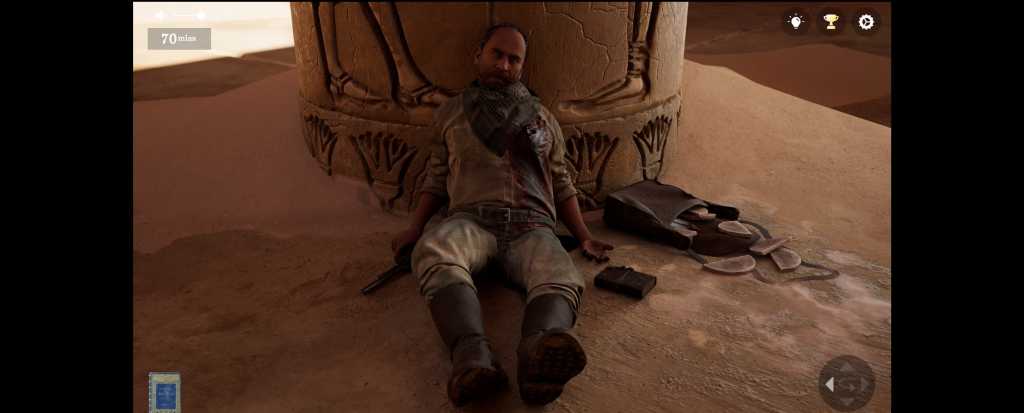
Visually, The Pharaoh’s Tomb punches well above what you might expect from a browser-based escape game. The environments are rich with detail, from shadowy corridors and ancient carvings to carefully lit chambers filled with objects that feel deliberately placed rather than randomly scattered. Every scene feels handcrafted, with visual clues naturally embedded into the surroundings instead of awkwardly highlighted.
The art style walks a nice line between realism and illustration. It’s detailed enough to feel immersive but stylised enough to maintain clarity, which is essential when puzzles depend on noticing small details. Nothing feels cluttered, and the camera work guides your attention without holding your hand.
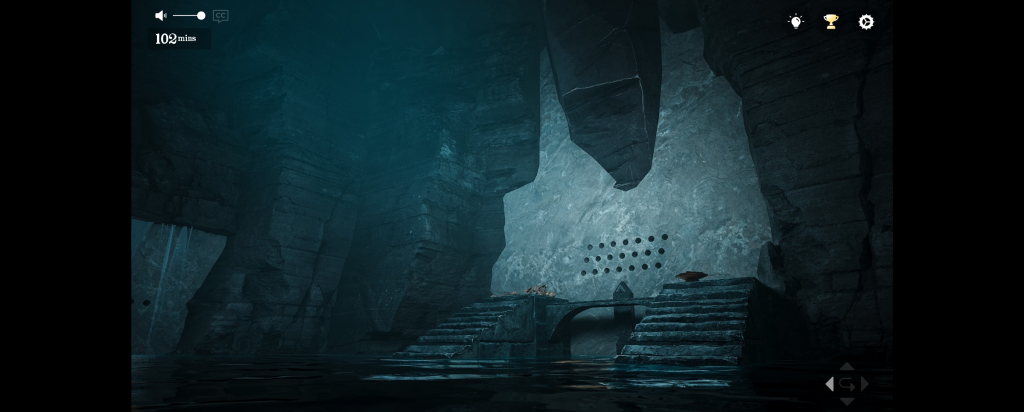
Audio design deserves special praise. The soundtrack subtly shifts depending on what’s happening, creating tension during tougher puzzles and easing off during exploration. Ambient sounds such as distant echoes and faint environmental noises help sell the illusion that you’re deep inside a forgotten place. It all works together to pull players in, making it surprisingly easy to forget you’re sitting at a laptop rather than standing in a tomb with centuries of secrets pressing in around you.
Longevity
As with most escape room experiences, The Pharaoh’s Tomb is not designed for endless replayability in the traditional sense. Once you’ve solved the puzzles and uncovered the story, you’ll know the solutions. However, that doesn’t mean the game lacks staying power.
Replay value comes from how the game can be experienced differently depending on who you play with. Group dynamics change everything; what feels obvious to one player might completely stump another, and seeing different people have their “aha” moments can make a second run surprisingly enjoyable. There’s also satisfaction in replaying the game with fewer hints, aiming for a cleaner, sharper solve.
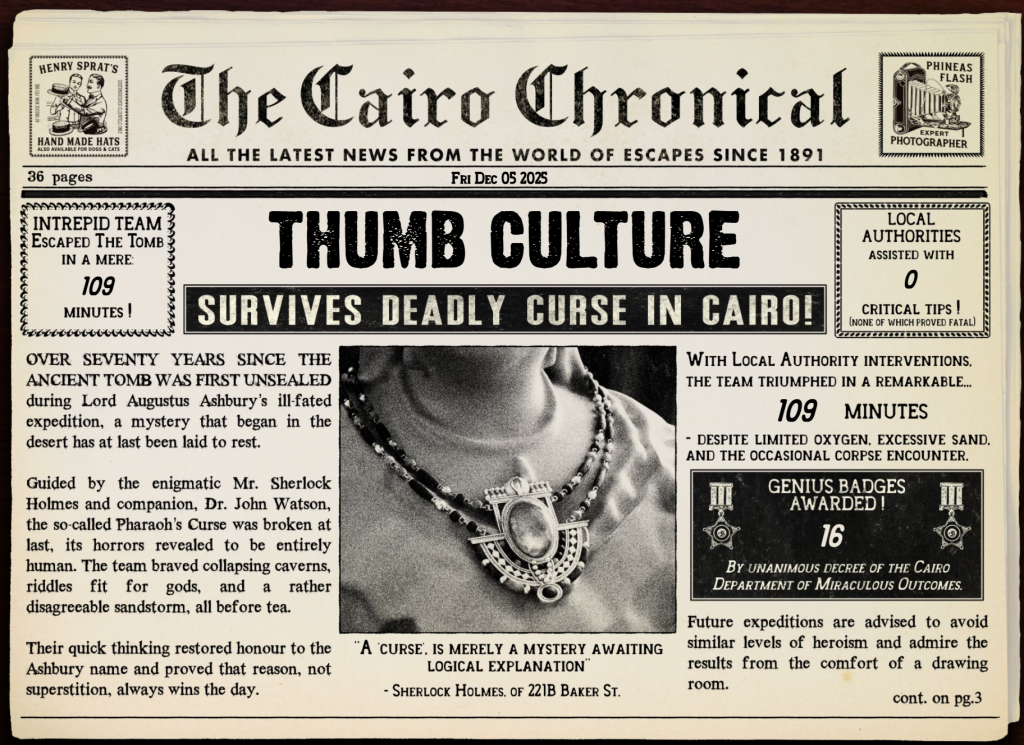
The game’s length strikes a comfortable balance. At around 150 minutes (We got out at 109), it’s long enough to feel substantial but not so long that fatigue sets in. This makes it ideal for an evening session, a virtual get-together, or a weekend puzzle night. And for players new to Wolf Escape Games, The Pharaoh’s Tomb acts as a strong gateway into the studio’s wider collection.
Final Thoughts
The Pharaoh’s Tomb feels like a confident evolution for Wolf Escape Games. It takes everything the studio has learned from its previous titles and refines it into a smoother, more immersive experience. Strong puzzle design, thoughtful cooperative features, and a compelling narrative combine to create an escape room that’s as enjoyable to discuss as it is to play.
What really sets the game apart is its atmosphere. The sense of place is strong, the story gives meaning to every challenge, and the presentation elevates the experience beyond a simple collection of puzzles. It respects the player’s intelligence, rewards teamwork, and never forgets that escape games should be fun first and foremost.
If you enjoy mysteries, puzzle-solving, or simply spending time collaborating with friends on something a little different, The Pharaoh’s Tomb is well worth stepping into. Just don’t be surprised if you find yourself eyeing the walls a little more carefully afterwards, ancient secrets have a habit of lingering.
The Pharaoh’s Tomb receives the Thumb Culture Platinum Award!

Disclaimer: A code was received in order to write this review.
YouTube | Facebook | Twitter | Instagram | Discord | Podcast
About Author
