
Back in 1993, The 7th Guest was a massive deal. I was only 13 years old, and it felt completely groundbreaking. At the time, seeing real video footage of actors overlayed right on top of those drawn graphical backgrounds was mind-blowing; nobody had ever seen a hybrid mixture like that before. Because it was such a product of its time, I was honestly really unsure how The 7th Guest would come across in a modern remake.
Old man Stauf built a house…
It’s tough to capture that lightning in a bottle twice, especially when the original relied so heavily on tech that was considered black magic back then. But stepping back into this world on PC, I was pleasantly surprised.
Gameplay
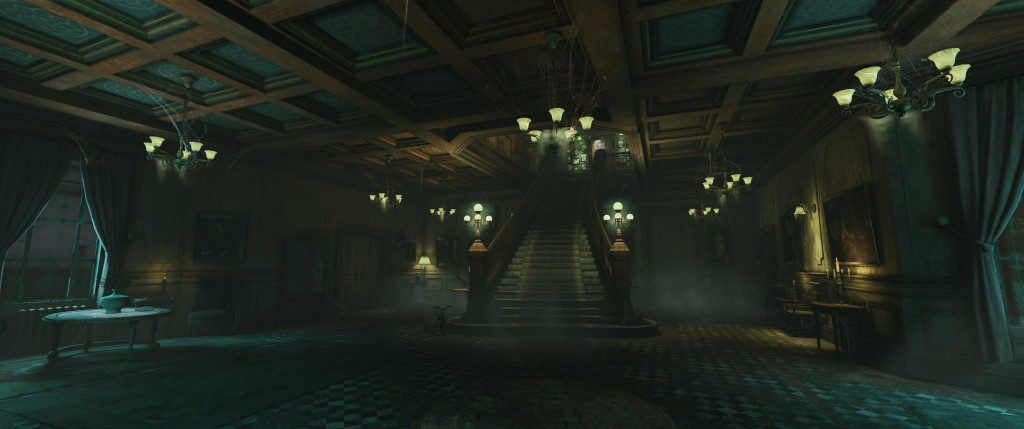
The core setup puts you back in the shoes of an unnamed spirit wandering the dark, forgotten halls of an eccentric toymaker named Henry Stauf. Years after a bizarre tragedy took place at his mansion, you are there to piece together what happened during a fateful night when six wealthy guests were invited for a party, only to find themselves trapped in a sick game. Each room in the house tells a piece of the story, showing you the drama, greed, and dark bargains that unfolded between the guests.
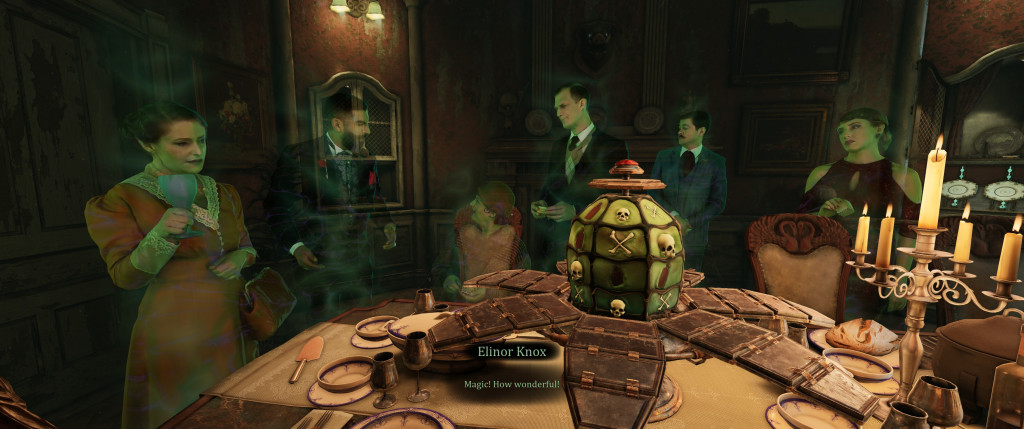
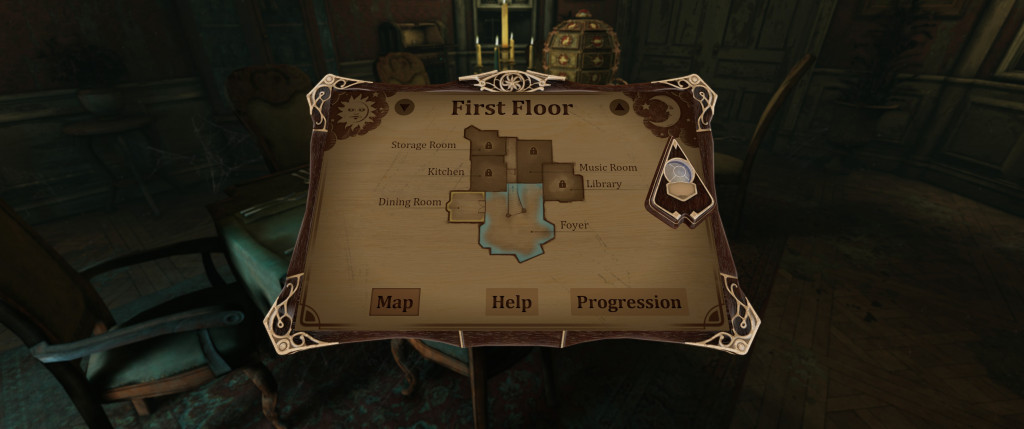
To unlock these rooms and uncover the mystery, you have to tackle Stauf’s twisted puzzles. They aren’t your typical modern video game puzzles where you just look for a hidden key; they are classic, brain-bending logic and spatial riddles. You’ll find yourself manipulating ornate chess pieces, sliding blocks, mapping out paths, and solving clever wordplays built right into the environment.
Ghostly Immersion
The way you play through these challenges is where the biggest and best changes happen compared to the 1993 original. Back then, you were totally locked down. You clicked your mouse, and the game just teleported you from place to place, node to node, facing one specific direction. In the remake, that’s completely gone. You have total freedom to move around within each space and room naturally.

As a massive fan of the original 7th Guest, I absolutely loved the nods back to the past puzzles from the 1993 game. The developers did a fantastic job of keeping those memories alive while still mixing in brand-new puzzles to solve. It kept me just as intrigued as I was when I was 13, trying to figure out the mansion’s secrets all over again.

Graphics & Audio
Visually, the game looks great, but there was one major hurdle for me: the voice of Henry Stauf. When I first started playing, I didn’t feel that the new voice actor was initially as creepy as the original. The 1993 Stauf had a specific kind of unsettling dread to his delivery that really stuck with me, and the new one takes some getting used to.
Freedom
However, the graphics make up for it with how they handle the ghosts. Because you can freely walk around, the immersion goes through the roof. I know there is a VR version of this remake available, but I no longer own a VR headset, so I played this straight on my PC monitor. Even without the headset, the way the game plays makes it obvious how highly immersive it would be in virtual reality. When the ghostly characters appear within the room, the fact that you aren’t stuck in one spot and can actually move right around them is brilliant. I can only imagine that in VR, with that depth, the ability to walk around these apparitions as they play out their scenes must be quite haunting.
![A dimly lit wooden dock with a green, vintage lantern hanging. Text overlay reads "Press and hold [button] to use lantern," creating a mysterious mood.](https://www.thumbculture.co.uk/wp-content/uploads/2026/06/20260611204718_1-1024x429.jpg)
Longevity
Walking through the mansion without the clunky loading or jarring jumps of the 90s version makes the whole experience feel smooth and engaging. The puzzles are clever enough to keep your brain ticking, and because the old puzzles have been reworked alongside the new ones, you don’t get that bored feeling of “oh, I already know the answer to this.” It feels like a full, complete game that respects your time while giving you a healthy dose of challenge.
Final Thoughts
Overall, The 7th Guest Remake handles its transition to modern PCs incredibly well. Even though I was sceptical about how they would replicate the visual magic of the original, and even if the new Stauf didn’t hit as creepy for me at the start, the gameplay changes win you over. Being able to freely explore the rooms, rather than being teleported by a mouse click, completely changes the vibe for the better. It’s a wonderful trip down memory lane that stands on its own two feet, and it proved to my 13-year-old self that Stauf’s mansion still has plenty of secrets left to tell.
I give The 7th Guest Remake the Thumb Culture Gold Award!!

Disclaimer: A code was received in order to write this review.
YouTube | Facebook | Twitter | Instagram | Discord | Podcast
About Author
