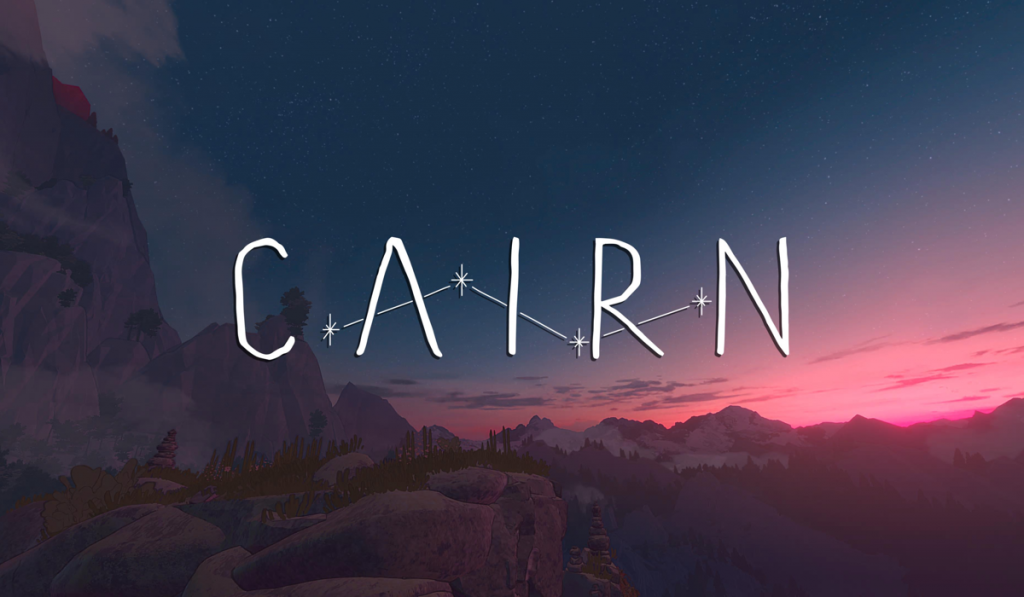
What’s this? Back-to-back reviews of games I did back-to-back previews of last year? That’s continuity, folks. This time I’m playing Cairn, the latest game from The Game Bakers; a small French studio — just 17 full-time members working remotely around the world — responsible for Furi and Haven. It’s clear these guys have some serious range. Speaking of, Cairn sees protagonist Aava tackling a mountain range, culminating in an attempt to climb the yet unconquered Kami. In order to summit this killer mountain, Aava will need grit, determination, and perseverance… as will I.
Nothing Worth Doing Was Ever Easy
As a realistic climbing/survival simulation, nothing I’ve ever played previously compares to Cairn. Yes, we have games with climbing and stamina mechanics such as A Short Hike and Jusant, but they’re nowhere near as involved or harsh as this. As you guide Aava higher and higher, you’ll need to manage gear, health, stamina, hunger, thirst, and heat.
Aava is clearly in an anti-social mood as she begins her journey, ignoring calls from her manager, Chris, and family. As she makes her way further from home, is she making her way to the top of the mountain, or running from life on the ground?
Gameplay
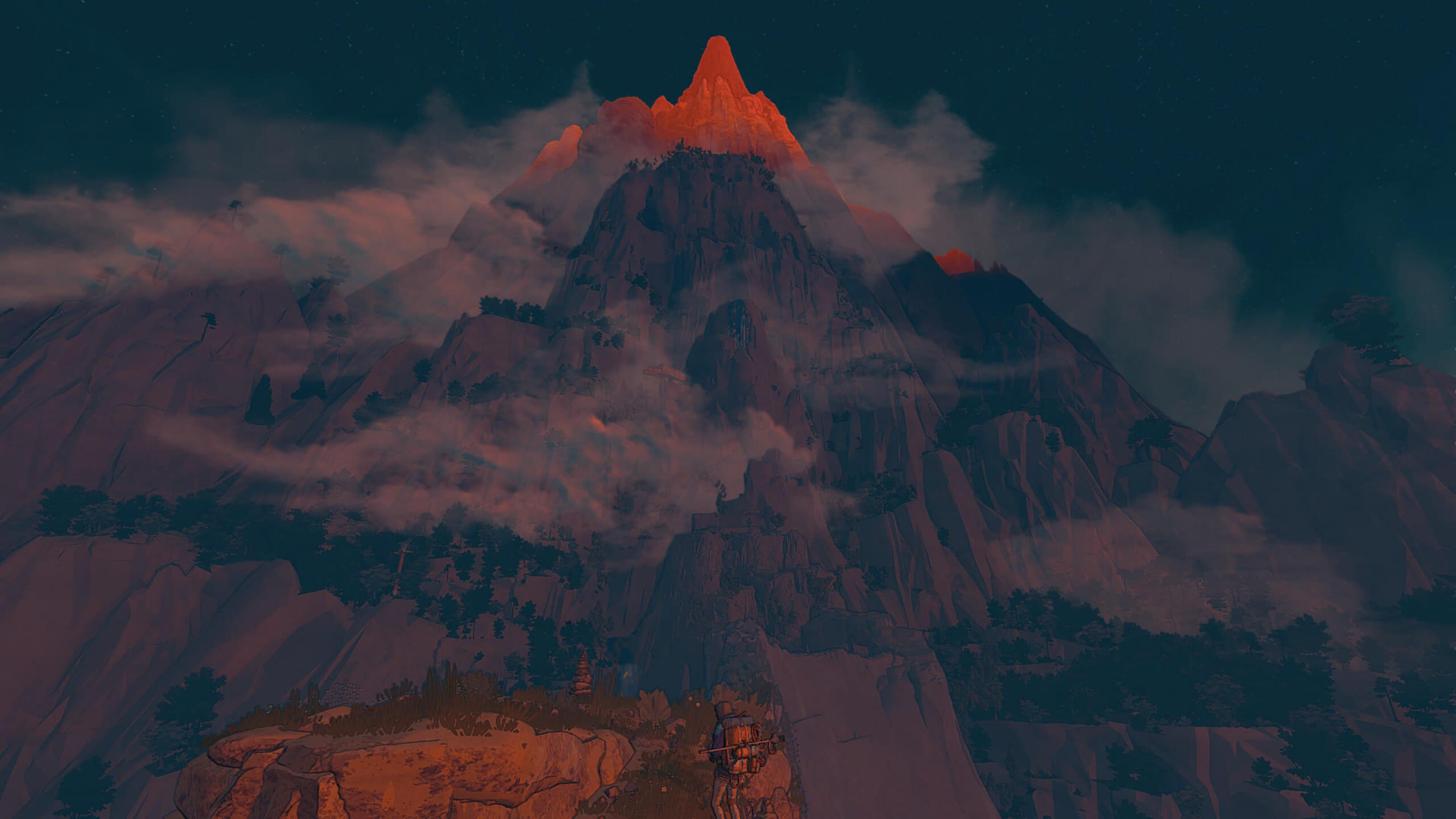
Before you get loose on the actual mountains, you can first test your skills and patience on several training walls. These are set up to increase steadily in difficulty, preparing you for what lies ahead, and above. Thanks to wall 8, my fall count was in double digits before I laid a single hand on stone. Only the first 3 walls are presented as objectives before you can proceed out of the gym and onto warm-up mountain Tenzen. This section of the game featured in the demo, so I was already mostly familiar with this initial climb. Following this section, as Aava walks along a ridge towards Kami, the music swells and the credits roll. Welcome to the game proper.
Without Further Belay
Cairn generally operates a tight, fairly short gameplay loop, beginning and ending at bivouac sites (camping sites for us horizonties). Whilst sheltering and resting in her bivvy, Aava can prepare for the next climb by cooking, consuming or replenishing food and water in her backpack, repair her hands and broken pitons, sleep to regain health, or wait for clearer conditions. Once ready, it’s time to explore, gather resources, and tackle a wall, or walls. Eventually, you’ll reach another plateau or trigger a cutscene and end up at another save-point-camp-site.
It’s a loop that works well, and you can generally see ahead to where you’re aiming for on your next climb, or at least to where the solid ground is to reset your pitons and have a little break. There are times, however, when this is not the case; when the wall ahead seems unsurmountable and there’s no way you’d be able to make it all the way. In many of these case, a cut-scene will likely occur some way up the climb to interrupt. I wish the game was a little more open and honest about what the next climb entails so I could accurately set my expectations and prepare accordingly. Sometimes I needlessly worried or conserved resources and made the experience more frustrating than it needed to be. Though, saying that, it does add to the realism.
Climbing Rocks!
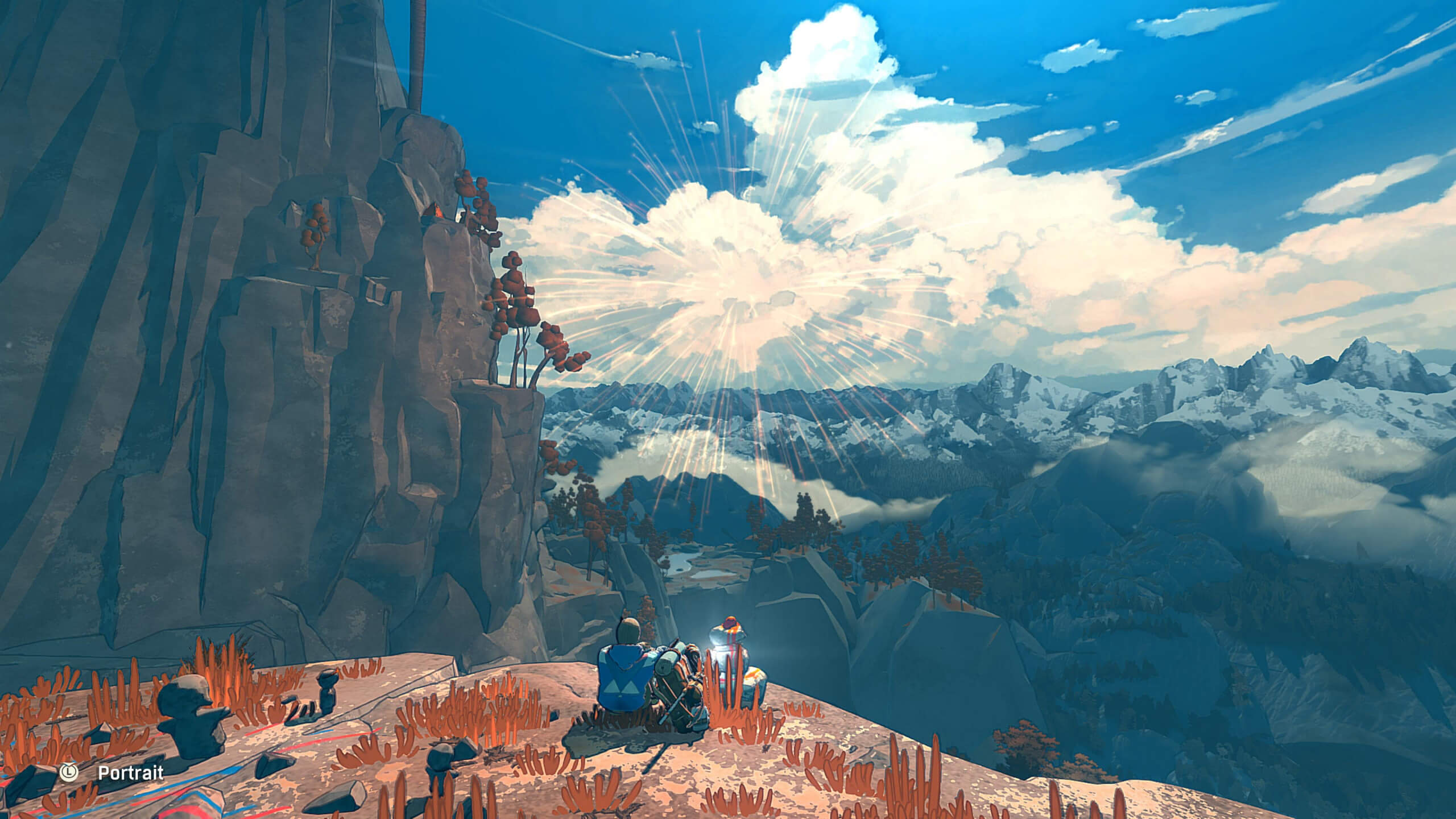
There’s a great deal of freedom offered in the climbing in Cairn. While marketing tag lines have included wording such as “climb anywhere”, there are obviously small caveats to that. The main rock faces and caves are pretty much all configured for climbing, with myriad permutations for which directions you can choose to reach the top. As you get to the outer sides of those faces, though, they tend to become smooth. There are also a couple of ‘funnel’ sections, where you’ll be pushed into a more limited space for a time, joining a common route. That being said, it’s an insane and impressive amount of freedom nonetheless.
As you climb with Aava, you’ll independently take control of each of her limbs and look to place them onto or into good holding spots on the walls. You’ll need to pay attention to Aava’s breathing and how much she’s shaking her limbs, else face the consequences. Her positioning — how far she’s stretching or crouching — will determine how much stamina is used. Unless you find a more comfortable position, it’s a matter of time before she falls. As you progress a climb, the game will auto-select the next limb to reach a different hold. Aava is extremely flexible, and must have the strength of a field of oxen. There were times when I’d mistake which leg I was trying to hike up and stretch for a new hold, and she would just contort her body into a pretzel to accommodate my idiocy.
It’s a great system that allows you to be immersed in the in-game climbing rather than the real world controller manipulation. However, as awesome as it feels most of the time, there are times when it doesn’t work as well.
Help! I’ve Fallen and I Can’t Get Back Up
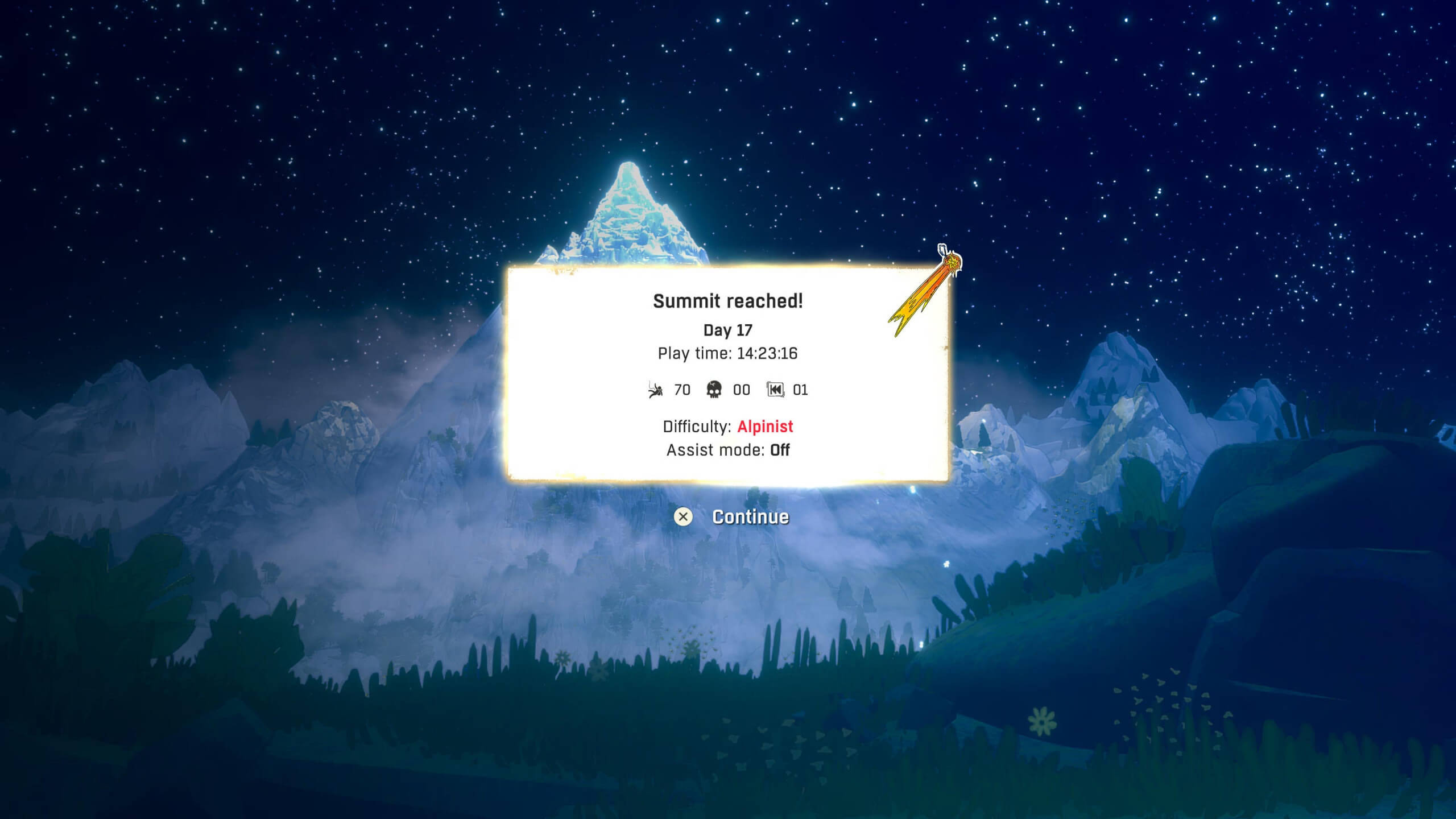
This was most egregious when not getting a ‘good’ grip when making a placement. When this happens, you can press a button to cancel that placement and try again. Sometimes, Aava just wouldn’t connect correctly with the surface, and after a couple of cancels, it seemed like the system would get confused over which limb to reset. Also, when a limb starts to get tired, placing the other 3 limbs onto good holds wouldn’t result in the game auto-picking the weakening limb, instead prompting me to replace a good grip instead. This led to most instances of my 70 falls. I also had to enable visual feedback for grips as while it may look like Aava has hold of a ledge, it wouldn’t be registered as a strong grip.
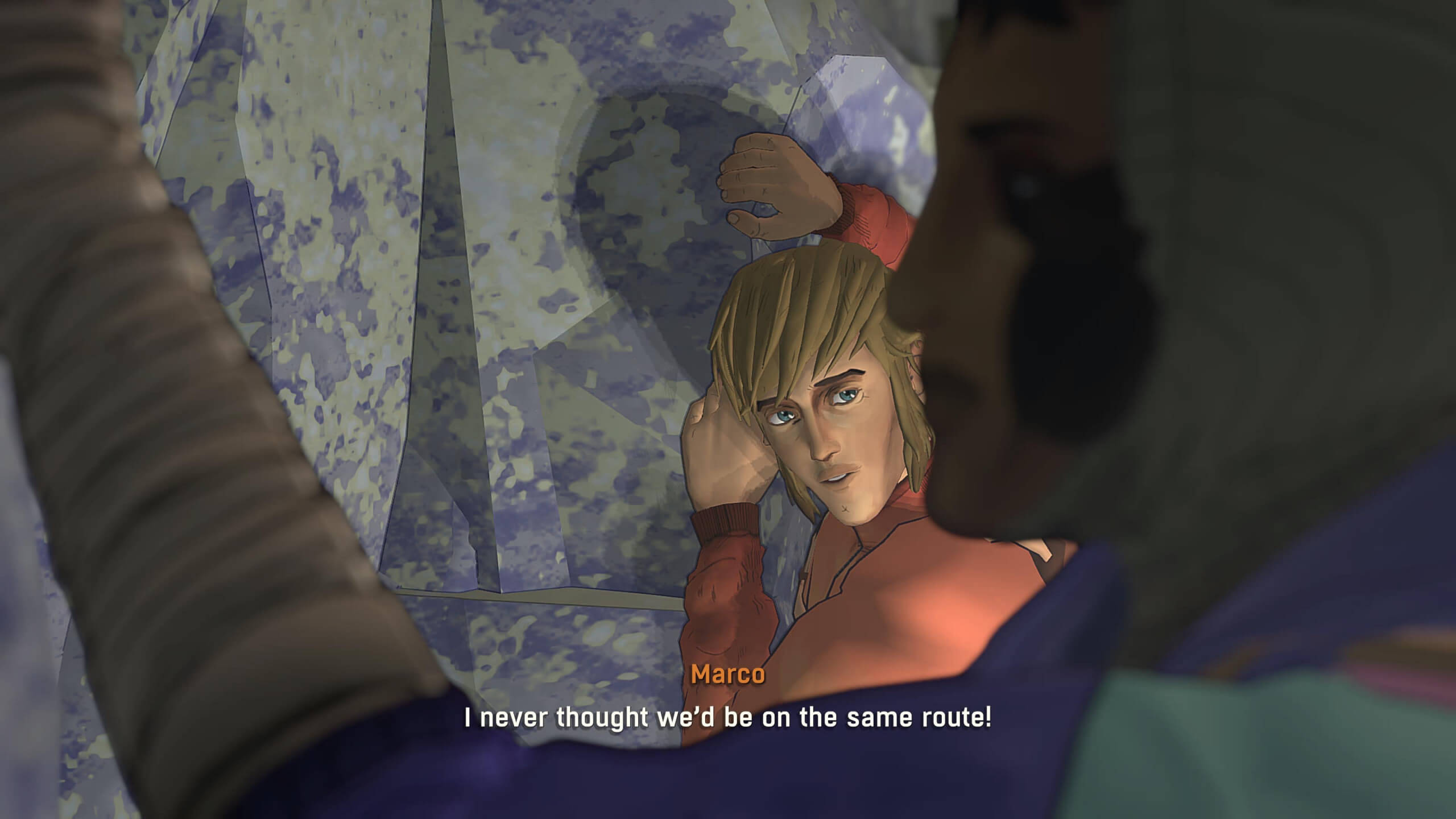
Those frustrations aside, the climbing is really satisfying and rewarding. I mean, you’d hope so in a game centred around the mechanic. Analysing a wall beforehand with the birds-eye, roaming camera, picking a route, pushing as far as you dare before placing a piton, and ultimately beating the climb, is a wondrous feeling. Those last couple of hand placements before hoisting over a ledge are some peak adrenaline producers! The Game Bakers said that each wall feels like a boss fight, and they’re not wrong, especially the longer ones. A section called ‘The Peril’ was easily the most difficult climb. Who designed that one? What are their contact details? I just want to talk…
Surviving Kami
Aside from potentially falling to your death, you can die from exposure. Hunger, thirst, exhaustion, and freezing are all on the table. To fend these off, you’ll need to scavenge for plants, steal from corpses, find fresh water springs, and more. Early on, I really felt like hunger would be my biggest threat on these fronts, and I was right, but only ever once did it really almost end my run. The was on the wall mentioned above, and to combat it I just headed back down and made sure I stocked up correctly and re-planned my route.
Along the journey up Kami, Aava will find different plants and herbs, which she can cook into meals and drinks in her bivouac. She’ll also find dried food packets, vegetables, and even fresh goat’s milk to boost her spirits and nutrition. I found it interesting to see what meals would be produced as I whipped up a storm on the little camping stove, adding more and more ingredients to dishes to discover their effects. Different foods and drinks can bestow beneficial statuses to Aava, assisting in the climb. These are things such as better grip, shielding from needs for a short time, or a speed boost. Aava can also dabble in hallucinogenics and alcohol, the results of which I’ll leave to you to uncover.
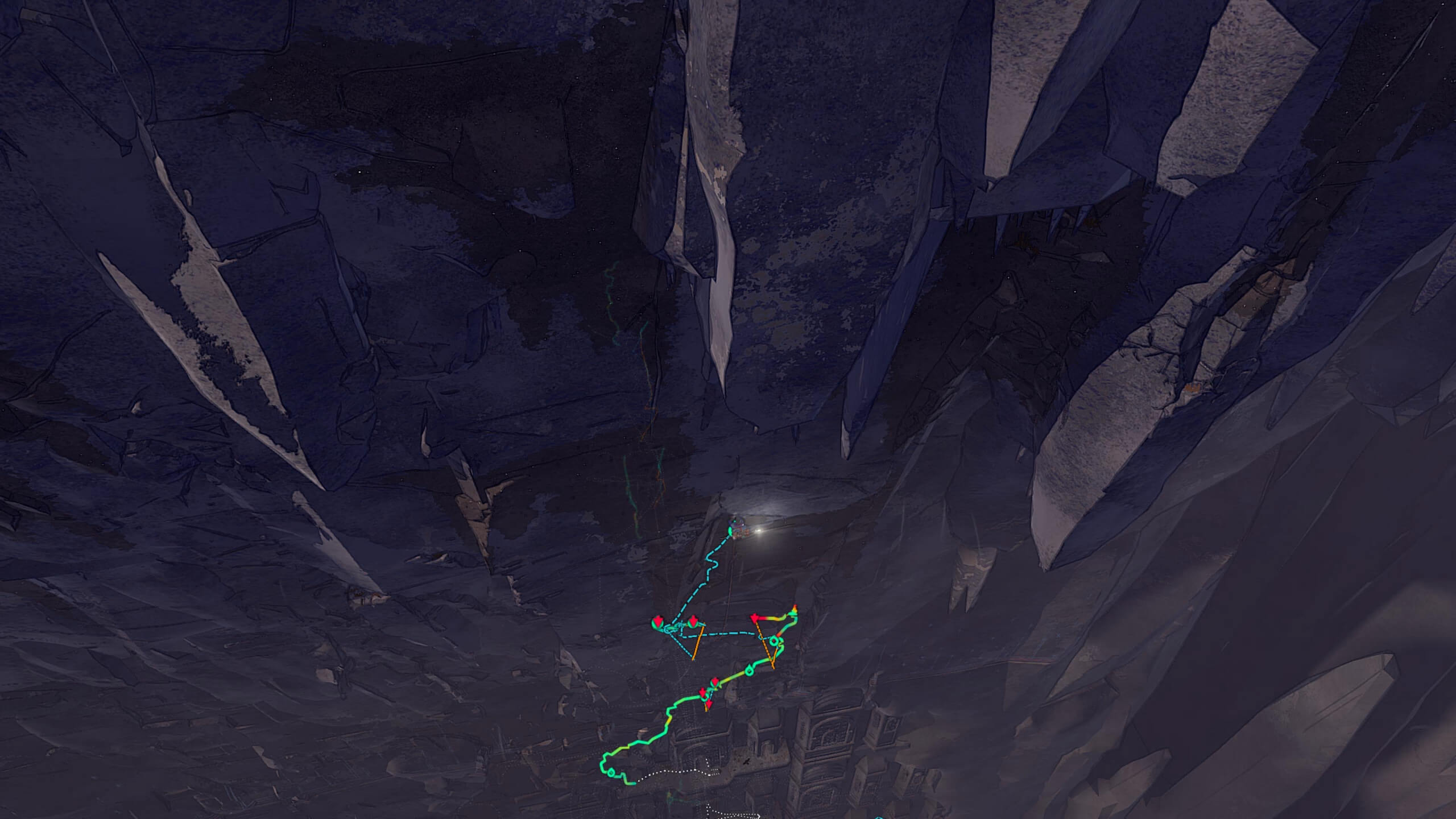
These systems definitely earn the game its survival genre listing. They add a real pressure to the climb, meaning you can’t meander or dilly-dally in any one place too long. This means, playing on the recommended difficulty with no assists will likely mean there will be things you miss on your first climb. After watching back my route after reaching the summit, I noticed a few, seemingly glaringly obvious points-of-interest that I simply did not spot due to me panicking about progressing and surviving. Something to aim for on the next ascent, then.
Graphics & Audio
French comic book artist Mathieu Bablet brings his signature style to Cairn to great effect. Each area on Kami looks like one of Bablet’s graphic novels rendered in 3D. Obviously, there’s a lot of starting intently of grey slabs of rock inherently required for a game about climbing a mountain. But when that’s not the case, there’s some stunning scenery to behold, especially as the time of day changes. Sunsets and nighttime skies full of stars are sights to behold. Cairn does occasionally suffer from frame drops in the more open areas, but it’s largely fine. Importantly, when climbing, the shading and design of the walls makes it easy to see where grips are.
While there is a handy UI that displays all the required information about Aava’s current status, this is hidden by default. This works really well because 90% of the time you simply don’t need to see it. If you start running low on a certain meter, that will show itself in the corner, and Aava will usually make some small mention of it. With the UI not being present, you’re free to really enjoy the views from the mountain in all their glory.
Sweet Mountain Music
The sounds of Cairn are brought to us by Martin Stig Anderson (LIMBO, INSIDE, Control), who takes the roles of audio director, co-composer, and sound designer. With vocals from up-and-coming singer Gildaa, and music from The Toxic Avenger (who provided music for Furi and who I recognise from a track on the Road 96 OST), Cairn’s soundtrack is deep and emotional. In particular, ‘In My Gut’ and ‘Part of a Whole’ are songs that have stuck in my head, in no small part thanks to thier distinctive shared motif.
There’s a rich tapestry of realistic environmental sounds that add a great deal to Cairn’s immersive nature. Weather is a key feature where this stands out, with rain and wind battering the mountain as you get higher. The sounds of climbing itself are also pronouced, and punctuate the quiet as the music drops away during climbs, letting you focus on Aava’s breathing. It all serves to build an atmosphere that pulls you further into the scenario. Also not to be missed here, Sophia Eleni provides a dedicated vocal performance for Aava. She 100% sells the frustration and emotion of mountain climbing, and indeed mountain falling. Sophia and I were often very in sync with our screams of annoyance!
Longevity
I think Cairn is possibly the first game where I can see a benefit to play on all 3 difficulties. I played on Alpinist on this play through, which is the recommended setting for new players to discover Cairn. On this setting, the survival elements are at their full effect, but you have access to all the assists if you want to use any of them, you can use your pitons, and death simply resets you to the previous save. The lower difficulty eases the survival elements and activates some assists by default. This is the option for those who want to relax a little more and enjoy the story with less stress. The highest difficulty setting removes saves and pitons, and makes death permanent. After my climb I’m not sure how this is even possible to complete, but part of me wants to try anyway.
I spent just over 14 hours conquering Kami. With a few trophies missed for areas I didn’t spot or explore fully on the first ascent, there are a couple more hours to clean up the platinum and then who knows how much more time to sink if I want to complete a climb on hard. I’m always conscious of speed-running potential too, and skilled players can and will race to the top. With the amount of freedom in routing your way up the mountain, there’s going to be tonnes of approaches to try shave time off a climb.
Final Thoughts
I’m not sure Cairn is going to be for everyone, it’s more likely to be a Marmite thing. Thankfully, the demo is perfect for giving you a taste of the full product, so do check that out. For me, the frustrations mostly enhance the realism. I certainly didn’t feel that always during those moments, but with some time to cool down afterwards I can appreciate mountain climbing should be difficult. There are great assist options available too if things do become to much of an annoyance. My misplaced pride wouldn’t allow my to fall back on those though, especially knowing that I’d like to tackle the harder difficulty.
As I said at the top of this review, there isn’t another game like Cairn. It’s a unique experience as it stands and it comfotably earns the Thumb Culture Gold Award. Do check out the demo and challenge yourself to summit Kami if you enjoy that preview.

Disclaimer: A code was received in order to write this review.
More Climbing? Check out my Jusant review here.
YouTube | Facebook | Twitter | Instagram | Discord | Podcast
About Author
