
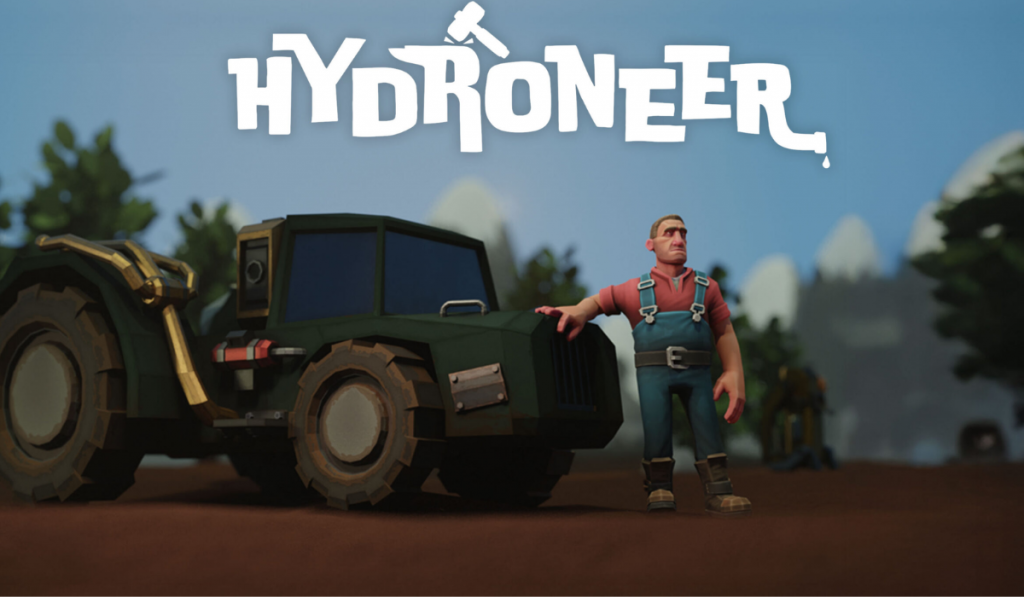
If you’re a PC gamer, chances are you’ve played a mining automation sandbox videogame before. There are a lot out there, with many seemingly having something to set them apart from the rest. But which category does Hydroneer belong to? An innovative title for the genre, or something that does little to showcase itself?
Developed by Foulball Hangover, Hydroneer is finally available for consoles! Originally released on Steam in 2020, it has seen a plethora of updates over the years. Now, Hydroneer is available on PlayStation 5 and Xbox Series X|S!
Hydroneer, Hydro Far, Hydro Wherever You Are
Hydroneer is actually a title I’m rather familiar with despite never having played it. The YouTube channel Let’s Game It Out made several videos on it that usually resulted in it slowing to a crawl or outright crashing! I’d recommend giving them a watch if you like a bit of game-breaking humour.
Gameplay
The main goal of Hydroneer is to grow your mining operation, while automating it as you go. It’s physics-based, meaning every item and resource can (and will) be thrown around the map. You’ll start small; mixing water and dirt in a pan before cleaning it to reveal raw minerals and ore. You can either sell these straight away or refine them into bars and/or craft them into items to fetch a higher price. It’s a slow process, but seeing what goodies you can buy from the shops around the map is motivation to keep grinding. This early game loop did test my patience, though, and I felt it was a little too drawn out.
Right off the bat, I wasn’t a fan of the lack of an inventory. Only being able to hold one item at a time was also something I did not like. Having to pick up every item, then place it down, only to pick up the next one, and repeat, got tedious almost instantly. Worst of all was having to physically carry any money I’d earned and find a suitable spot to keep it safe.
Yes, you can use vehicles and carts to store items. But when placing said items in truck beds becomes an infuriating tug-of-war between the physics and limited controls, I tried not to buy too many items at once. As an extra annoyance, items drop slightly to the right of where you’re looking. There is a small shadow below each object to gauge where it will land, but it’s not always possible to see when holding bigger items.
Water + Automation = Watermation?
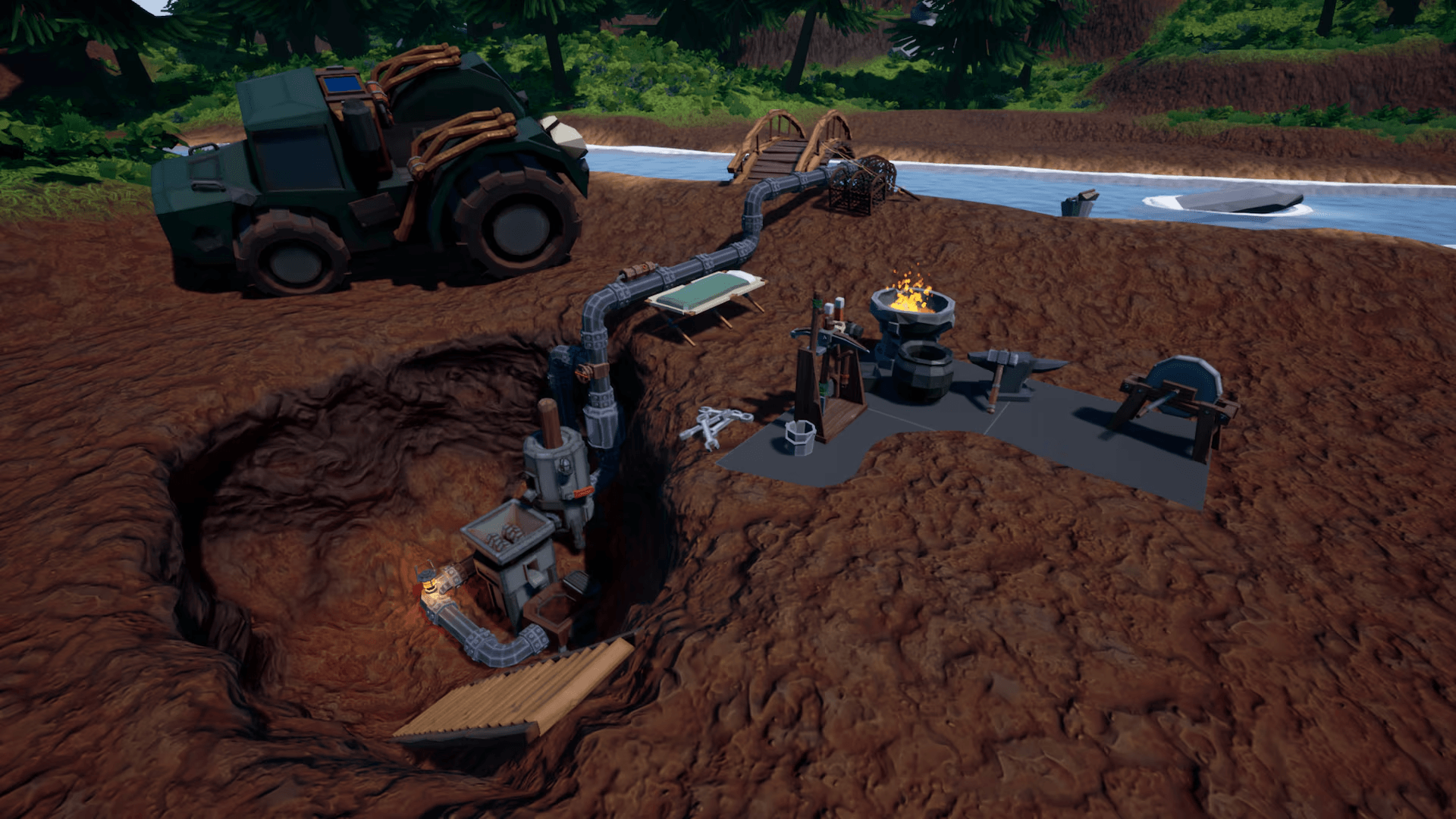
After working yourself to the bone, you’ll slowly be able to automate much of the manual labour. Drills and harvesters, used to automatically collect dirt and break it down to find minerals, are the easiest to procure. Eventually you’ll be adding conveyor belts and automated sorting to really streamline production. But how are these machines powered? Hydropower, of course! By using pipes and regulating the water flow, you’re able to fuel each machine. Certainly much less stressful than having to balance power inputs and outputs as you do in games like Satisfactory!
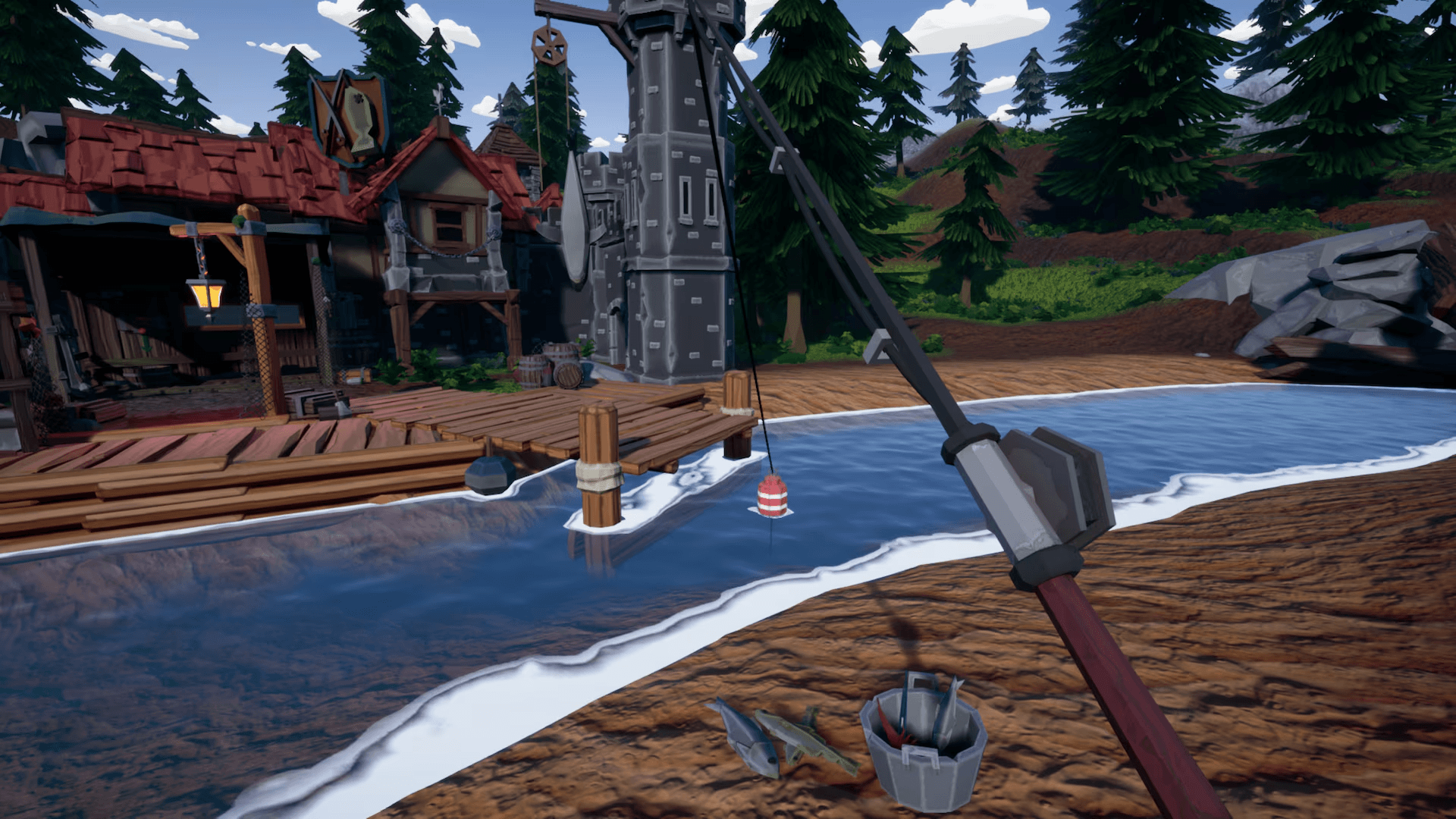
Aside from constructing factories, there’s a decent amount of other content in Hydroneer. You can fish (a quick way to earn money), build your own home, or even start a farm! There’s also the option to just go and explore. Who knows, you may end up finding some valuable relics! Whilst none of this content is as in-depth as the main crux of the game, it’s enjoyable nevertheless.
Graphics & Audio
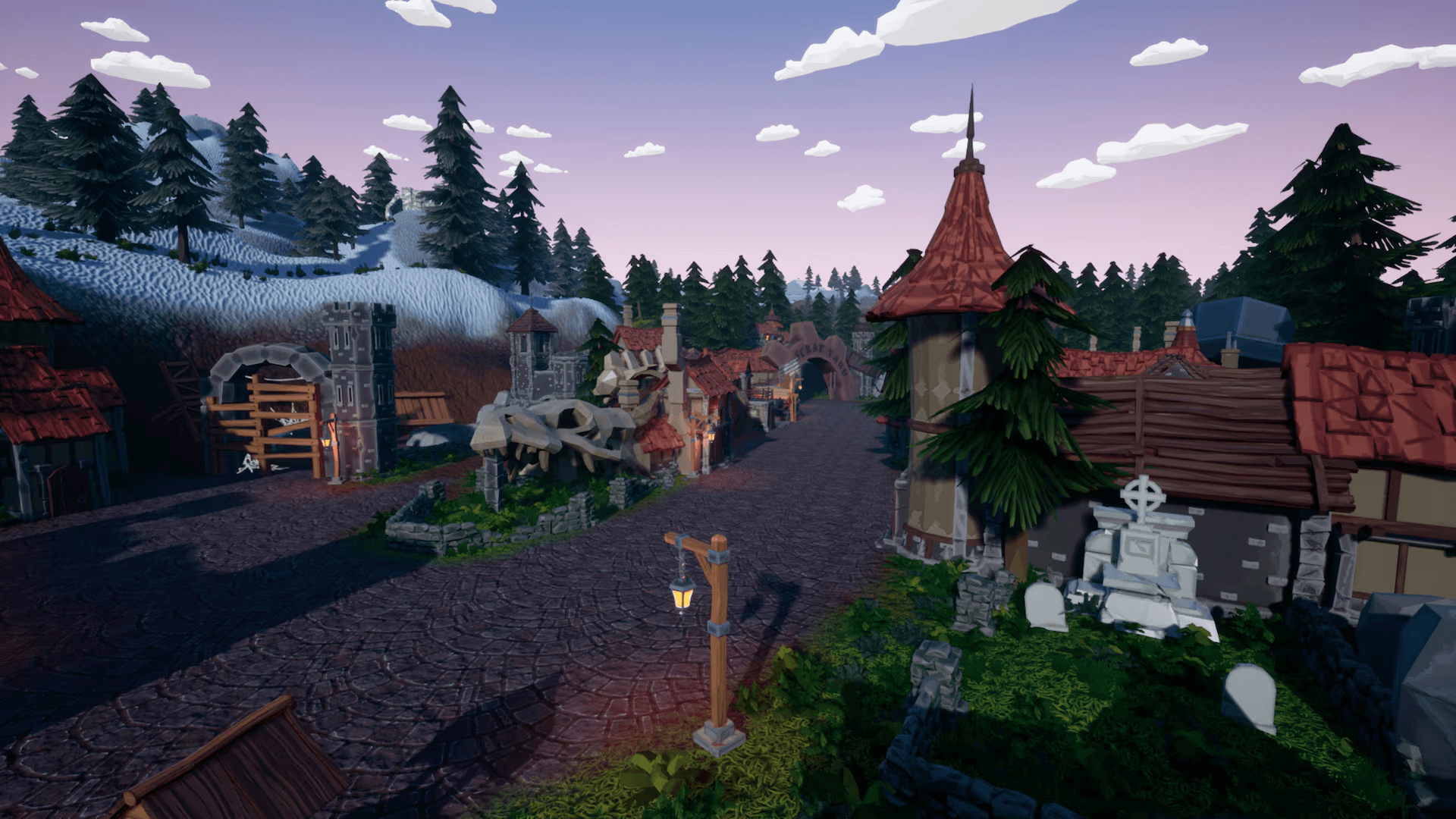
Hydroneer isn’t going to blow you away, either from a visual or audio standpoint. It looks very simple, with a rather muted colour palette. That’s not to say it isn’t without its own charm, though. The exaggerated, chunky designs of both the environment and characters create this sort of cosy, stress-free feeling when playing. And since you’re able to go at your own pace, it is a pretty chilled experience!
The music heard throughout Hydroneer follows this trend, opting for slower, more tranquil tunes when playing. I quite enjoyed the soundtrack, which had a high fantasy vibe to it. The rest, unfortunately, doesn’t have quite the same effect, and is pretty limited overall. NPCs will occasionally say a one-liner, and the ambient audio is fine, but that’s about all there is to say.
Longevity
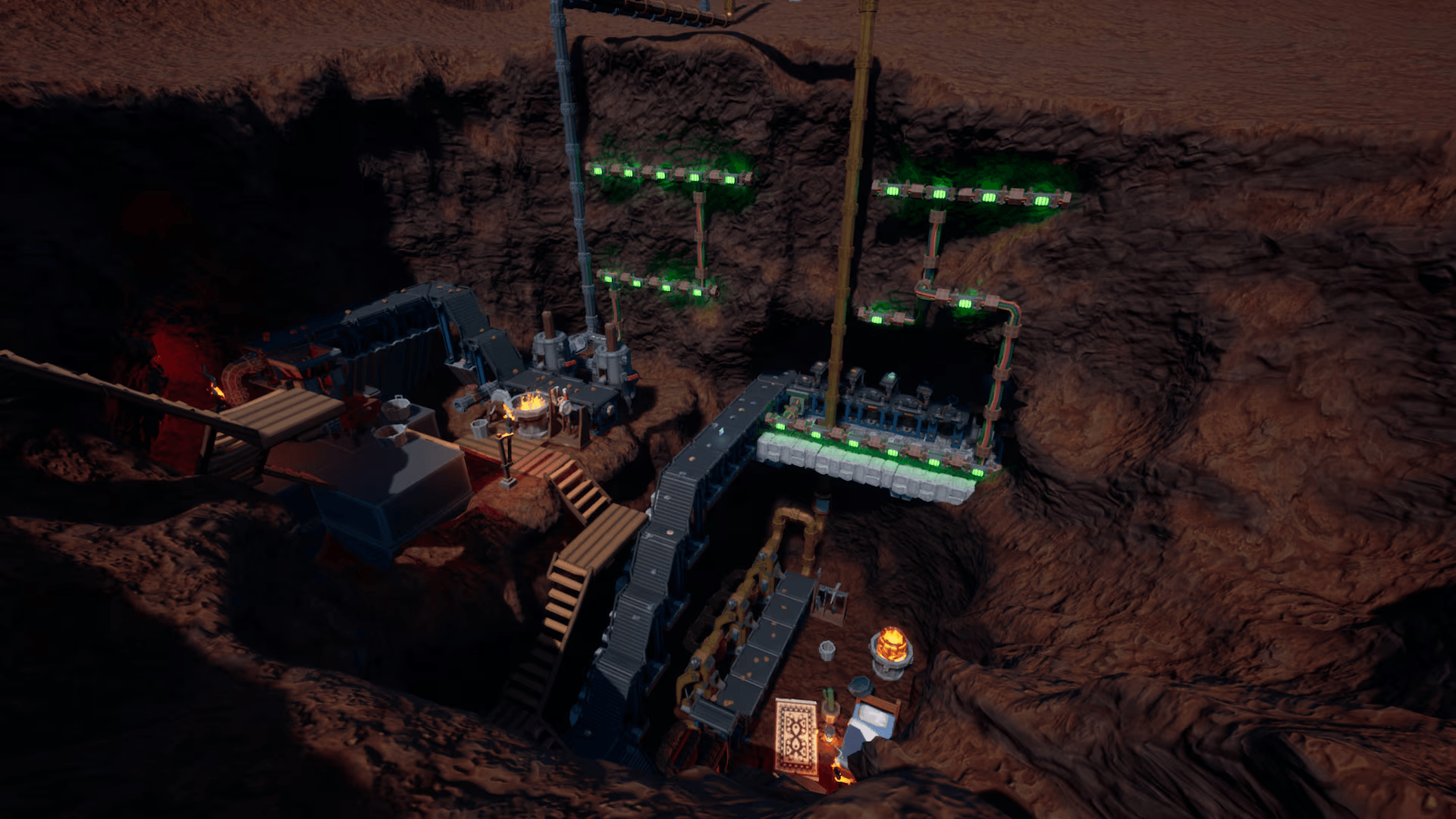
Games like Hydroneer can potentially last for as long as they keep the player entertained. There is no “you win!” or final mission here; you just build to your hearts content. That said, there is definitely a point in which you run out of new things to buy and upgrade. But, after around 30 hours, I still felt I could get more life out of it if I had I wanted to.
Whilst it can be satisfying to see your automated production lines do most of the work for you, it did leave me thinking “What’s the point?” as I eventually had less and less to do. I understand that’s the whole point of these sorts of games, to start out with lots to do and work to make it easier for yourself, but it just grew a little stale here.
Final Thoughts
As much as I wanted to love it, I just don’t think Hydroneer is a title for me. From a personal standpoint, I didn’t especially enjoy Hydroneer‘s gameplay loop. Would an inventory system have alleviated this? Possibly, but then that would take away the one unique thing about the game. It’s just a shame that that unique feature isn’t something I clicked with.
I can absolutely see why people would love playing this, and for these people, Hydroneer will no doubt be a blast. Unfortunately, for me, the unwieldy controls and slow early game left me too frustrated. There are other automation games out there that are more my speed, so, unfortunately, I don’t see myself returning to Hydroneer.
For those reasons, I’ll be giving Hydroneer the Thumb Culture Bronze Award.

Disclaimer: A code was received in order to write this review.

YouTube | Facebook | Twitter | Instagram | Discord | Podcast
About Author
