
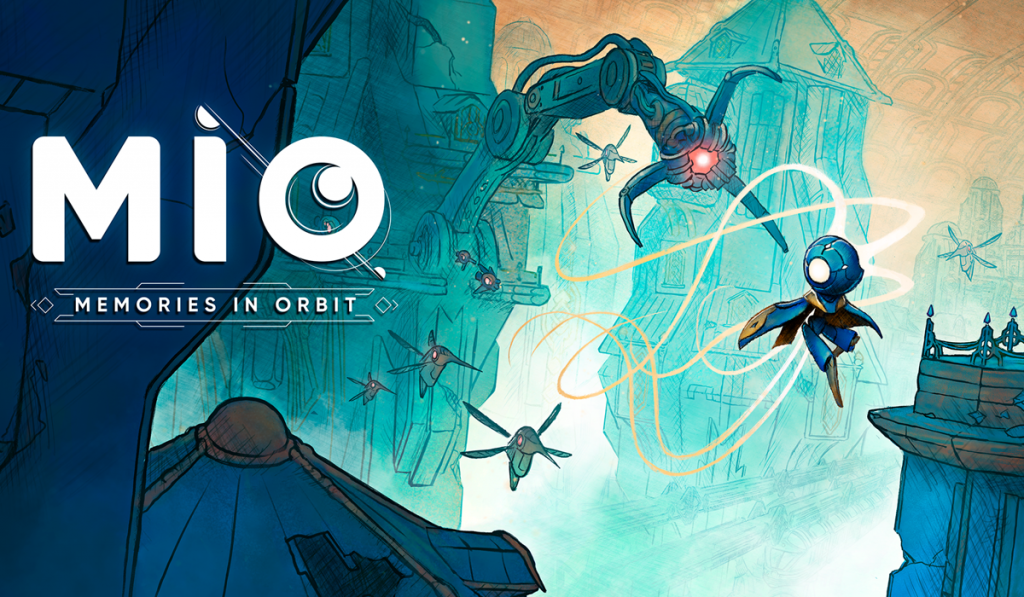
We’re starting 2026 off with a bang with a very strong indie Metroidvania offering from Douze Dixièmes and Focus Entertainment. MIO: Memories In Orbit is, if you’ll excuse the pun, stellar. Whilst I certainly have gripes with some elements, I’m very much captivated with the whole experience.
I wrote a preview on MIO in June last year when I played the demo, and most of my thoughts there still stand, I recommend reading that too. Following my time with the full game, I now have answers to some of the burning questions I had.
Holy Mother of Pearl! Mio Is Precious
I don’t really like talking about story details in my review, at least beyond the initial premise. That is especially true for games like this – where the journey of discovery for each player is so important, and will uniquely shape their experience. Suffice to say there are no spoilers below.
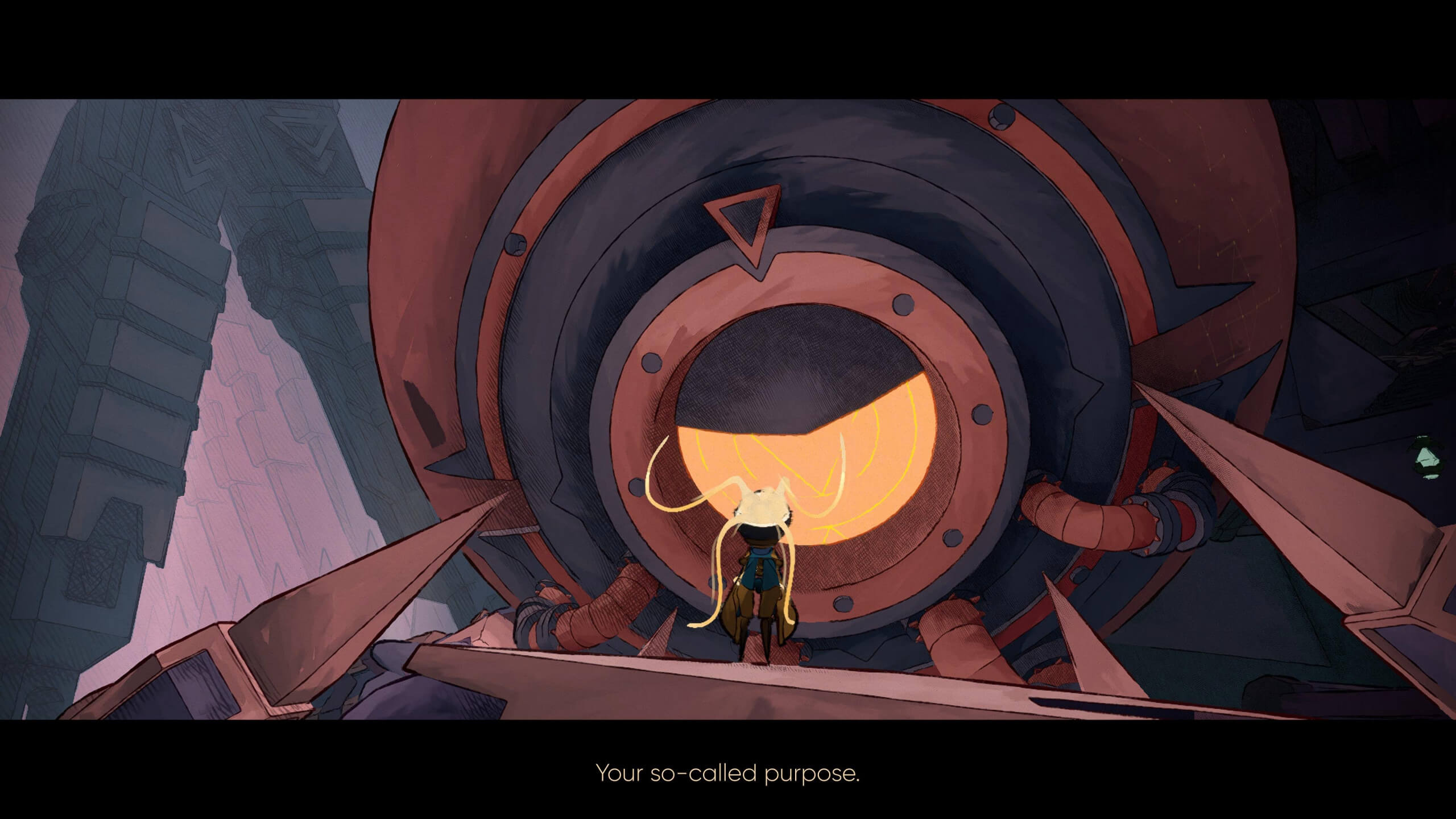
The game begins as Mio awakens on The Vessel and learns that the AI caretakers have seemingly gone offline. Tremors are occurring at an increasing rate, causing more damage and loss each time. Mio is tasked with traversing The Vessel to investigate the problems and learn more about the ongoing problem, avoiding and/or fighting rogue robots as she does.
Gameplay
The first thing you’re going to notice upon gaining control of Mio, is the fluidity in her movement. She is beauty, she is grace. Well, in the air at least. Mio’s ground speed leaves a little to be desired, but serves its purpose in encouraging you to be in the air when possible. Once unlocked – thankfully nice and early in the game – Mio’s signature Hairpin grapple ability really becomes the star of the show. Using it on energy crystals and enemies to launch into the air is a key strategy to not only platforming, but also fighting.
No Walk In The Park
MIO: Memories In Orbit is challenging. You begin with few hit points, and your situation will only ever slightly improve upon that. Death will likely be frequent to begin with. To soften the blow, your first few deaths will likely advance the early story a little bit – not that dying is strictly necessary to do so. When Mio is defeated, she will lose any liquid Nacre she is carrying to ‘The Pool’. After a certain amount is lost, or donated, a plot point will unlock.
Nacre is essentially the currency of The Vessel, you collect it in liquid form when defeating enemies or salvaging from scrap piles. Although liquid Nacre is lost on death, you can crystallise your collection at machines that are sparingly spread through the world. Crystallised Nacre persists on death. Crystallise often. The other tradable resource is Old Cores. These can be given to you by NPCs, or again, salvaged from often well hidden or hard to reach places.
To overcome enemies, and particularly bosses and platforming sections, you’ll need to really understand and utilise Mio’s expanding move set. Bosses have pretty high hit point totals compared to Mio’s base damage output, so you’ll need to be able to avoid being hit as much as possible. With only a double jump to begin with, and the grappling Hairpin ability shortly after, this can be hard work. My issues with combat movement in my preview were mostly due to skill issues, as your double-jump can be refreshed by striking an enemy, and you can use your Hairpin ability on flying enemies to close distance. Once I’d figured these out I had a better time of things. Certain later game ability unlocks will become vital too, though.
The World of The Vessel
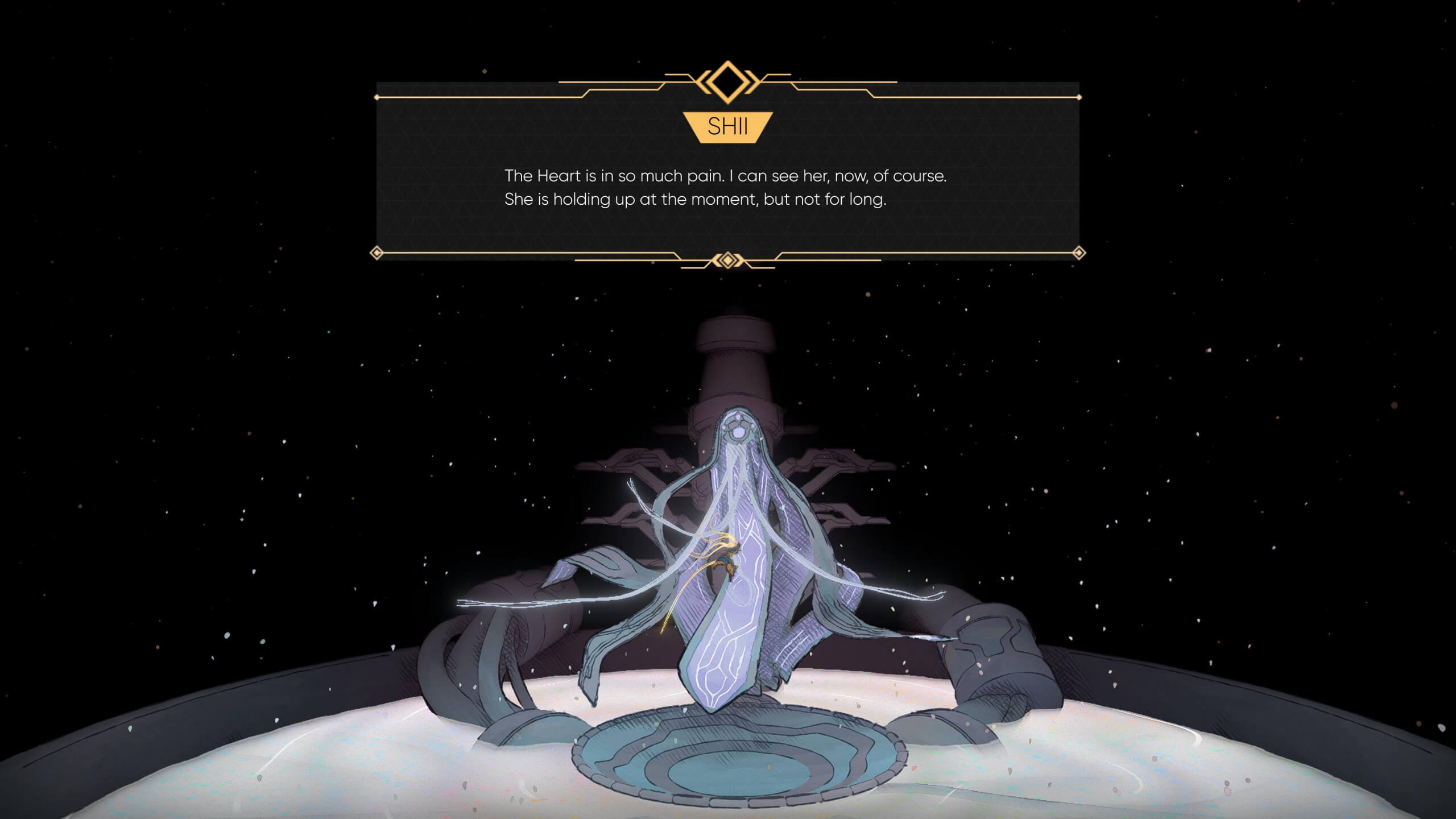
The Vessel is a vast, interconnected world, filled with beauty and mystery in equal measure. I constantly felt that I was surely getting close to an edge on the map, or as high or low as I was going to be able to go, only to find new ways to travel further. It’s an exhilarating experience that easily rivals any other Metroidvanias I’ve played. The sheer amount of hidden paths and secrets kept exploring rewarding. The world design really feels like a love-letter to the genre. I would be remiss if I didn’t mention how detailed and unique each area of The Vessel is. Without spoilers, I can’t talk about some of my favourites, but when you discover a series of scattered logs, you’ll know that’s one of them.
Despite all that, some players, may be put off by the amount of backtracking, and the slightly hidden fast travel unlocks. By the time I’d rolled credits, I’d thankfully managed to build up a decent network of travel points, but some areas never become connected and have a long transition animation. For me, it’s all forgivable due to the magnificence of the world I’m spending more time in, and because of how much discovery happens when revisitng areas often.
Mod Me Up
Alongside ability unlocks, Mio will also find Mods – equipable items that alter some facet of gameplay, allowing you to tailor your approach to different challenges or situations. The Mods will occupy some number of slots in Mio’s Allocation Matrix, of which she has a limited, but extendable, amount. As I played, I ended up with a couple of consistent loadouts – one for farming currency while exploring, and one for survivability in boss fights – but also adapted those slightly in some cases. For instance, the final boss had me using an additional healing Mod so I could endure the mistakes I kept occasionally making.
While positive effect Mods cost slots, there are some negative Mods you can apply which will grant you access to more slots in exchange. These negative Mods formed a core part of my boss fight loadout, as I wasn’t bothered at that point about extracting resource from enemies, instead preferring higher damage and health. Overall, there’s a fair amount of customisation available with these tools, and there’s still a good number I’ve not found yet, which is intriguing. Make sure you search high and low for Old Cores, as these will be essential to unlocking additional slots for Mods.
Improvise, Adapt, Overcome
I’ve mentioned that starting with a small health pool makes the early game tough. This is amplified by a healing system where, by default, you need to pay to recover health while exploring, and that is only at sparsely available Nacre Basins. You can unlock additional hit points by acquiring 4 Core Components, but be warned, these are essentially temporary. I won’t give away the reason for this, but know that you absolutely should make it a priority to collect them, but also get used to only having 4 or 5 hit points, max. I understand why this mechanic exists – the way it ties gameplay to the story is brilliant – but it did mean I could never get too comfortable or complacent when fighting.
It’s one thing for a game to provide difficulty, but it’s another to avoid feeling frustrating when doing so. MIO: Memories In Orbit skated this line at times. My partner joked about whether I would include any of the choice non-PG phrases I’d been uttering for the past week in this review. I will refrain. Thankfully, the boss fights never felt unfair to me and were satisfyingly varied. When I lost, it was because I made mistakes. However, the limited health and healing available meant I had to go through those fights more times. The small delay in getting control of Mio again after death provided some frustration. One boss in particular, Sawlong, began to grate on me a little prior to finishing it. Other than those examples, though, Mio falls on the right side of the fun vs annoying scale.
Graphics & Audio
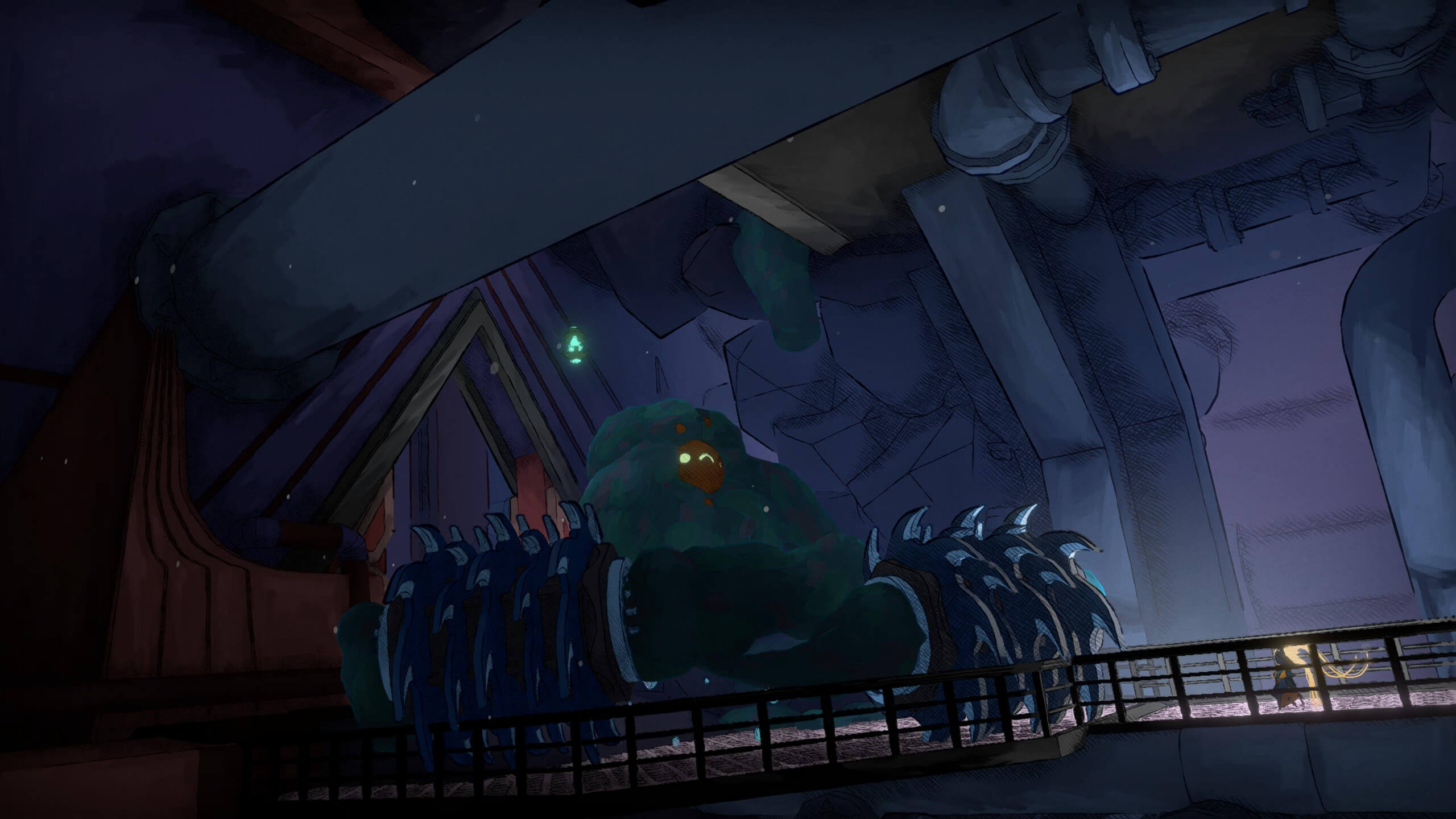
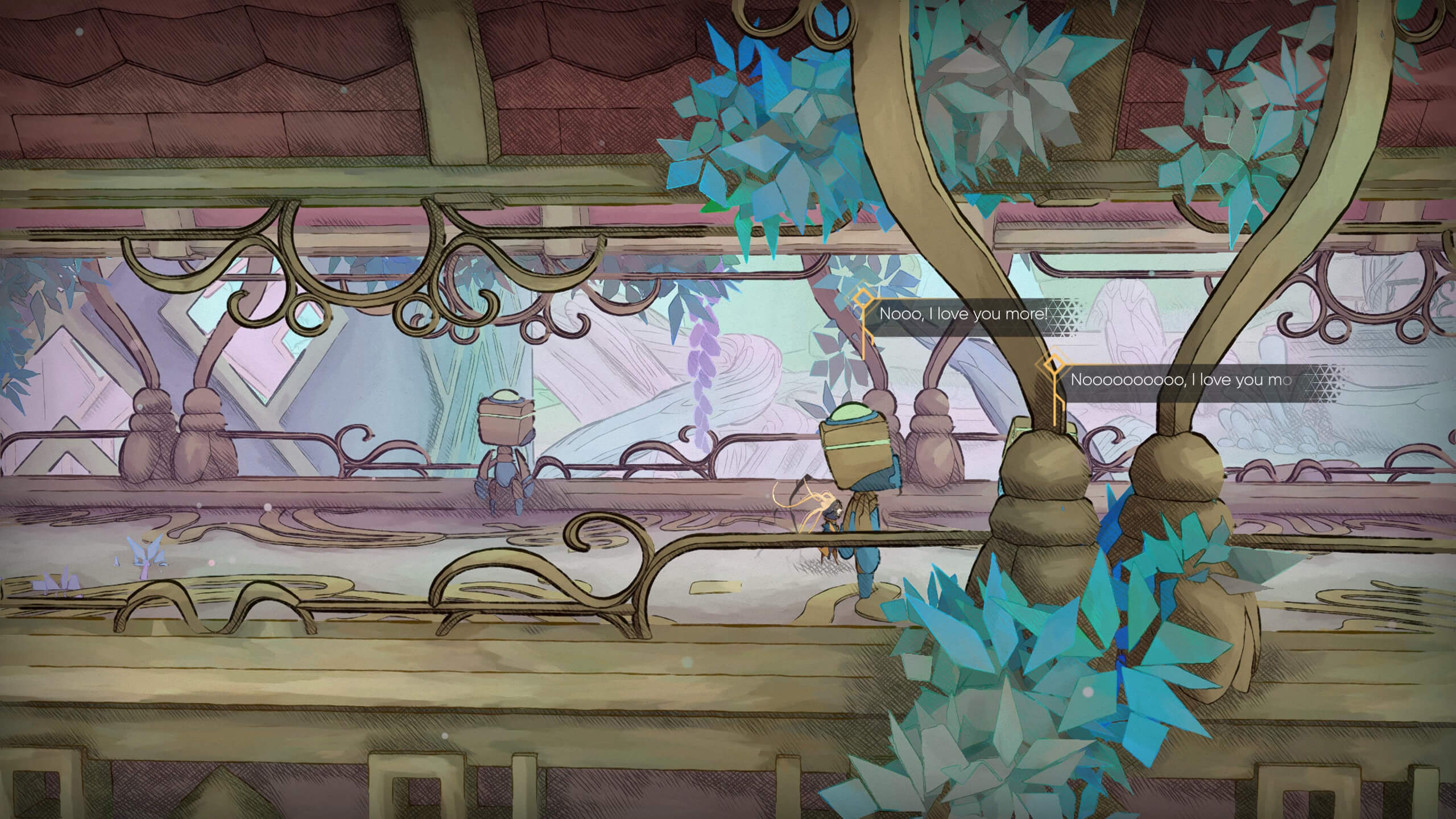
I’d already begun gushing about the art in MIO above, but it’s worth stating again here. The Vessel is absolutely stunning. I mentioned in my preview article how well the environments are crafted, in that I could always tell where the actual interactive areas were, compared to background or foreground details. While Mio occupies a 2D plane, the world around her is 3-dimensional. This adds a real depth that 2D Metroidvania games using stacked, flat, parallax backgrounds can’t emulate. Although I’m sure I have, I’m struggling to recall another game that uses this style. It’s simply wonderfully used here.
Having an audio review section in each review can sometimes lead to difficulty describing a game’s music, when sometimes the music just sort of exists. That’s not the case with MIO: Memories In Orbit. The soundtrack is integral to the atmosphere being built. Low tempo, melancholic melodies give the feeling of a slowing, decaying world, while high energy boss music spikes your attention and adrenaline at key moments. One track in particular early on, ACAT, almost gave me an out-of-body experience when the chior dropped in. My partner is already anticipating a record release so we can add it to our collection, and I’ve already bought the digital version on BandCamp.
Another crucial element in the presentation is voice acting. While not all characters are voiced, those that are, are done-so with real emotion and gravity. In those moments, you can’t help but be sucked further into the events. This is definitely amplified by voices being used sparingly throughout, amplifying the importance of the dialogue in these moments. Yet another great design choice by the devs.
Longevity
I am about 25 hours in, and I’ve rolled credits on what I assume is the first ending. However, I can see so much on the map that I haven’t yet fully explored. The press kit gives a time of 25-40 hours, which seems fair. I can imagine this will have a decent speed running community after launch too, given the amount of content that appears to be non-critical in terms of rolling credits.
Final Thoughts
MIO: Memories In Orbit was one of my most anticipated games last year after playing the demo, and I’m happy to say it more than lived up to the hype. For fans of the genre, this is a must-play. The art, the music, the vibes, the story, all hit the mark. Slowly unravelling the mystery of the slowly decaying Vessel, and witnessing the impacts of that first-hand, is an emotional experience.
I was pushed towards my gaming ability limits at times, and my patience was tested, but with focus and determination I was able to overcome those hardships and felt a real sense of satisfaction. While there are a couple of assist options in the menu, to wear bosses down over time or heal Mio while on the ground, you are fully on your own in platforming. In fact, I had to really dial in to my old Celeste muscle memory to get past some of the trickier set-pieces. Even still, fans of the genre are sure to find a gem.
I didn’t give out our top award last year, despite playing some great games. This year begins much differently, though, as MIO: Memories In Orbit receives a Thumb Culture Platinum Award.

Disclaimer: A code was received in order to write this review.
Can’t get enough of Metroidvanias? Check out Momodora: Moonlit Farewell.
YouTube | Facebook | Twitter | Instagram | Discord | Podcast
About Author
