


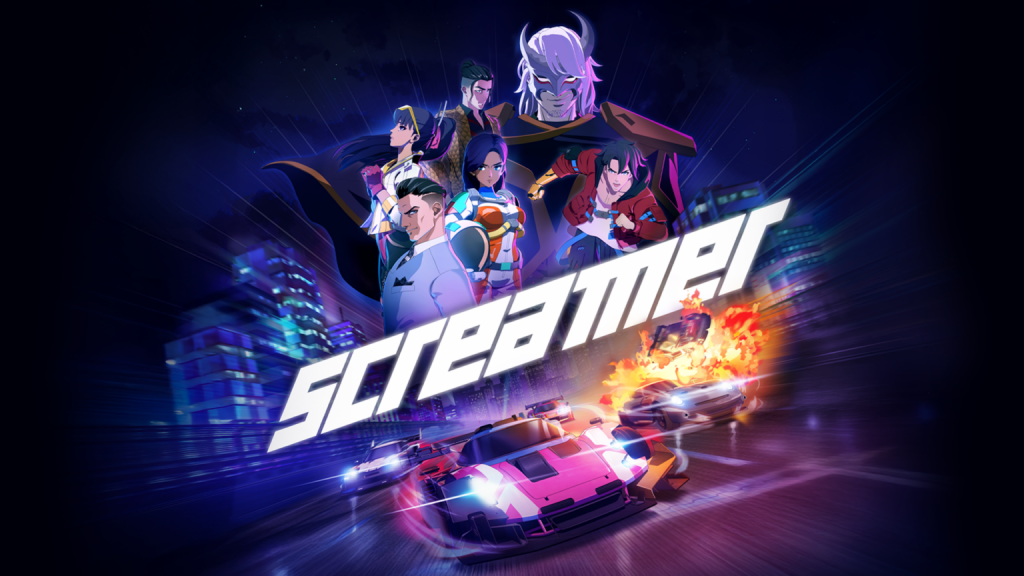
Screamer roared onto the track on 23rd March for Deluxe Edition players, with everyone else jumping in on 26th March across PlayStation 5, Xbox Series X|S, and PC. It was developed by Milestone, the same team behind the recent Hot Wheels Unleashed games, and notably the studio lineage that created the original Screamer back in 1995 under the studio name Graffiti.
There are a few editions floating around, including a top-end version that throws in a model car if you’re feeling fancy. For most people though, the standard edition lands at £49.99, while the Deluxe Edition will cost you an extra £10 for the early access and bonuses.
So, the big question: Has Milestone modernised their classic to perfection or should it have been left on the scrapheap?
The Fast and the Waifurious

Gameplay
Screamer isn’t subtle, the amalgamation of Twisted Metal, Cyberpunk and Intial D (this writer does his research) hits at a breakneck pace once you get all of the shiny toys.
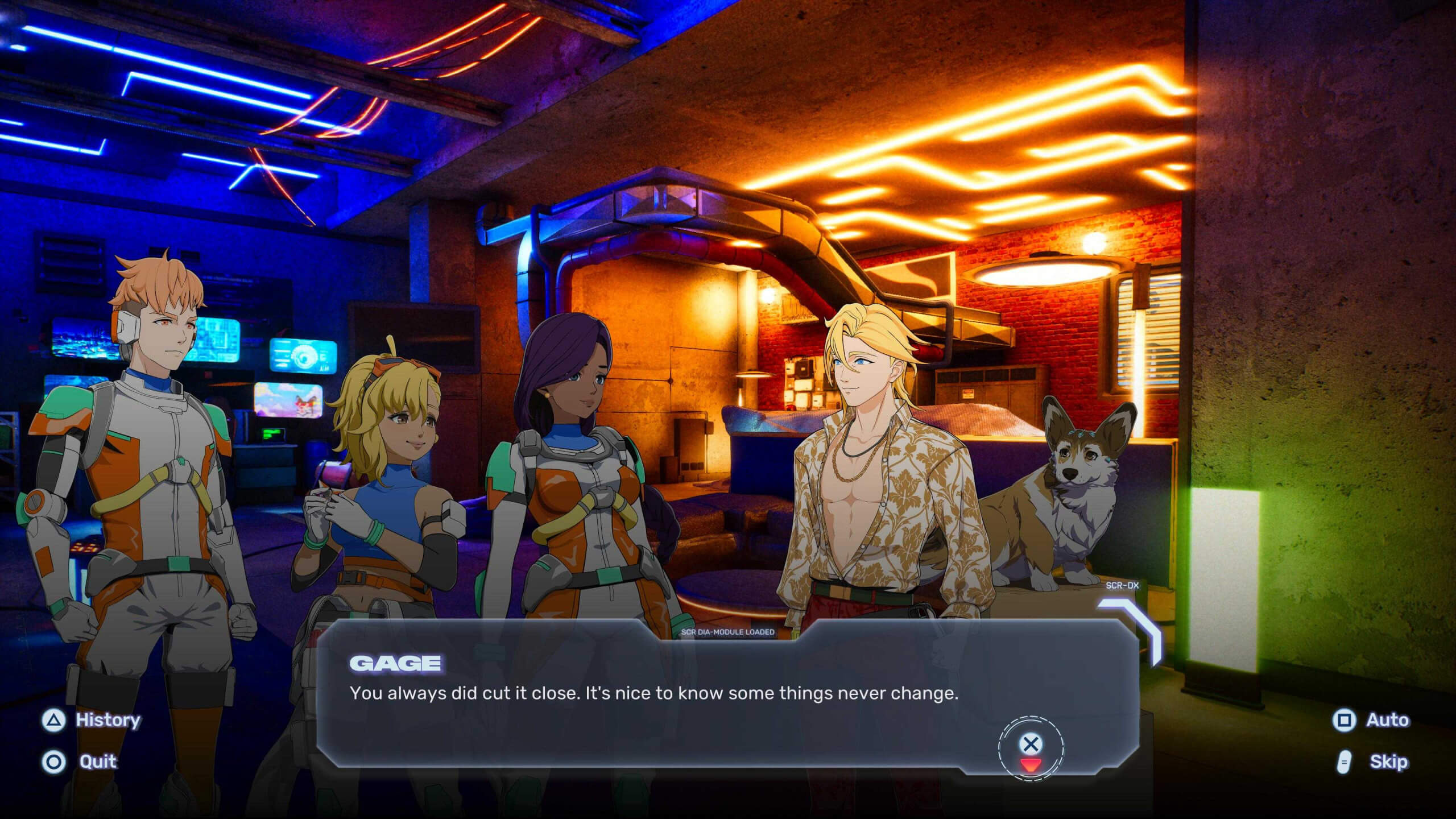
The first act doubles as a tutorial, slowly drip-feeding your abilities. Each car has an Echo device explaining why you respawn after smashing into another vehicle. You unlock new characters who all have a unique special ability that makes a different use of the Echo.
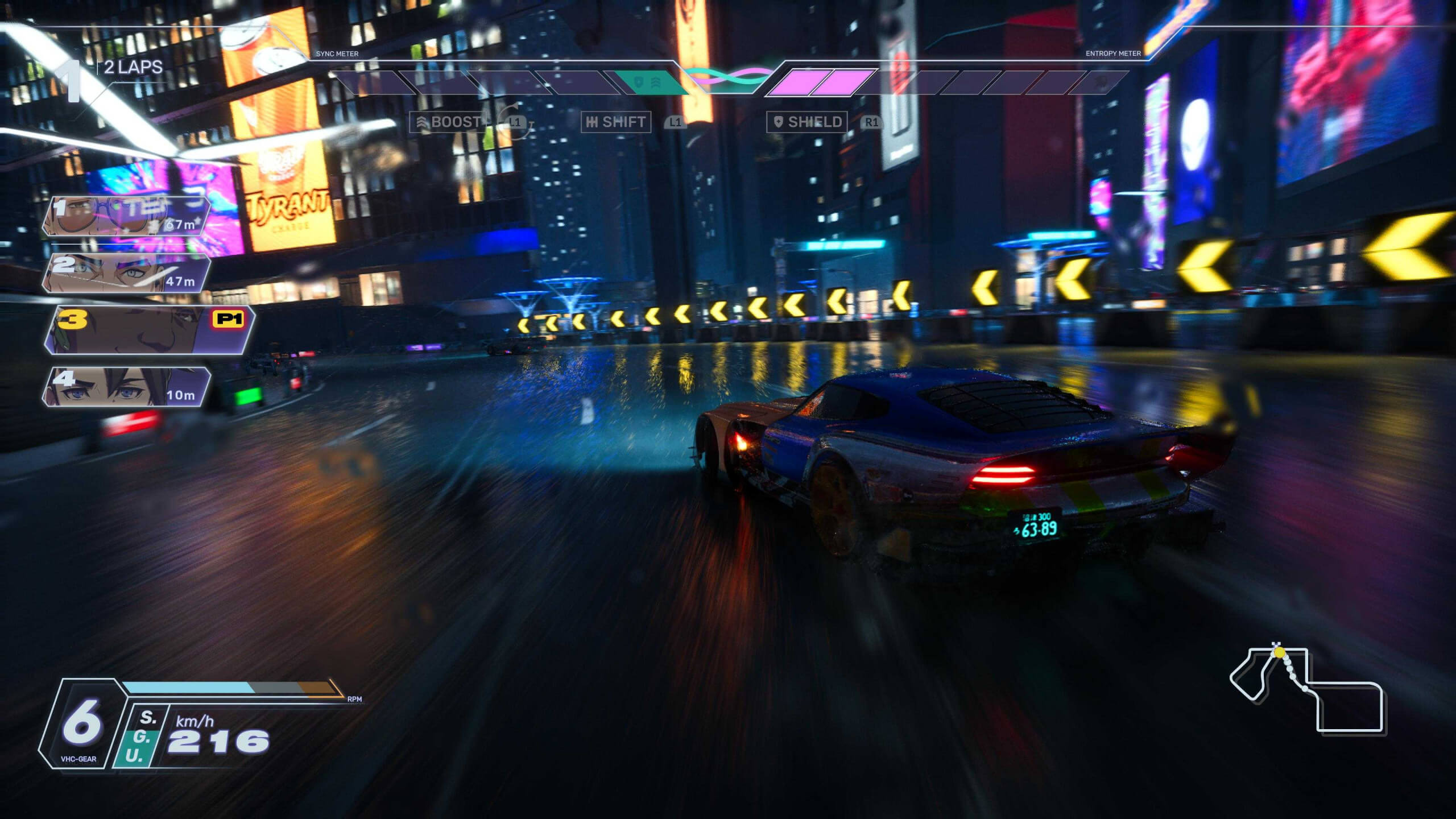
The HUD has two key meters with the Left side dedicated to boost. You fill a segment, hit L1 and get a speed burst but time it right, and you get a extended burst of velocity. Boosting helps to fill your strike meter which is a ram attack that is activated with R1 and KO’s anything in it’s path. Chain these right, gain boost, realistically you could spend almost the entire race in a strike state and reach a state of full on attack known as Overdrive.
The speed works against you at times. You need a moment to charge, so aiming while moving at bullet train pace is not easy, but feels great when you pull it off. The game uses twin-stick driving. You steer with the left stick and drift with the right. I mostly got the hang of it, but some tracks throw in sharp turns that had me bouncing off barriers like a dodgem car. The gears shift semi-automatically, but if you time them manually, you gain extra boost when you nail it.
The game has great accessibility all around. You are able to change to one handed controls, the text scale is decent and there’s even a tinnitus filter. You can even check the past conversations during the visual novel like sections.
Graphics & Audio
The game itself is an ambitious setup, and the anime-style cutscenes mixed with visual novel storytelling give Screamer a distinct identity. Honestly, it’s not something you see often in the genre, and it helps the game stand out immediately. That said, it doesn’t always land. The dialogue and voice acting leans a bit too hard into melodrama.
Neo Rey is pure sensory overload in the best way possible. Neon is everywhere. The HUD hits you instantly with bold teals, reds and pinks, all wrapped in that futuristic, anime-leaning design. The cars look like they’ve been ripped straight out of an over-the-top anime intro sequence, and honestly, it works. The cutscenes double down on the style too. That comes with the usual pros and cons of the anime genre, but here they do a lot of heavy lifting. They give Screamer it’s identity instead of feeling like being bolted on at the last minute. Nothing about Screamer feels safe, and fair play to Milestone for stepping outside the usual arcade racer.
The soundtrack is doing just as much work. It’s stacked with high-energy tracks that keep the pace relentless, and when Overdrive kicks in, everything cranks up. The music, the engine noise, the speed, all of it hits another level. It’s one of those moments where the audio and gameplay just lock in and carry you.

Longevity
Screamer isn’t a game you finish and uninstall. It tries to stick around and earn that spot on your hard drive. Outside of the Tournament, there’s Arcade mode which has got single races for quick hits. There’s team-based events if you fancy a bit of chaos, time trials, checkpoint challenges and overdrive events. There’s even a custom ruleset which lets you mess around and create your own weird race scenarios, which is exactly the kind of life extending content modern games need.
Multiplayer is also on the table but I didn’t get hands-on before writing this, so no promises there. Including offline multiplayer at all deserves a nod. Split-screen in 2026 should not feel like a novelty. Credit to Milestone for remembering that sometimes people actually sit in the same room and want to shout at each other in a very old-school way. The catch is that all of this extra content lives and dies on how much you actually enjoy the driving. There’s no escaping that. If it clicks with you, Time trials turn into shaving those seconds. Multiplayer turns into madness with your mates. Even something as simple as earning new colourways for your car parts becomes a reason to keep going.
If it doesn’t click, though, the whole thing starts to wobble a bit. Track variety isn’t massive and players will recognise layouts sooner than expected. The handling is solid but doesn’t feel like it breaks a ceiling. This isn’t one of those racers where you’re still learning fifty hours in. Once you’ve got a grip on it, that’s kind of it. That creates a a long-term problem. the game leans heavily on those extra modes once the credits roll and if they don’t fully grab you, that’s a problem.
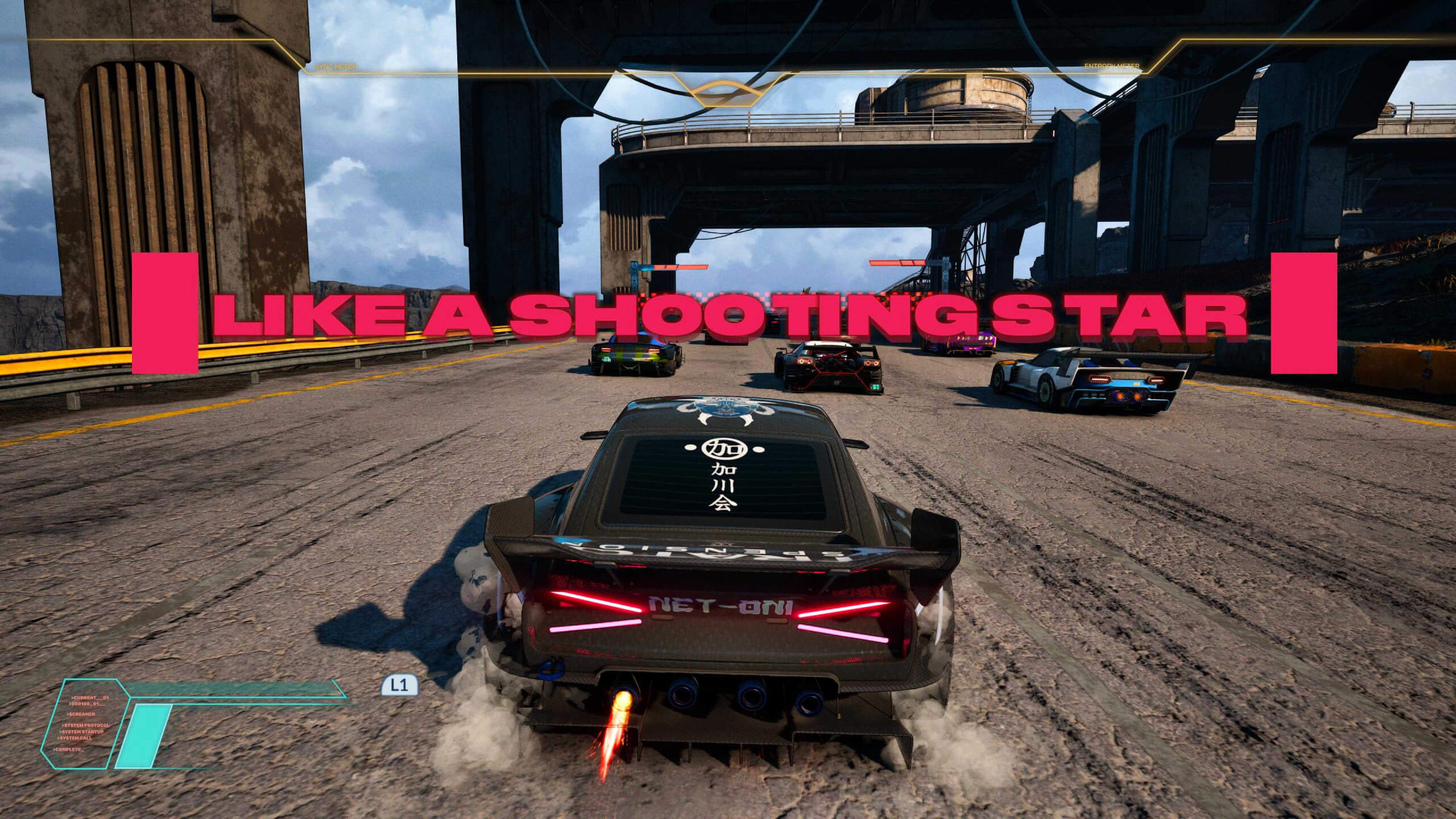
The bigger issue is pacing. The campaign drags. After around 30 races, I’m not even halfway through the second act and I’ve only raced on the same two biomes, The neon cityscape of Screamer’s main city Neo-Ray and a Mad Max inspired wasteland.
Final Thoughts
Milestone took a risk, and I respect it. The combination of arcade racing, combat and anime storytelling is bold. When everything lines up, it feels brilliant. However, it is not flawless. The campaign drags, the writing feels hammy, and the chaos can sometimes outweigh the skill.
Best case scenario, Screamer becomes your go-to “one more race” game. Something you dip into regularly, chasing better times, messing around in custom events, or battling your friends in split-screen. Worst case, it burns bright, burns fast, and ends up as that game you were obsessed with for a while before moving on to something else. Even so, in a time when so many games are chasing the live service carrot, it is refreshing to see something this loud and different. I will always take a game with personality over another safe, forgettable one.
For this, Screamer earns the Thumb Culture Gold Award.


Disclaimer: A code was received in order to write this review.



YouTube | Facebook | Twitter | Instagram | Discord | Podcast