


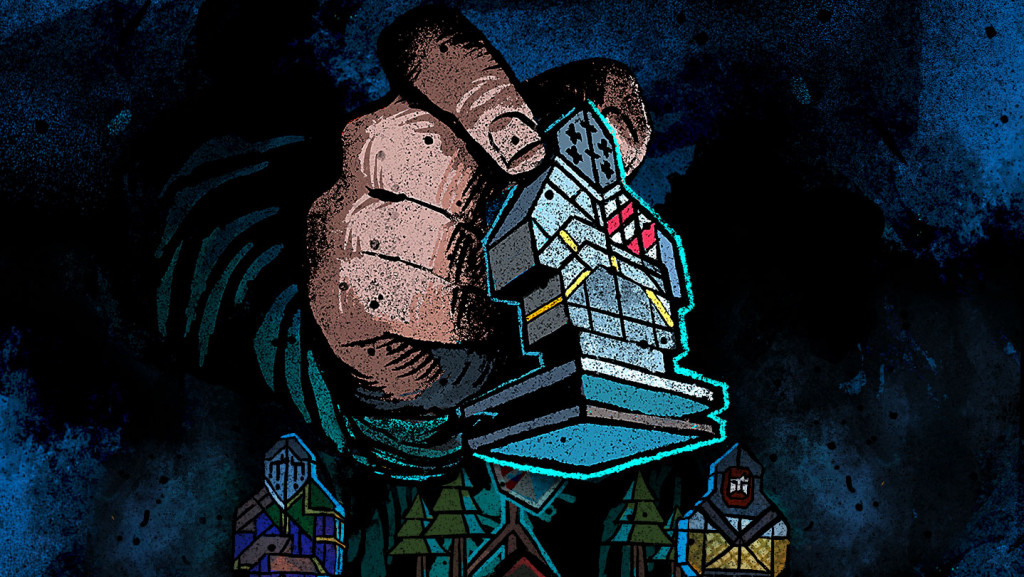
There is a thrill in Master of Piece when pieces slide neatly across the board, and a fight that looked unwinnable quietly collapses in your favour. Master of Piece, developed and published by I M GAME and I M fine, clearly understands their blend of deck-builder, rogulite and pieces. On Steam via Early Access, it presents itself as a deceptively approachable roguelite, swapping decks of cards for mercenary pieces. On the surface, its rules are straightforward enough to feel welcoming. Underneath, however, it hides a surprising amount of rigidity. Where small decisions are permanent, and misjudgements linger far longer than you might expect. Currently, Master of Piece wants to be fast, readable, and endlessly replayable. Still, it expects you to accept friction as part of the deal; whether it comes from systems, presentation, or the simple reality that the board does not always care about your intentions.
Master of Piece – Has a few pieces missing.
Before we step into the black fog, I’m curious what drew you here. Is it the board-game logic, the promise of broken synergies, or just the comfort of a turn-based roguelite you can finish in a sitting? Let us know in the comments, because Master of Piece rewards some expectations much more than others.
Gameplay
Rather than building a deck of cards, Master of Piece challenges you to assemble a band of mercenaries. Battles unfold on a board, with each turn granting four action points—deploy a mercenary for two, reposition for one. Once spent, control ends, emphasising strategic efficiency. The tutorial expertly clarifies this core loop, highlighting the importance of speed and quick decision-making without overwhelming with text. Mercenaries act automatically based on their Speed stat; ties are broken by a dice roll, injecting tension and unpredictability. One roll can save a run, while an unlucky one can turn a well-planned opening into sudden disaster.
Battles end the moment a flag is destroyed—yours or the enemy’s—making positioning paramount. This is where Master of Piece starts to feel like a card game with physical bodies, a tactical chess match where stats, traits, and lanes matter more than flashy abilities. Enemy variety supports that tactical focus. While many opponents are human, orc units introduce some of the more punishing abilities, such as Shamans, who can absorb the power of nearby allies and snowball rapidly if left alive. Even standard enemies like Acrobats, who splash damage onto additional units after attacking, are designed to punish.

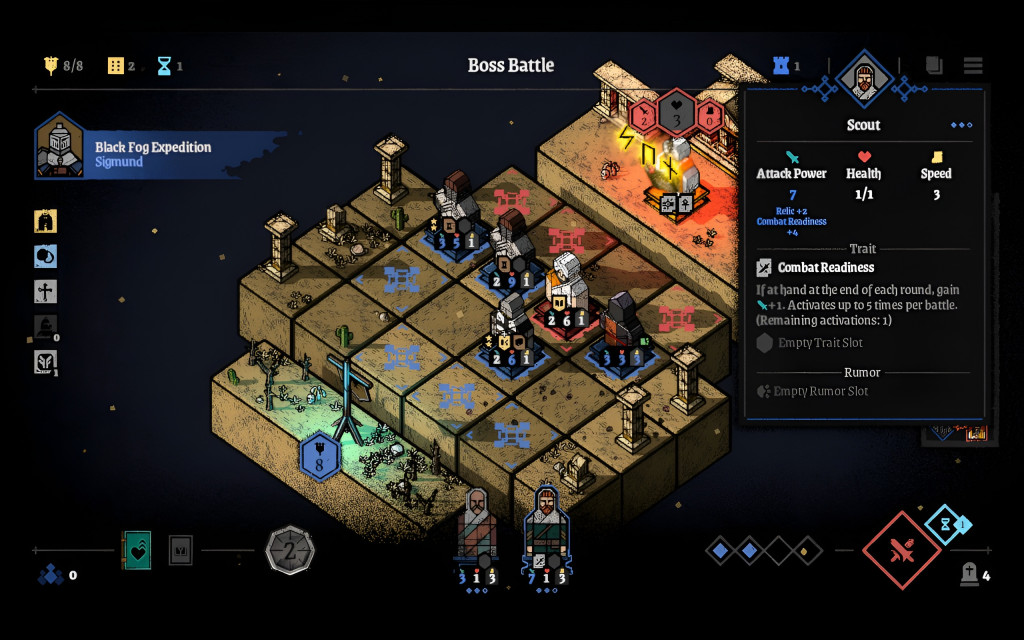
The creative joy comes from unit synergies. The Siege Engineer, who gains attack power equal to a fallen ally once per round, actively encourages sacrificial thinking. The Ambusher becomes deadly when no enemies stand in front of him, turning lane control into a puzzle. The Scout quickly becomes a standout favourite; keeping him unplayed in your hand passively increases his attack, allowing you to deploy him late as a devastating finisher—especially if you have invested in attack upgrades to deliver it.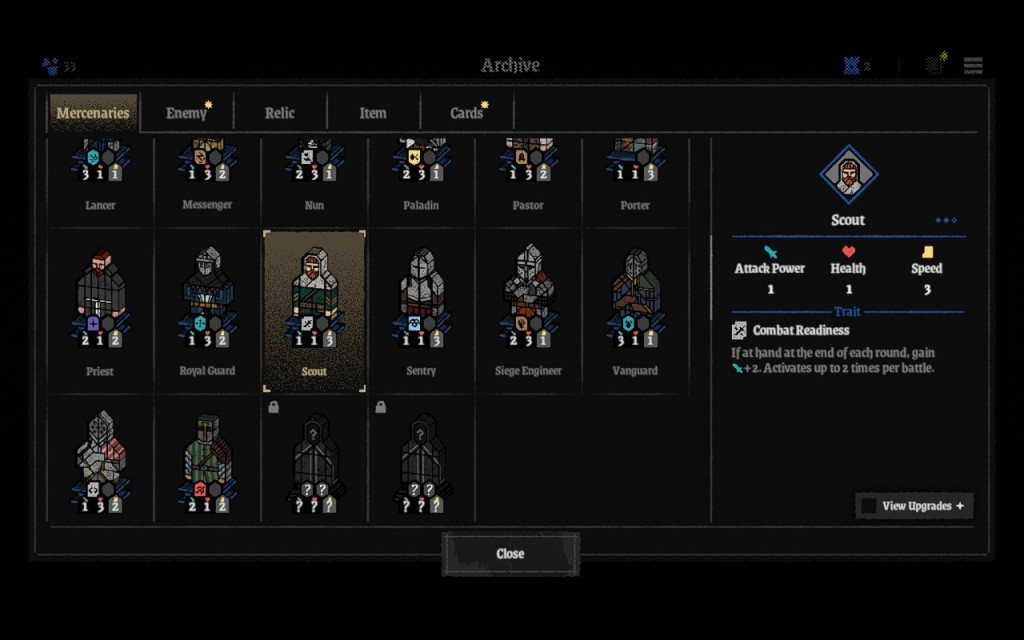
Not every system lands quite as cleanly yet. Sigmund, the default commander, is reliable if unremarkable. Livius, however, introduces a Resolve mechanic that allows a mercenary to dodge once after building three stacks of Resolve. In theory, it’s a high-skill tool. In practice, it often feels like a lot of preparation for a modest reward, only useful in specific moments, perhaps, but rarely transformative enough to justify the effort.
Between battles, you navigate branching paths across different regions. The Ash Graveyard is an interesting stop, offering a buff and a debuff in tandem, such as increased attack at the cost of speed. It’s an elegant way of forcing uncomfortable choices. Less elegant is the Gallows, where you can sacrifice a mercenary to pass their traits to another. The upside can be powerful, but the permanence makes the decision heavy. Mercifully, you can back out rather than being forced to commit.
One frustration that must be stated plainly is the lack of forgiveness regarding inputs. If you mis-click and recruit the wrong mercenary or pick up an unwanted item, there is no undo. The game treats a slip of the mouse with the same severity as a tactical blunder. It feels less like intentional difficulty and more like an interface oversight that asks you to be perfect with your clicks, not just your strategy.
Graphics and Audio
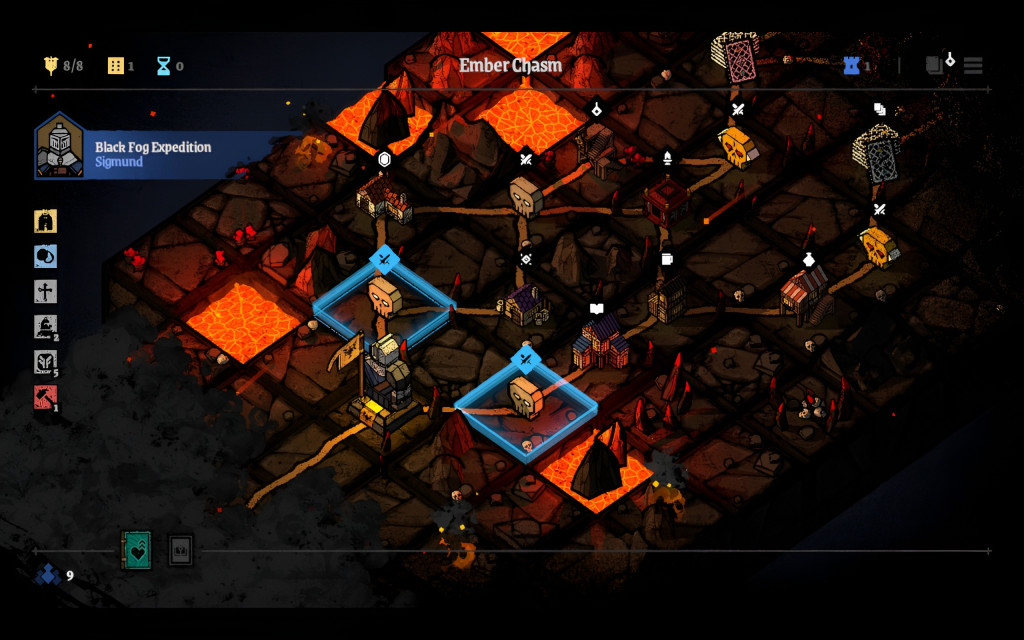
Visually, Master of Piece is clean and readable. Boards vary between forests, lava-scarred lands, and other biomes, and the mercenaries are distinct enough to parse quickly. That said, the buildings you encounter on these maps are functionally identical regardless of the region, which chips away at the sense of place over time.
The audio is a much rockier road. The opening story is delivered through voice acting that, to put it politely, feels amateurish. It sounds like someone reading directly from a script while trying to “put on a voice,” resulting in a delivery that feels forced and unnatural. Fortunately, this is the only instance of voice work in the game, so once the intro is over, the experience improves. The music varies wildly in quality. Early areas rely heavily on repetitive violin strings, which can get quite annoying. However, the Departure Grounds introduce lute, slow drums, and a foreboding folk tone that suits the game beautifully. The Hill of Sunshine swaps this for harps and flutes—pleasant, but it feels oddly mismatched for the forest setting.
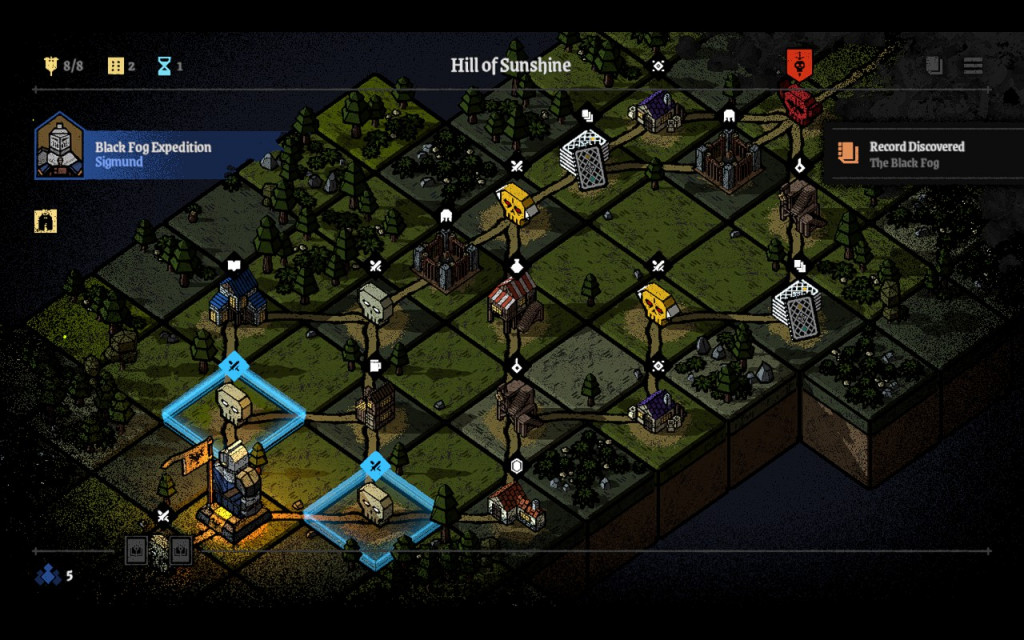
Some regions disappoint sonically. Duskwind Plains relies largely on rain ambience and the return of those familiar strings. Blazing Sands falls back on a predictable “Arabian” musical palette that feels safe to the point of boredom. In stark contrast, the overworld screen features a striking, godlike theme, akin to Smite, that adds a sense of mythic weight, and the victory jingle is short, sharp, and genuinely satisfying.
Longevity
Having a successful run in Master of Piece can be surprisingly quick if your team comes together early. Failure is far more common, and it’s through failure that progression happens. Resources gained from lost expeditions allow you to build facilities at the Outpost, granting permanent upgrades that shape future runs. Bosses escalate pressure rather than spectacle, with the dragon standing out thanks to its high health pool and board-wide damage.
With over a hundred mercenaries and traits already in the game, with relics, items, and unlockable commanders such as Serilla. The current content provides ample opportunities for experimentation. You can visit taverns to spread ‘Rumours’ about your mercenaries—a somewhat vague mechanic that does not reveal any specific rumour, but grants a buff to your units regardless.
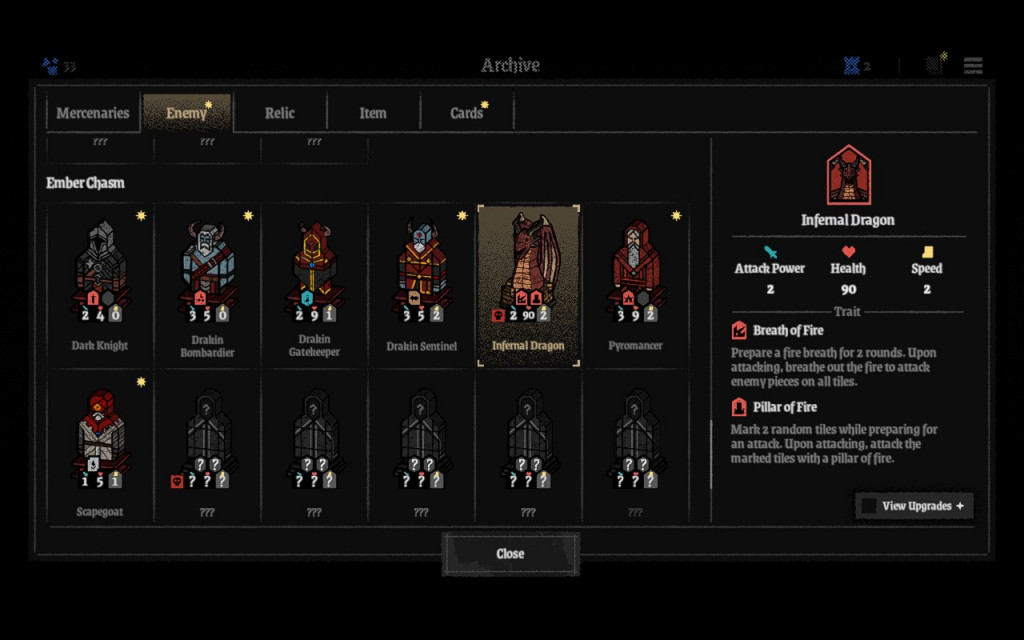
Being an Early Access build, you will occasionally spot greyed-out options on cards, hinting at features or choices not yet fully fleshed out. However, there is enough here to keep you busy, provided you have the tolerance for it. If defeat feels like information to you, you will find reasons to return.
Final Thoughts
Master of Piece is confident in its rules and unapologetic about their consequences. It blends chess-like positioning with the quiet dopamine hit of watching a well-prepared Scout dismantle an enemy line, and in those moments, it is genuinely engaging. Its flaws are hard to ignore in its current state. The opening voice acting falters, the music swings between atmospheric and repetitive, and the interface shows little mercy for clumsy input.
Master of Piece isn’t a game that tries to win you over with charm alone. It lays out its systems, accepts that they will push back, and waits to see if you are willing to meet it on those terms. Where it goes from here will depend on how much of that friction proves intentional.
Disclaimer: A code was received in order to write this review.
If you enjoy this review, be sure to check out my other reviews with Thumb Culture here
