



In space, no one can hear you scream. That may be for the best when it comes to the horrors inside Directive 8020. Developed by Supermassive Games, the game was released on PS5, Xbox Series X|S, and PC on the 12th May 2026. Supermassive know their cinematic horror, so prepare for the return of branching choices, gruesome deaths and Hollywood faces. The Standard Edition costs £39.99. The Digital Deluxe Edition increases the price to £49.99. So does it get off to an astronomical start, or is it just a waste of space?


A Fear Orbit Experience
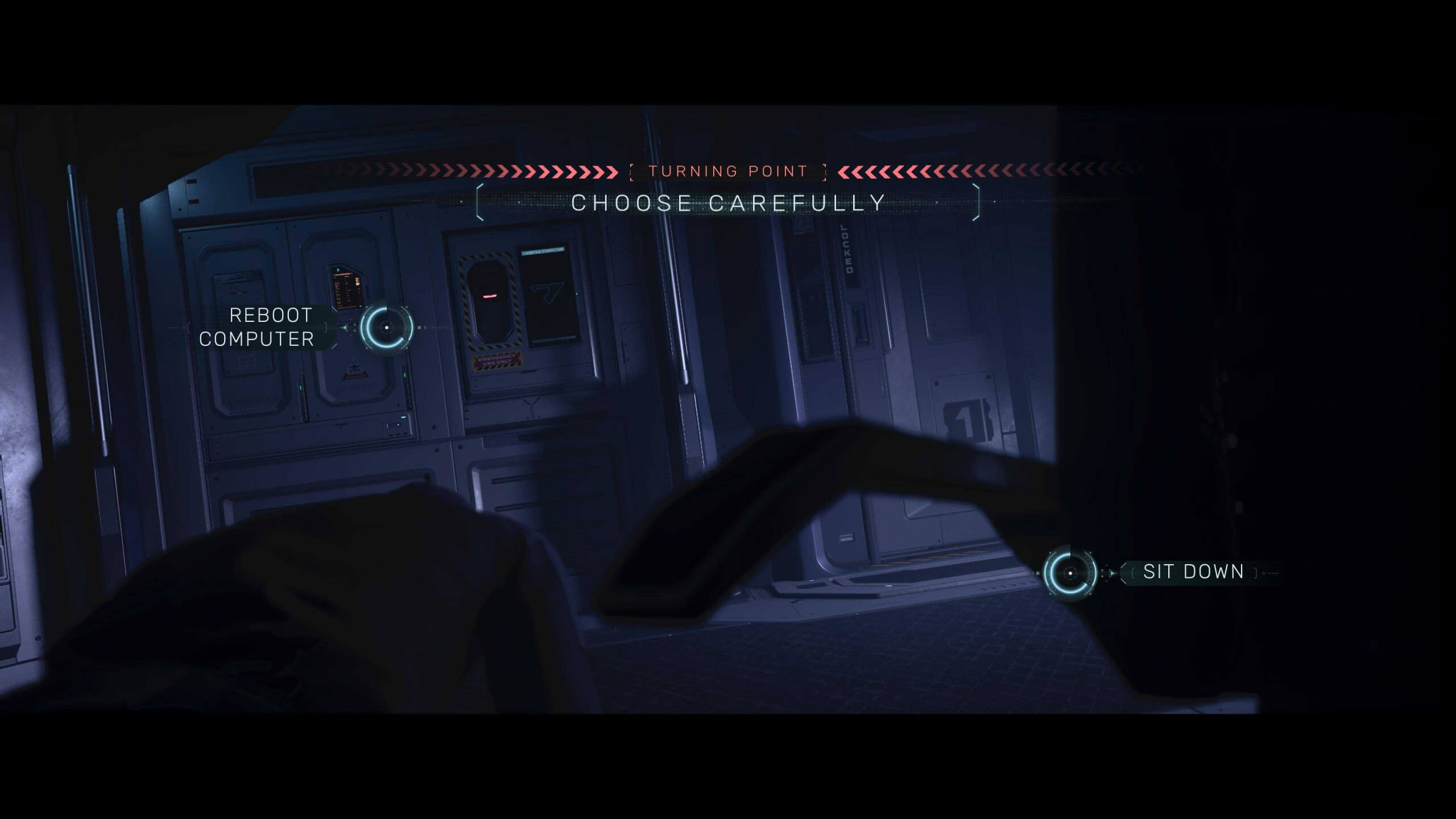
Directive 8020 feels like an unholy union of Alien and The Thing. A cramped spaceship? Check. A hostile shape-shifting threat? Also check. Growing paranoia making every crewmate feel suspicious? Triple check. The setup captures the suffocating tension, although matching the terror of such iconic films is never going to be an easy mission. If you have played a Supermassive game before, the formula of Directive 8020 feels familiar. Dialogue choices, exploration, collectables and quick-time events all remain central mechanics. Choices begin affecting events from the outset. Just one poor decision can leave a character mutilated in sharp 4K detail. An on-screen tracker frequently displays the impending consequences of decisions, and it works brilliantly at constantly reinforcing the importance of every action.
Gameplay
Directive 8020 follows the crew of the Cassiopeia, an interstellar scout ship en route to Tau Ceti f, the nearest potentially habitable world, as Earth is in rapid decline. With a four-year journey ahead, most of the crew are placed into hibernation, leaving the rather funnily named “sleep technicians” to manage the voyage. Naturally, things do not stay calm. As we join them just days from arrival, a meteorite strikes the ship, harbouring a shapeshifting alien substance capable of flawlessly mimicking the crew.
From there, the story revolves around tracking down the missing sleep technicians, repairing the damaged vessel, and trying to maintain order as paranoia spreads through the remaining crew. When anyone could be an impostor, trust becomes a luxury nobody can afford, especially when you might have already set off a chain reaction ending in someone being skewered like a marshmallow over a campfire.
Houston, We Have a Scene
The narrative takes a while to find its footing. Flashbacks and flashforwards occasionally disrupt the pacing, but there are still flashes of brilliance as secrets are uncovered and the horror becomes increasingly grotesque and unnerving. The way character development is shaped by player choices in dialogue and personality is particularly commendable. Lashana Lynch stands out in particular, with a strong performance as protagonist Brianna Young. You may know Lynch from other performances in No Time to Die and The Day of the Jackal.
The rest of the crew is a mixed bag. Not all characters are playable, with only five of the main crew and a sleep technician given playable sections. None of the main cast is outright unlikable, a contrast to previous Dark Pictures entries, but the non-playable characters never really give you a reason to care if they survive. The series is known for reusing actor likenesses among its supporting characters and that doesn’t change here.
Be Kind Rewind
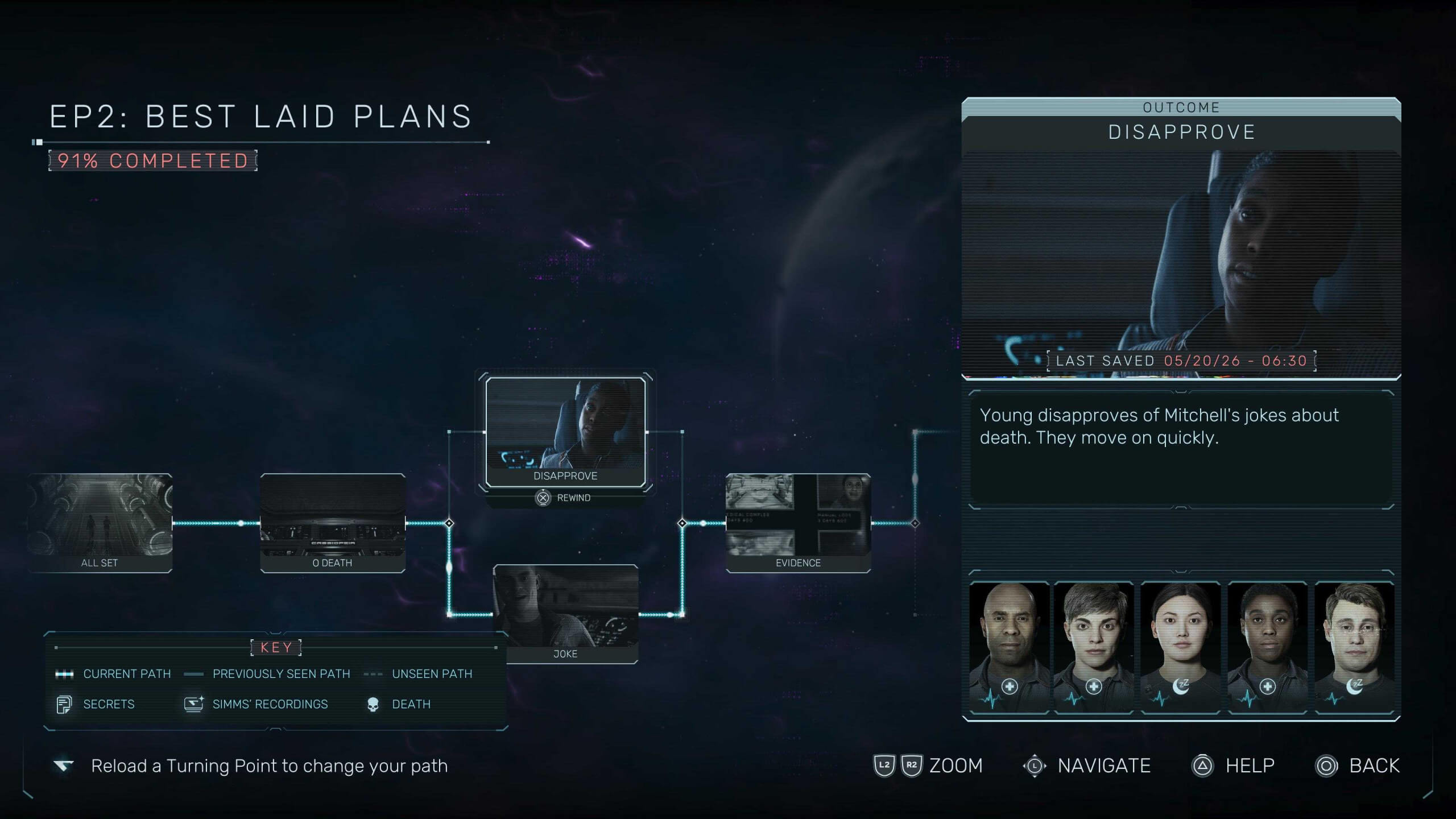
One of the most notable additions is the rewind system, known as “Turning Points”. It allows players to revisit key decisions without replaying entire sections of the story, making experimentation and collectable hunting a less tedious chore. That said, navigating the timeline can sometimes feel clunky, particularly in later chapters where branching paths become more complex. Collectable trackers help by clearly marking progress within each segment, which improves clarity. While the system is undeniably convenient, it does come at a cost. The ability to undo mistakes reduces much of the usual tension, as consequences feel less permanent. Thankfully, Survivor mode addresses this by disabling rewinds entirely, offering a more traditional Dark Pictures experience where decisions carry full weight.
Stealth in the Stars
The biggest gameplay shift comes from the introduction of stealth mechanics, with several sequences tasking players with avoiding alien threats. The inspiration from Alien: Isolation is clear, although the execution doesn’t quite match its intensity. Players can use a utility strap to distract enemies, restore ship systems, and send messages to crewmates, which adds optional layers of interaction and coordination. However, enemy AI often seems to follow scripts rather than reacting dynamically, making encounters easier to manipulate than intended. This undermines the tension these sections aim to build. Even when caught, the stakes rarely feel high, as successful quick-time events (QTE) often feature use of the wedge tool. This electric baton doubles as both a defensive option and a door unlocking progression aid.
On the plus side, character movement is noticeably improved over earlier entries. Actions such as vaulting over obstacles feel smoother and more responsive. There’s also a raft of accessibility features to aid, including simplified puzzles. You can also turn off the QTE timer or make it the same button each time. A visual change is the ability to reduce the film grain and chromatic aberration. While the gameplay options change the experience, they are most welcome.
Graphics & Audio
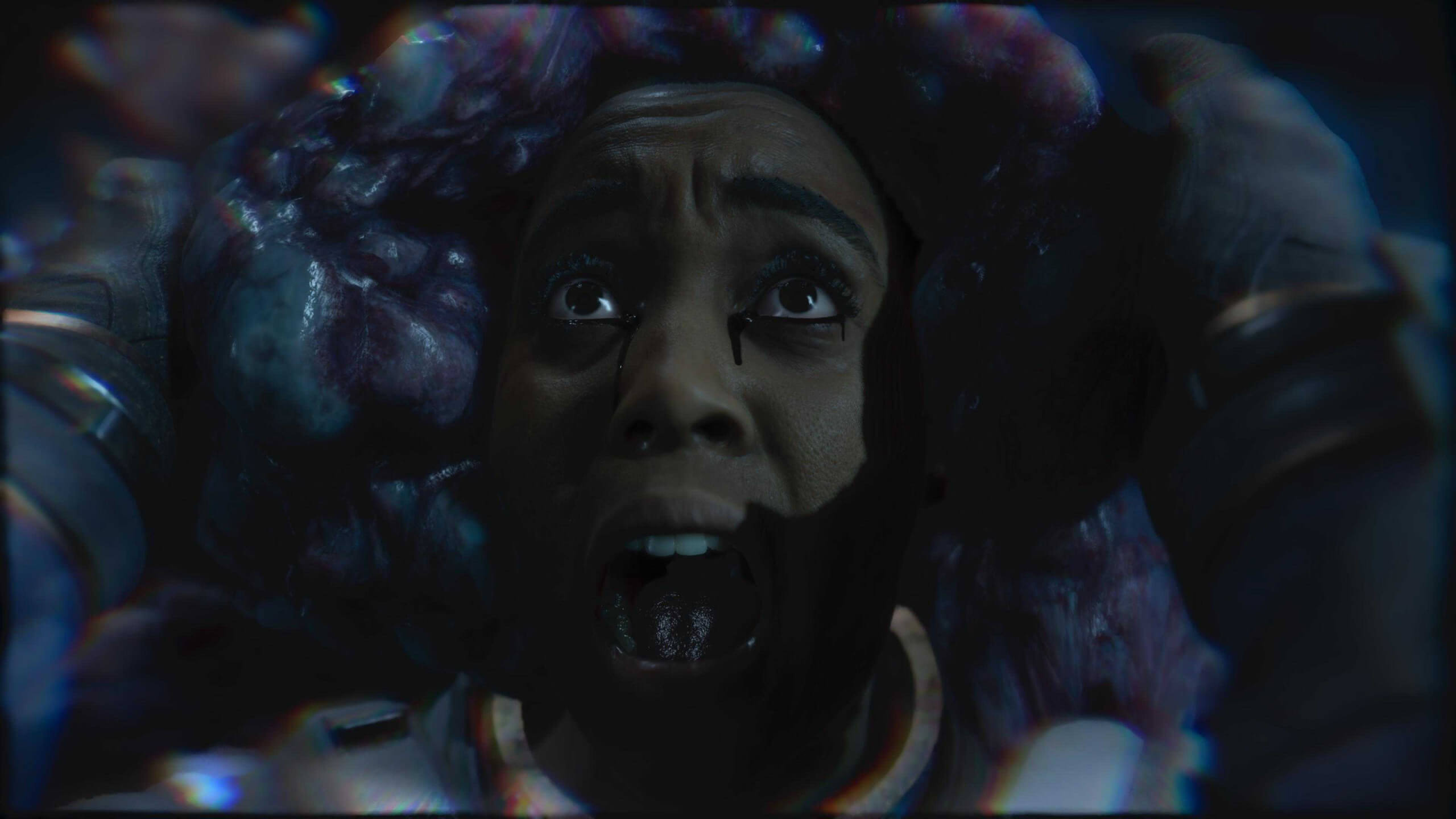
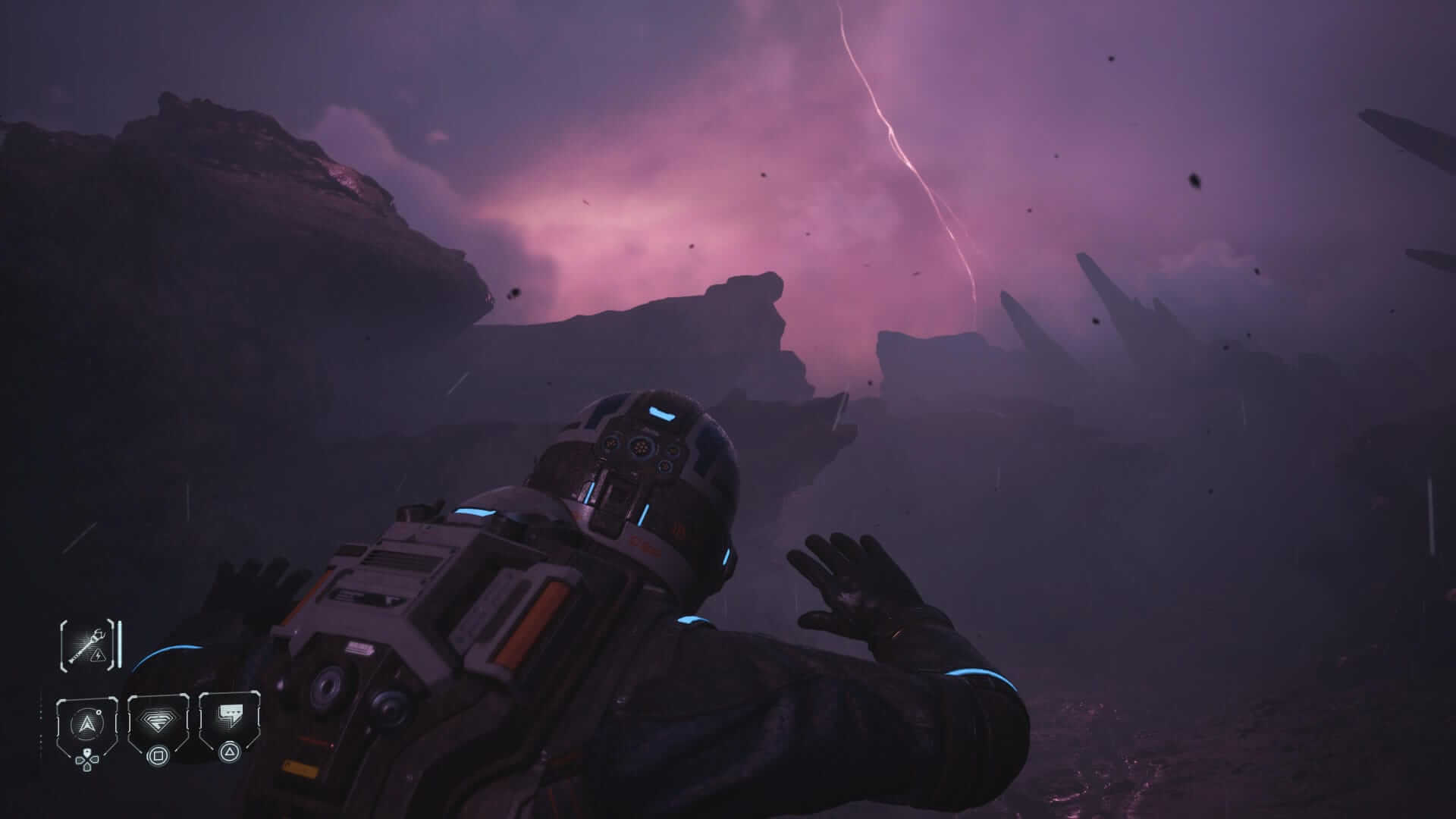
Directive 8020 delivers impressive character models and remarkably lifelike facial animations, while the grotesque bio-flesh horror leaves a lasting impact. The death scenes are brutal and memorable, even if a few rely on recycled animations across different chapters and characters. Still, Supermassive clearly understands how to handle gore, and when paired with the disturbing designs of the enemies’ true forms, the result is a visually striking experience. Credit has to go to the animation and art teams for imagery that sticks in the mind long after the credits roll.
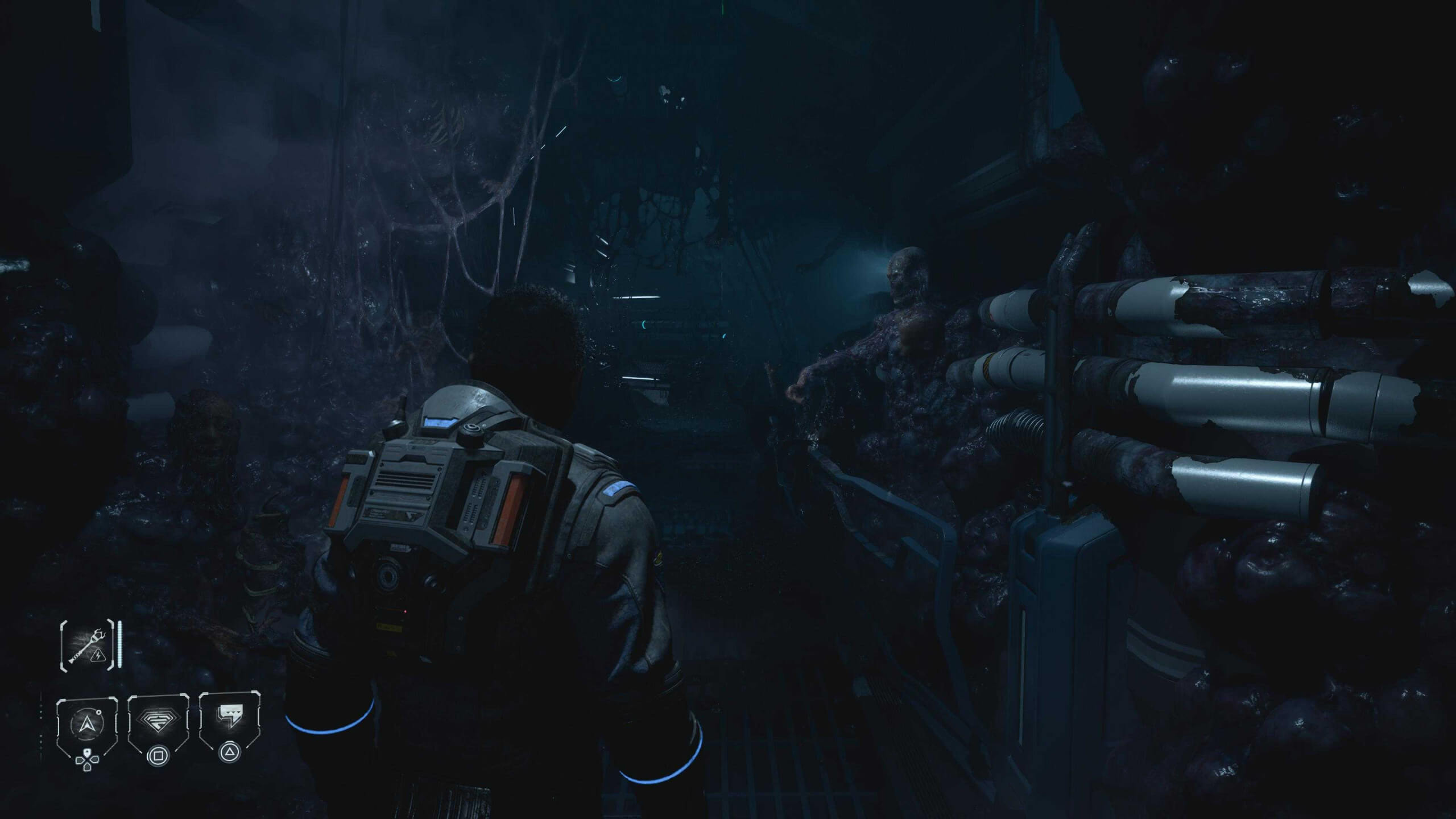
Where the game struggles visually is within the ship itself. What seems like endless grey corridors, reused room layouts and an overall lack of personality in some locations early on make the Cassiopeia feel designed rather than lived in. The setting never quite reaches the iconic status of sci-fi horror landmarks like the Nostromo from Alien or the Ishimura from Dead Space. Performance-wise, however, is where the game excelled throughout my time with it. I played on a standard PS5 using the 60fps performance mode and encountered no crashes, bugs, or major glitches. The haptic feedback does add tension during close encounters, but after testing for this review, I turned it off for my own preference.
Directive 8020 also shines in its audio direction. The game is divided into eight chapters, each ending with a title splash and a song that perfectly complements the tone of the events that just unfolded. The ship’s metallic clinks and its warning alarms sound exactly as you would expect from a sci-fi horror setting. Most unsettling of all are the enemy transformations, with the sickening cracks and distortions still lingering in my ears well after playing.
Longevity
A single playthrough takes around 7 to 8 hours. Completionists or players aiming to tread every narrative path will find considerably more content to explore. With over 50 collectables and multiple endings to view, replayability remains a core part of the Supermassive experience. There is plenty of incentive to return, as experimentation is strongly encouraged and characters can survive or perish across a wide range of scenarios. The higher overall body count compared to previous instalments further adds to the unpredictability, while the multiple endings help ensure each run can feel meaningfully different.
However, while some branching storylines are genuinely engaging to revisit, certain weaker gameplay sections can make repeated solo playthroughs feel a little tiresome. Thankfully, the addition of couch co-op, along with a planned online co-op update, provides a stronger social reason to return and experience different outcomes with others.

Conclusion
Directive 8020 is frustrating because all the right ingredients are in place, but they never fully come together. The paranoia, mistrust, unsettling body horror and occasional bursts of genuine tension all hint at something special. When the game commits to its identity, it delivers some of the strongest moments Supermassive has produced in the series.
However, the central setting lacks personality, and some characters rarely leave a lasting impression, holding the experience back. The stealth mechanics also fail to develop, limiting the overall tension they are meant to create. There is still plenty here for Supermassive fans to enjoy. The branching choices lead to entertaining moments of panic, and the latter half of the game does show flashes of the tense sci-fi horror experience it is aiming for.
Directive 8020 is a solid sci-fi horror adventure built on strong ideas. These ideas never fully evolve into something exceptional. Despite this, it delivers enough tension, intrigue and cinematic spectacle to comfortably earn the Thumb Culture Silver Award.


Disclaimer: A code was received in order to write this review.



YouTube | Facebook | Twitter | Instagram | Discord | Podcast