


There’s subtlety, and then there’s Celestial Return. Developed by Metaphor Games and published by Shoreline Games, this neon-soaked detective RPG doesn’t creep onto your screen so much as bleed into it. This doesn’t ease you into Netherveil City. It throws you in, neon-first. Coming to Steam, and currently running a Kickstarter.
Celestial Return – Not quite a star
Before we really get into Netherveil, I’m curious, are you the sort who clicks every dialogue branch just in case, or do you streamline towards objectives?
Gameplay
You play Detective Howard, a worn-out investigator armed with a rusted badge, a sentient rose that refuses to stay quiet, and a pocketful of dice that matter far more than you’d expect. Netherveil is a dying city. Suicides pile up. Corpses crawl. Conversations fracture your psyche into competing traits like Virtue, Intelligence, and Foolishness.
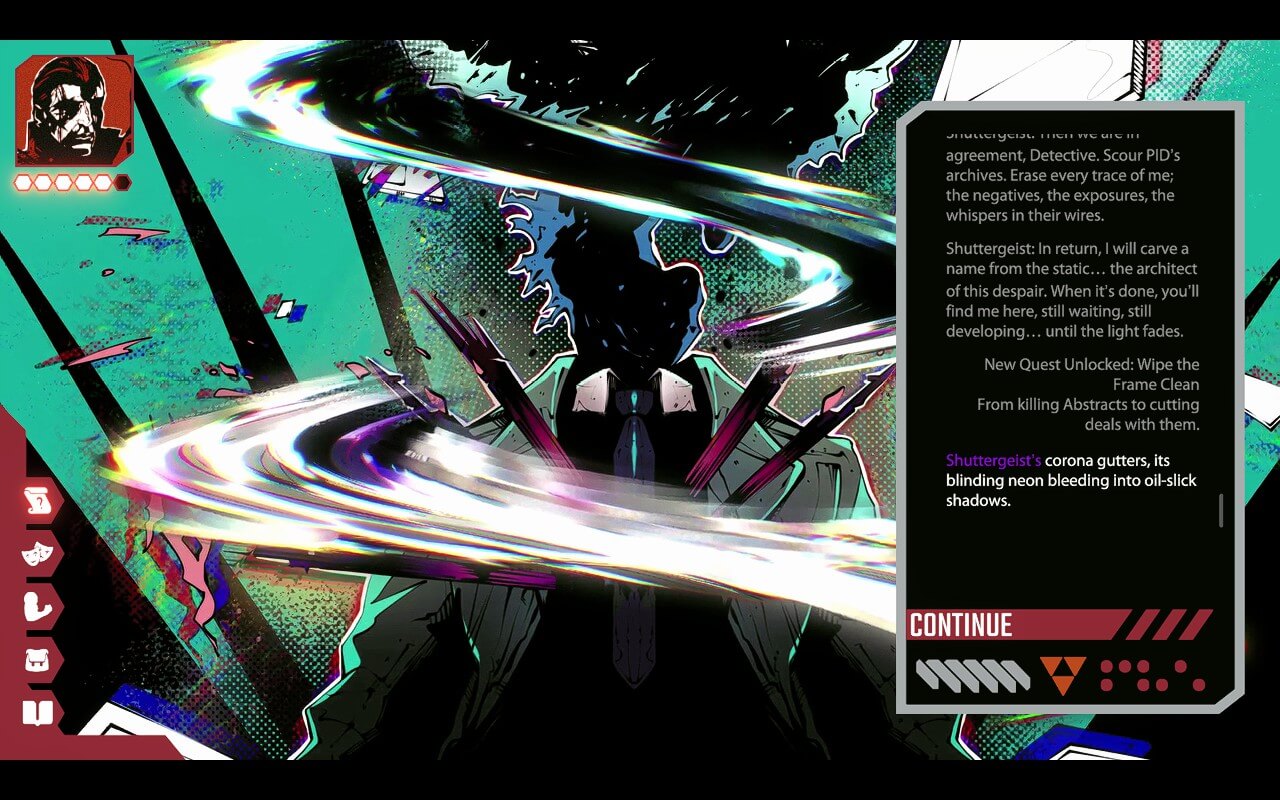
The opening blast of psychedelic colour could probably have done with a warning. Once your retinas adjust, you’re dropped into comic panels, unexplained icons, and immediate dialogue choices. No hand-holding. No gentle prologue. Just text, atmosphere, and the quiet pressure to decide. It’s confident. Sometimes a little too confident.

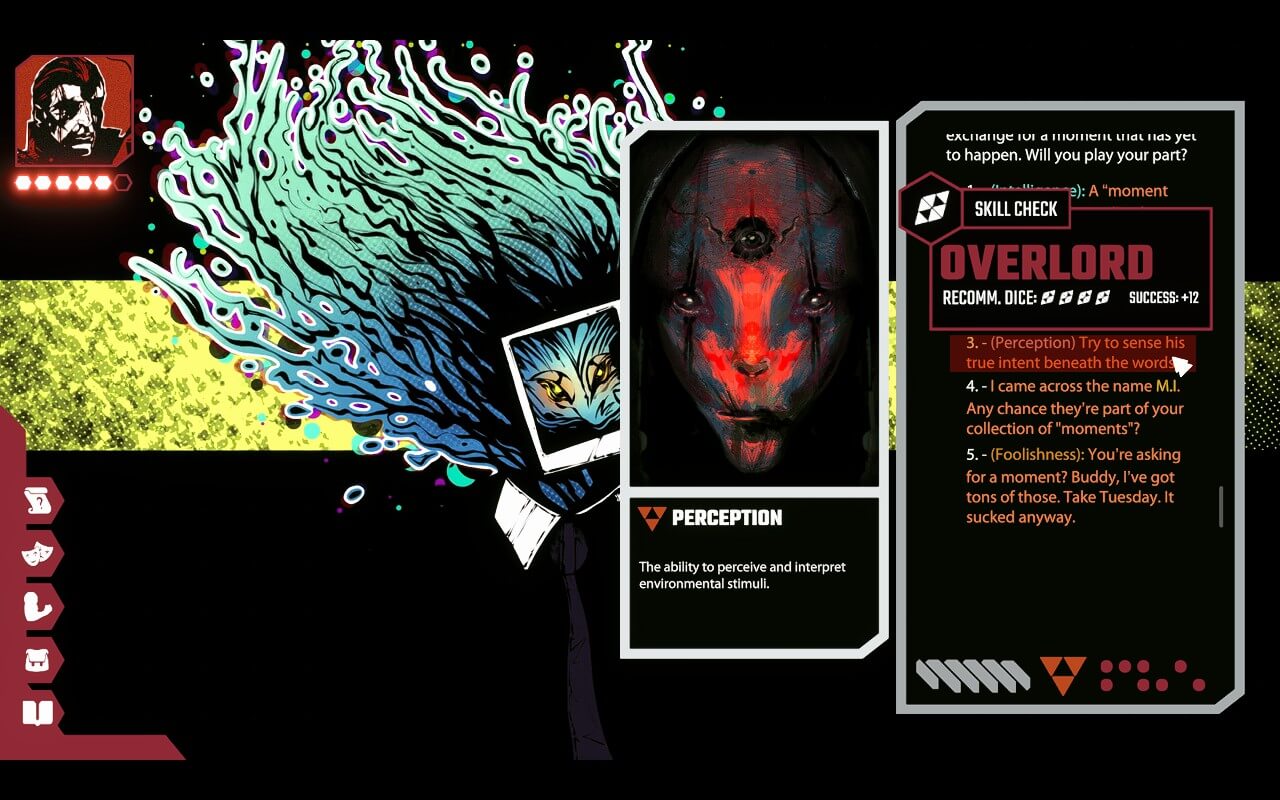
Celestial Return plays more like a graphic novel with mechanical teeth than a traditional RPG. There is exploration, but it’s framed through stylised panels and location selection rather than full analogue wandering. Initially, it feels almost static, flipping between story and art like pages in a digital comic. The game revolves around dialogue choices, character insights, and dice management. Intelligence, Virtue, Foolishness and other “insights” manifest almost like voices in your head, represented by striking alien-like figures in the UI. They shape your available responses and, more importantly, your consequences. Your character is not a build in the traditional sense. It’s an evolving argument between internal fragments.
Then, unexpectedly, those insights start speaking. Not always, but during one scene, so possibly voice acting could be added to the full game. The moment an Insight voices its opinion aloud, fully voiced, and distinctly Scottish, is genuinely surprising. Whether it’s one performer modulating tone or multiple actors, it works brilliantly. It adds texture to what initially feels like a purely text-driven system, turning internal debate into something you can actually hear pushing back.

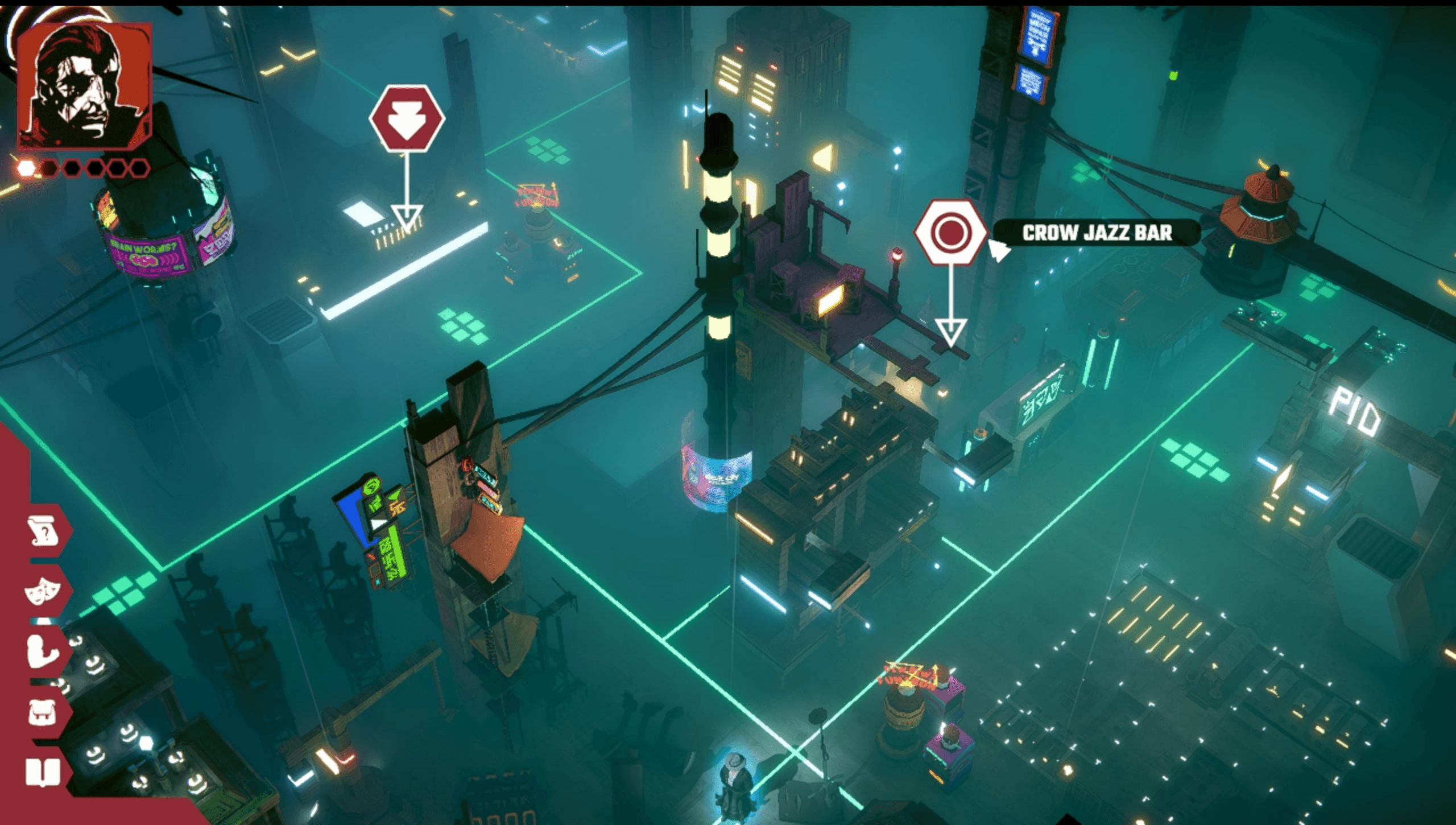
Soon enough, you gain access to an overhead map of Netherveil, selecting destinations while random encounters potentially ambush your plans. Movement is less about physical navigation and more about narrative positioning. You aren’t really controlling the full movement; you’re choosing which moral compromise to visit next, clicking on the map, and then you’ll move along a trail.
That’s where things get interesting. You are introduced to dice. These are both currency and opportunity. Earn them through exploration and survival. Spend them to push conversations, investigations, or mini-games in your favour. Hoard them for too long, and certain opportunities will vanish. Roll recklessly and watch your resources evaporate. The system forces tension into even mundane interactions.
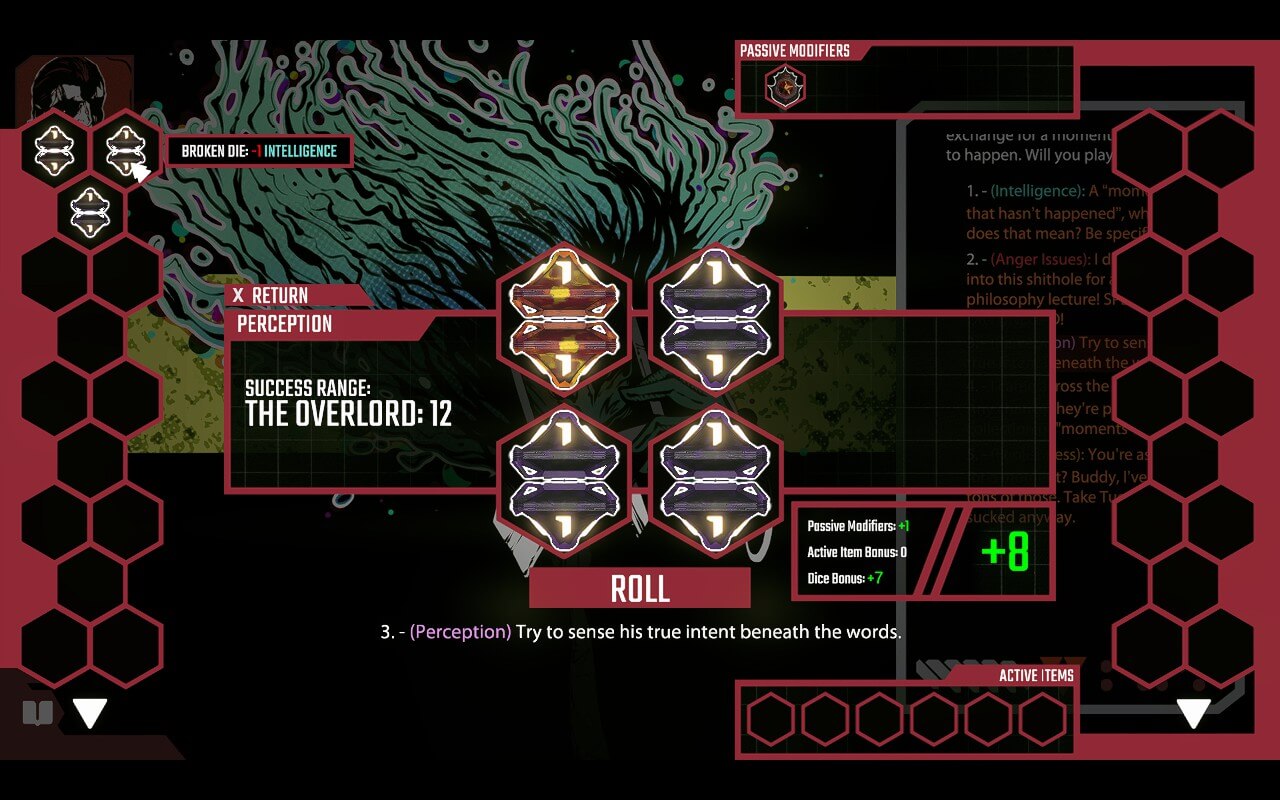
The dice mini-game early on that asks you to stack as many dice as possible for a high score, with the looming threat of a catastrophic “nuke” result that wipes your rolls. Mechanically, it’s simple. Emotionally, it’s nasty. Especially when, you may find yourself staring at “Perception – 2 dice” and unable to participate in future conversations. It’s a balancing act of not just choices but also your dice.
Writing quality fluctuates. Some passages land beautifully, helped enormously by the striking imagery beside them. Others feel oddly basic, particularly when building tension. The choices themselves, however, are compelling. You want to see what happens when you lean into Virtue over Perception, or when Foolishness laughs in the abyss’s face. The act of choosing is often more engaging than the prose surrounding it.
The codex, currently labelled “Archive”, fills out as you explore and survive. It rewards risk with deeper lore. That design choice is bold. It also means cautious players will inevitably miss context and character background. Celestial Return doesn’t soothe that friction. It simply leaves the gaps. This is not a game to rush. I tried. It didn’t go well. One mechanic involves urgent quests framed as “you don’t get to pretend you didn’t hear that” moments. It implies immediacy and moral obligation. In practice, you can ignore them. The tension is narrative rather than systemic. The illusion is clever, even if the follow-through is inconsistent.
On the less glamorous side, technical instability rears its head. Dialogue loops that refuse to recognise completed choices. Characters suddenly occupy the entire screen. Most significantly, there’s no robust autosave safety net. Losing hours of progress due to a progression lock stings. Especially when the cause appears to be selecting dialogue in the “wrong” order without any clear indication, saving manually becomes less habit and more of a survival strategy. Unfortunately, this crash occurred several times; in the end, the only way to complete this preview was to pick the most basic choices and not branch.
Graphics and Audio
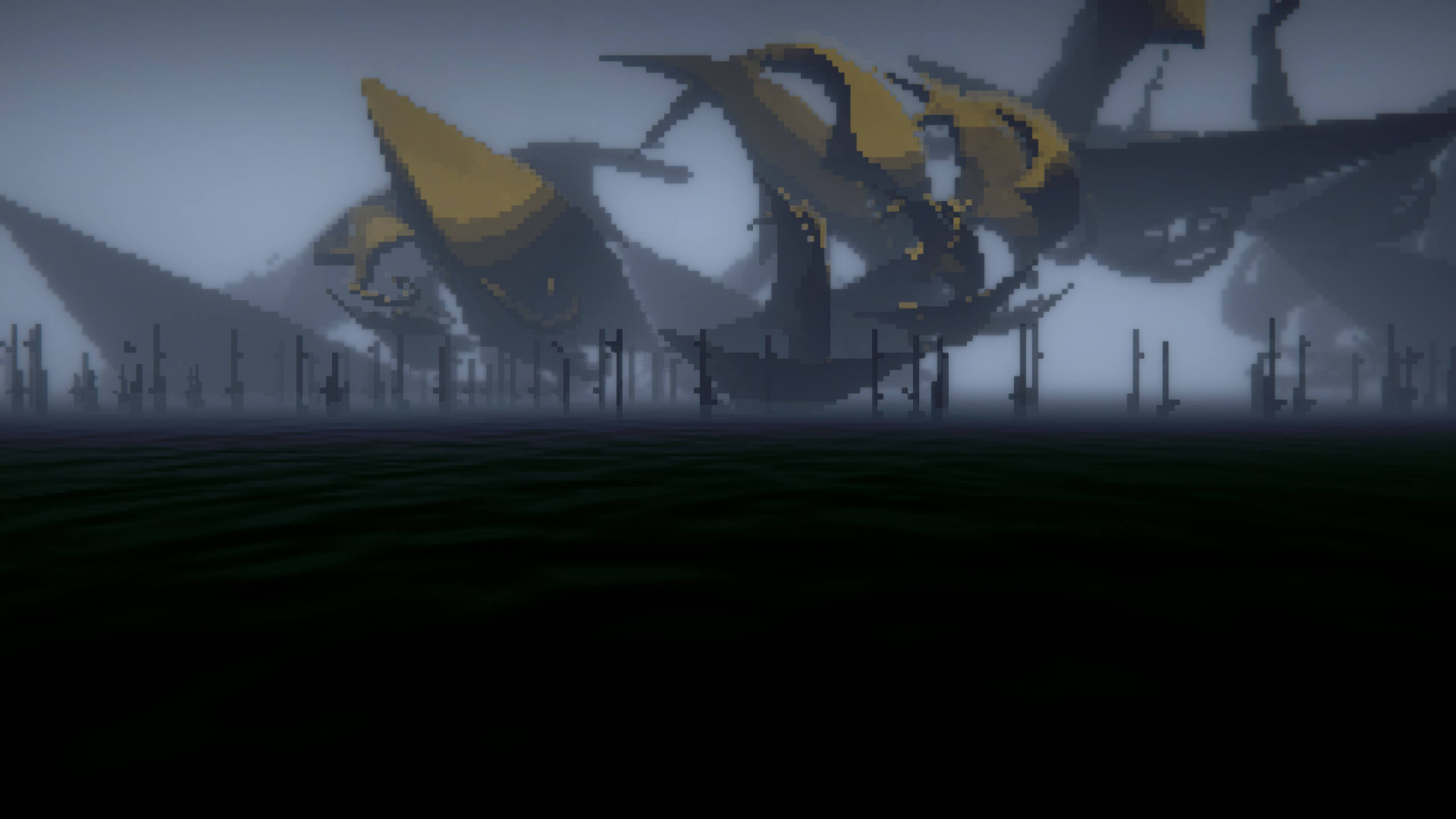
This is where Celestial Return shows its shining star. The hand-drawn art style blends manga precision with Western comic grit. Stark white outlines carve through shadow-drenched backdrops. Panels do the heavy lifting for the prose, grounding scenes when the writing skims too lightly. Then there are the curveballs. With a brief 3D pixelated dream section appears late on. It’s unexpected and all the better for it. Small tonal risks like that hint at a team willing to experiment rather than stay safe. Even the insights began speaking at this point.

The soundscape binds everything together. The main menu’s hip-hop beat gives way to an ambient unease. Jazz seeps into certain areas. Electronic pulses elsewhere. In one silo sequence, faint fan hums and quiet dripping built a claustrophobic edge that text alone couldn’t deliver. It’s subtle, but it lingers.
Unfortunately, the end credits wobble. It was a glitch-heavy introduction with a new character, then a creepy moon, the background imagery repeatedly paused and looped the voice line, “Good, so we have a plan.” It’s unclear whether that repetition is artistic or technical. Either way, it slightly blunts what should feel like a closing note.
Longevity
Celestial Return’s longevity isn’t about hours. It’s about patience. Lore fills out through risk. Codex entries reward thoroughness. Dialogue experimentation pays off. If you’re methodical and curious, there’s depth to uncover. If you skim, you will miss things. Technical instability complicates that replay appeal. Risk is compelling when the system feels solid. When progression stalls, enthusiasm becomes measured.
Whether Celestial Return feels invigorating or exhausting depends less on its length and more on your tolerance for imperfection. Nevertheless, this preview took about 6 hours to complete, including all the bugs. Others may have a better time.
Final Thoughts
Celestial Return commits fully to its identity. Scarce resources. Internal voices. Storytelling through panels and sound. It feels less like a traditional detective RPG and more like a manifesto wearing one. It’s about arguing with yourself, and rationing limited options. Mechanically, the game mirrors its themes; resources are finite, control is partial, and outcomes can slip through your fingers without warning.
It also commits to experimentation. Voice-acted Insights that catch you off guard. The unexpected pixelated dream detour. Tonal shifts from noir jazz to industrial hum. When those ideas land, they’re striking. When they falter, it’s usually because ambition edges past stability or clarity. This isn’t power fantasy. It’s psychological survival wrapped in neon ink and uneasy silence. Sometimes messy. Often compelling. Occasionally brilliant in ways you don’t see coming. But I’d still wait it out until it’s had some updates.
Disclaimer: A code was received in order to write this preview.


YouTube | Facebook | Twitter | Instagram | Discord | Podcast